Moscow Under Siege: Hybrid Drone Swarms Signal a New Era for Combat UAVs
A massive Ukrainian drone strike hit Moscow, using a hybrid swarm of commercial-off-the-shelf (COTS) DJI platforms and long-range fixed-wing bombers. Read how this defense crisis is reshaping global export controls, Part 107 airspace restrictions, and the inspected pre-owned drone market for B2B operators. Is your fleet compliant with the coming regulatory storm?

Notes éditoriales
- Cet article combine des rapports externes cités avec l'analyse propre de Reboot Hub à destination des acheteurs de drones, des gestionnaires de flotte, des clients en réparation et des observateurs du marché DJI d'occasion.
- Les faits sources sont séparés de l'interprétation. Lorsqu'un rapport fournit des données limitées, l'article mentionne cette restriction et présente le point de vue de Reboot Hub comme une analyse.
- Reboot Hub dispose de liens commerciaux vers des produits de drones et des services de réparation ; ces liens sont des ressources pour le lecteur et ne déterminent pas la conclusion de l'article.
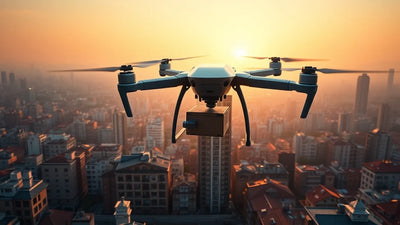
On the morning of June 18, 2026, extraordinary footage emerging from Moscow captured a scene that commercial UAV analysts have long feared but few truly prepared for: a massive, coordinated drone swarm penetrating one of the most heavily defended airspaces on the planet. Ukrainian forces executed a large-scale aerial assault on the Russian capital, triggering massive explosions and fires visible for kilometers. While the geopolitical ramifications are immediate and severe, the technological and market implications for the global drone industry are seismic.

For operators, manufacturers, and investors in the commercial UAV sector-particularly those operating under frameworks like the FAA's Part 107 or EASA's open category-this is not merely a distant war report. It is a stark, real-time case study in how commercial drone technology is being weaponized, and what that means for the future of certified airframes, export controls, and the second-hand market. At Reboot Hub, we analyze commercial UAV hardware daily; today, we must analyze its shadow.
The Anatomy of a Hybrid Swarm: COTS Hardware Meets Military Doctrine
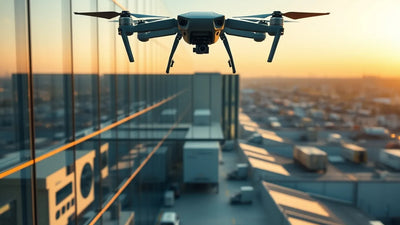
The footage, authenticated by The War Zone and other open-source intelligence (OSINT) networks, reveals a swarm composition that is uniquely modern. Analysts have identified a mix of small, first-person-view (FPV) racing drones and larger, fixed-wing UAS platforms. Crucially, multiple airframes bear the unmistakable silhouette and signature of modified DJI platforms-most prominently the DJI Mavic 3 Enterprise series and the more agriculturally-derived DJI Agras T40.
Fleet readiness
Keep DJI hardware available without overbuying new units.
Use this news as a planning signal for inspected DJI aircraft, repair support, and trade-in timing.
This is not a fringe event. It represents the full maturation of what defense analysts call a "hybrid cascade." Small COTS drones, retailing for less than $2,000 on the open market, are now being fielded as loitering munitions against strategic targets. The Moscow strike, which reportedly hit fuel depots, logistics hubs, and a S-400 air defense battery command post, was executed with a level of coordination usually reserved for dedicated cruise missiles. The key difference? Cost-effectiveness and supply chain accessibility.
"The technical challenge of defending against a swarm of 100+ small drones is fundamentally different from intercepting a single large cruise missile," explains a senior defense analyst cited in the report. "Traditional radar systems are overwhelmed by the sheer number of low-RCS targets. The drone swarm leverages commercial off-the-shelf components that are provably impossible to fully embargo."
For the commercial market, this realization is terrifying. Every time a DJI drone is used in a strike, it tightens the regulatory screws on legitimate drone operators worldwide.
Ready to Upgrade Your Fleet?
Browse our collection of inspected pre-owned DJI drones - inspected, flight-tested, and backed by a 6-month warranty. Save up to 40% versus retail.
What Does the Moscow Attack Mean for Commercial Drone Pilots?
The question every legitimate operator is asking-from a real estate photographer in California to a precision agriculture surveyor in Nebraska-is: "How does this affect my business?" The answer, unfortunately, is immediate and negative.
Immediate Regulatory Fallout: We are already on the brink of an aggressive wave of counter-drone legislation. In Washington D.C., the FAA Reauthorization Act of 2024 included significant provisions for remote identification (Remote ID) and approved counter-UAS (C-UAS) technology for law enforcement. After today's Moscow strike, expect a dramatic acceleration. The Department of Homeland Security and the FAA will likely impose temporary flight restrictions (TFRs) over critical infrastructure-oil refineries, power plants, data centers-that will blanket vast areas of American airspace. For commercial drone pilots, this means a shrinking map of permissible flight zones.
Export Control Escalation: The United States, the European Union, and their allies have already sanctioned DJI and other Chinese drone manufacturers. The Moscow attack, which relies so heavily on modified DJI hardware, will be used as a primary justification to broaden these sanctions. Expect a total ban on the export of any spare parts, software, or firmware updates for DJI products to certain regions-and a far stricter enforcement regime for domestic buyers.
Insurance and Liability: Commercial drone insurance policies are already tightly written. The proliferation of these swarm attacks will cause underwriters to re-evaluate "acts of war" and "terrorism" clauses. A survey mission near a fuel depot that was previously covered may now be explicitly excluded, driving up premiums or requiring dedicated security clearances.
For the used drone market, this creates a paradox. As stricter regulations hit new hardware sales, demand for "legacy" or "pre-sanctioned" airframes may spike-but so will the risk of purchasing a drone that has been flagged as non-compliant with new Remote ID standards or geo-fencing requirements.
The Second-Hand Market Tightrope: Opportunity Amidst Chaos
Every major global crisis creates a dislocation in the capital markets for UAV hardware. The Moscow attack will trigger a massive sell-off of "at-risk" commercial platforms, particularly the DJI Mavic 3 Enterprise and Matrice 30 Series models that are visually indistinguishable from their military-modified cousins.
This is where the Reboot Hub analysis becomes critical for B2B buyers. We are seeing an emerging two-tier market. Tier One consists of airframes that can be proven to be certified, non-modified, and compliant with the latest FAA Remote ID and NDAA Section 848 requirements. These units will hold their value or even appreciate as supply tightens. Tier Two consists of unverified, second-hand units sold on peer-to-peer marketplaces with no provenance. These units are now radioactive-they may be the target of forced buybacks, decommissioning orders, or outright seizure by law enforcement.
Our advice to commercial fleet managers is clear: Source your hardware exclusively from trusted refurbishers. A drone purchased from a platform like Reboot Hub comes with a documented chain of custody, a verified flight log, and a hardware inspection that confirms no illegal modifications have been made. This is no longer optional; it is a compliance imperative. The days of buying a "gently used" Mavic 3 from a stranger on the internet are over.
The counterargument from some operators is that they can save 20-30% by buying on the grey market. But consider the following: a single incident of operating a non-compliant drone within a new "Critical Infrastructure TFR" will result in a $30,000 FAA fine and potential loss of your Part 107 certificate. The savings evaporate instantly.
Counter-UAS Proliferation: A New Cost Center for Commercial Ops
One of the most immediate commercial consequences of the Moscow swarm attack will be the mass adoption of Counter-UAS (C-UAS) technology by private industry. Until now, C-UAS systems-such as RF jammers, GNSS spoofing detectors, and kinetic interceptors-were largely the domain of military bases and high-security government facilities. That is about to change.
Every major oil refinery, chemical plant, and power substation in the United States is now on high alert. Facility managers are being instructed to procure drone detection and mitigation systems. This opens a massive new market for companies like Dedrone, Black Sage, and Fortem Technologies. For the commercial drone operator, this means that your pre-flight planning app will soon have to account for a new variable: "Active C-UAS Zone." Flying a drone near a protected asset may result in automatic RF jamming, causing you to lose control of your $10,000 aircraft.
The economic impact is double-edged. While the C-UAS industry will boom, the overall cost of doing business as a drone service provider (DSP) will increase. You will need to invest in hardened GPS receivers, alternative communication link protocols, and potentially drones that are certified as "safe to operate in jammed environments." This favors larger, higher-value platforms like the DJI Matrice 350 RTK or the Autel EVO Max 4T, which offer multi-band GNSS and ADS-B integration. Lower-end consumer platforms may become entirely unusable in urban environments.
We are also seeing the rise of "closed-loop" drone systems designed for critical infrastructure inspection. These are drones that operate entirely within a localized private network (LTE, 5G, or wired tether) and are physically incapable of operating outside a predefined geofence. For operators considering fleet expansion, this is the direction of specialization.
Market Trends and the Road Ahead: A Necessary Pivot
We previously advised our readers to focus on the professional DJI repair services offered at Reboot Hub as a way to extend the life of your fleet while maintaining compliance. That advice is now more urgent than ever. As new drone exports face inevitable trade barriers, and grey-market hardware becomes increasingly dangerous to operate, the most stable path forward for commercial operators is to invest in the maintenance and certification of existing, legally compliant airframes.
We predict the following market shifts over the next 12 months:
1. The "Airworthiness Certification" Standard: Just as general aviation aircraft require annual inspections, commercial drones will face mandatory hardware verification standards. Reboot Hub's inspection workflow-which includes flight controller firmware verification, motor bearing analysis, and RTK module alignment-is already a de facto standard. We will expand this service to meet the demand for "Provenance Documents."
2. The Consolidation of the Second-Hand Market: Unregulated peer-to-peer drone sales will collapse. Buyers will only trust established refurbishers that offer warranties and compliance guarantees. This is a net positive for the industry, but it means that the window to sell your used drone legitimately is closing. If you own a DJI Phantom 4 RTK or a Mavic 3 Enterprise that you aren't using, now is the time to trade it in at Reboot Hub.
3. The Rise of "Battle-Proven" Countermeasures: Private industry will form collectives to jointly purchase and operate C-UAS networks. This will be funded by insurance premium reductions. Drone pilots will need to register their fleets with these collectives.
FAQ
1. How does the Moscow drone attack affect my FAA Part 107 operations?
The attack will accelerate the implementation of stricter Remote ID enforcement and the expansion of Temporary Flight Restrictions (TFRs) over critical infrastructure. You will likely need to file more complex authorization requests for flights near refineries, power plants, and government buildings. Failure to comply will result in severe penalties.
2. Are DJI drones still safe to buy for commercial services in the USA?
Yes, but with significant caveats. You should only purchase DJI hardware from a certified refurbisher like Reboot Hub that provides a documented, unbroken chain of custody and verifies compliance with all current export and security regulations. Avoid grey-market purchases as they carry a high risk of being non-compliant with future Remote ID standards.
3. Will the value of my used drone increase after this crisis?
Only for verified, certified airframes. Unverified drones on peer-to-peer platforms will see their value collapse due to compliance risk. If you own a drone with a clear history and no modifications, its value may increase as the supply of certified hardware shrinks. We recommend immediate trade-in if you wish to monetize your assets.
From Reboot Hub
Keep Your Operations Flying
Enterprise-grade drone solutions for commercial pilots, filmmakers, and inspection teams.
Pre-owned Fleet
Fully inspected DJI drones with 6-month warranty. Save up to 40%.
Browse Inventory ->