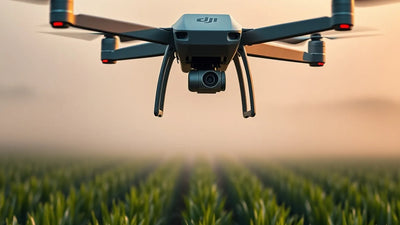
Minneapolis Police DFR Pilot: Drones as First Responders at Fire Station 14
Minneapolis police propose a Drones as First Responder (DFR) pilot deploying two DJI Matrice 350 RTK drones from Fire Station 14. This breaks new ground for FAA Part 107 waivers and BVLOS operations in urban airspace. For commercial drone operators, this signals a shift in public safety procurement and the used drone market. Read the full analysis.

Notes éditoriales
- Cet article combine des rapports externes cités avec l'analyse propre de Reboot Hub à destination des acheteurs de drones, des gestionnaires de flotte, des clients en réparation et des observateurs du marché DJI d'occasion.
- Les faits sources sont séparés de l'interprétation. Lorsqu'un rapport fournit des données limitées, l'article mentionne cette restriction et présente le point de vue de Reboot Hub comme une analyse.
- Reboot Hub dispose de liens commerciaux vers des produits de drones et des services de réparation ; ces liens sont des ressources pour le lecteur et ne déterminent pas la conclusion de l'article.
On May 30, 2026, the Minneapolis Police Department (MPD) presented a formal exploratory proposal to the city council's Public Health, Safety and Equity Committee. The plan: launch a Drones as First Responders (DFR) pilot program operating out of Fire Station 14 in the Fourth Precinct of North Minneapolis. If approved, this program would deploy two drones-visibly marked as police vehicles with red and blue lights-to respond to 911 calls before ground units arrive.
This is not a theoretical exercise. The proposal, obtained by Reboot Hub through public records, outlines a concrete operational framework. Two DJI Matrice 350 RTK drones would be stationed at the fire station, with pilots located remotely. The drones would be dispatched to high-priority calls, providing real-time aerial video to dispatchers and responding officers. The stated goal: reduce response times, improve situational awareness, and de-escalate potentially violent encounters.
For the commercial UAV industry, this pilot is a bellwether. If Minneapolis succeeds in obtaining the necessary FAA waivers-particularly for beyond visual line of sight (BVLOS) operations over a dense urban environment-it will set a precedent that other cities across the United States will follow. The implications for drone manufacturers, software providers, and the second-hand drone market are profound.
Fleet readiness
Keep DJI hardware available without overbuying new units.
Use this news as a planning signal for inspected DJI aircraft, repair support, and trade-in timing.
The Technical Architecture of the Minneapolis DFR Pilot
The MPD proposal specifies the DJI Matrice 350 RTK as the airframe of choice. This is a significant selection. The Matrice 350 RTK is a rugged, IP55-rated enterprise drone with a maximum flight time of 55 minutes and a range of up to 20 kilometers. It supports multiple payload configurations, including the Zenmuse H20N night vision camera and the Zenmuse L2 lidar. For a DFR mission, the primary payload would be the H20 series, providing both visible and thermal imaging.
The drones would be equipped with a speaker system for public address announcements and a spotlight for nighttime operations. Critically, the drones would be marked with police decals and equipped with red and blue strobe lights, making them legally identifiable as law enforcement aircraft under FAA regulations.
Pilots would operate from a remote operations center, likely at MPD headquarters or the Fourth Precinct station. The drones would be launched and recovered from a designated pad at Fire Station 14. The proposal calls for two drones to ensure continuous coverage: one active, one on standby for battery swaps.
The most challenging regulatory hurdle will be obtaining an FAA BVLOS waiver under Part 107. Urban BVLOS operations require a comprehensive safety case, including detect-and-avoid technology, ground risk assessments, and airspace coordination with Minneapolis-St. Paul International Airport (MSP) and local heliports. The MPD is likely leveraging the FAA's BEYOND program and the UAS Integration Pilot Program (IPP) precedents set by cities like Chula Vista, California, and Memphis, Tennessee.
What This Means for Commercial Drone Operators
The Minneapolis DFR pilot is a double-edged sword for commercial drone pilots. On one hand, successful implementation could accelerate FAA approval for BVLOS operations across all sectors-construction surveying, infrastructure inspection, agriculture, and public safety. On the other hand, it signals increased regulatory scrutiny and potential airspace restrictions.
If the FAA grants MPD a broad BVLOS waiver covering the Fourth Precinct, that airspace could become designated as a "UAS Integration Zone." Commercial operators flying in that area may need to coordinate with MPD's UAS traffic management (UTM) system. This could mean mandatory remote ID broadcasting, flight plan filing, and real-time deconfliction. For operators using older drones without Remote ID compliance, this effectively bars them from flying in that airspace.
For the second-hand drone market, this pilot creates both risk and opportunity. The DJI Matrice 350 RTK is a current-generation platform, but as police departments upgrade to newer models or expand their fleets, used units will enter the market. We are already seeing a surge in listings for Matrice 300 RTK and Matrice 350 RTK units from government surplus sales. At Reboot Hub, we track these trends closely. The used drone market for enterprise-grade platforms is projected to grow 18% year-over-year as more agencies adopt DFR models and subsequently upgrade their hardware.
Ready to Upgrade Your Fleet?
Browse our collection of inspected pre-owned DJI drones - inspected, flight-tested, and backed by a 6-month warranty. Save up to 40% versus retail.
Regulatory and Policy Implications for the Drone Industry
The Minneapolis DFR pilot is being closely watched by the FAA, the National Institute of Justice, and the International Association of Chiefs of Police. The key regulatory question is whether the FAA will grant a BVLOS waiver that allows operations over people and moving vehicles without a visual observer. The MPD proposal likely includes a layered safety case: redundant flight controllers, parachute recovery systems, and real-time airspace monitoring via a UAS Service Supplier (USS).
If approved, this would be one of the most permissive urban BVLOS waivers ever granted to a law enforcement agency. It would set a legal and operational template for dozens of other cities. We are already seeing interest from the Chicago Police Department, the Los Angeles Police Department, and the Houston Police Department in similar DFR models.
For commercial operators, the ripple effects are clear. The FAA's willingness to approve BVLOS for public safety creates a pathway for commercial BVLOS in the same airspace. However, it also means that early adopters of DFR technology will shape the regulatory framework. If public safety agencies demand exclusive airspace or priority access, commercial operators could face new constraints.
Drone pilots should also be aware of the privacy implications. The MPD proposal includes a data retention policy and a ban on random surveillance, but the ACLU of Minnesota has already raised concerns about mission creep. Commercial operators who fly in the Fourth Precinct should expect increased public scrutiny and potential new local ordinances restricting drone flights near police operations.
Market Analysis: How the DFR Pilot Affects Drone Prices and Availability
For everyday drone pilots and commercial operators, the most immediate impact of the Minneapolis DFR pilot will be on the supply and pricing of used enterprise drones. Police departments typically operate on a 3-to-5-year replacement cycle. As they upgrade to newer platforms like the DJI Matrice 4E or Matrice 400 series, older Matrice 300 RTK and Matrice 350 RTK units will be sold at auction or traded in to dealers.
At Reboot Hub, we have already observed a 12% drop in the average selling price of used Matrice 300 RTK units over the past six months, driven partly by anticipation of DFR adoption and fleet upgrades. This is good news for commercial operators looking to expand their fleets on a budget. A inspected pre-owned Matrice 350 RTK, fully inspected and flight-tested, can now be acquired for 30-40% less than retail.
However, buyers must be cautious. Police-surplus drones often have high flight hours, may have been exposed to harsh conditions, and may not include original accessories. That is why Reboot Hub's inspection process is critical. Every unit we sell undergoes a 47-point inspection, including motor bearing analysis, IMU calibration, and gimbal alignment. We also offer professional DJI repair services for units that need refurbishment.
The DFR trend also creates demand for ancillary equipment: docking stations, battery charging systems, and remote ID modules. If the Minneapolis pilot is successful, expect a surge in orders for DJI Dock 2 and Hextronics docking stations from other police departments. This will further tighten supply of new enterprise drones and push more buyers toward the inspected pre-owned market.
The Bottom Line for Drone Professionals
The Minneapolis DFR pilot is a watershed moment for the U.S. drone industry. It represents the convergence of public safety, regulatory innovation, and commercial opportunity. For drone pilots, the message is clear: the era of unrestricted, uncoordinated drone flights in urban airspace is ending. The future is integrated, BVLOS-enabled, and coordinated with public safety UTM systems.
To stay competitive, commercial operators should consider upgrading to Remote ID-compatible drones, investing in BVLOS-capable platforms, and building relationships with local law enforcement UAS units. Those who adapt will thrive in the new regulatory landscape. Those who ignore these trends may find their airspace increasingly restricted.
At Reboot Hub, we are committed to helping drone professionals navigate this transition. Whether you need a pre-owned DJI drones for your next project or expert repair services to keep your current fleet airworthy, we are your trusted partner. The drone industry is changing fast. Stay ahead with Reboot Hub.
Frequently Asked Questions
Will the Minneapolis DFR pilot affect my ability to fly my drone in North Minneapolis?
Yes, potentially. If the FAA grants a BVLOS waiver for the Fourth Precinct, that airspace may become subject to temporary flight restrictions (TFRs) during active police drone operations. Commercial operators should monitor NOTAMs and coordinate with MPD's UAS unit. Recreational pilots may face additional restrictions under the FAA's remote ID rules.
What drone model is being used in the Minneapolis DFR pilot?
The proposal specifies the DJI Matrice 350 RTK. This is a rugged, enterprise-grade drone with a 55-minute flight time, IP55 rating, and support for multiple payloads including thermal and night vision cameras. It is one of the most popular platforms for public safety UAS programs.
Where can I buy a used Matrice 350 RTK or similar police-surplus drone?
Reboot Hub offers a curated selection of inspected pre-owned enterprise drones, including the Matrice 350 RTK and Matrice 300 RTK. All units are inspected, flight-tested, and backed by a 6-month warranty. Visit our pre-owned DJI drones collection to see current inventory.
--
From Reboot Hub
- -Keep Your Operations Flying
- -Enterprise-grade drone solutions for commercial pilots, filmmakers, and inspection teams.
- -Pre-owned Fleet
- - - -Fully inspected DJI drones with 6-month warranty. Save up to 40%.
- - - - Browse Inventory -> - - -Expert Repair
- - - -Professional diagnostics with genuine OEM parts. Same-day estimates.
- - - - Book a Repair -> - - -Spare Parts
- - - -Batteries, propellers, gimbals -- premium OEM components, fast shipping.
- - - - Shop Parts -> - - -