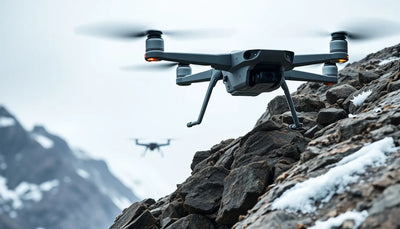
Kratos ARAV-B Target Drone Used in Pacific Dragon 2026 Exercise
Kratos announced its ARAV-B ballistic missile target was successfully used during the multinational Pacific Dragon 2026 exercise, according to reporting from Yahoo Finance. The development highlights growing demand for high-performance aerial targets in allied training programs and defense procurement.

Quick answer
Kratos Defense & Security Solutions announced its ARAV-B ballistic missile target was successfully utilized during the multinational Pacific Dragon 2026 exercise, according to a Yahoo Finance report.
- The announcement came from Kratos on September 9, 2026, via GlobeNewswire.
- The exercise involved U.S. Navy and allied partner forces in the Pacific region.
- The ARAV-B served as a ballistic missile target for training or test purposes.
- The report indicates continued defense procurement demand for aerial target systems.
Evidence: Source material · Defense.gov official source
Fleet readiness
Keep DJI hardware available without overbuying new units.
Use defense and fleet news as a planning signal for repair support, inspected pre-owned aircraft, and replacement timing.

Verified facts
What the available evidence confirms
| Entity | Role | Reported Detail |
|---|---|---|
| Kratos Defense & Security Solutions | Defense technology company | Announced ARAV-B target use in Pacific Dragon 2026 |
| ARAV-B | Ballistic missile target | Successfully utilized during multinational exercise |
| U.S. Navy | Exercise participant | Named in source reporting on Pacific Dragon 2026 |
| Pacific Dragon 2026 | Multinational exercise | Held in the Pacific region with U.S. allies and partners |
Kratos Defense & Security Solutions, Inc. announced on September 9, 2026 that its ARAV-B ballistic missile target was successfully utilized during the multinational Pacific Dragon 2026 exercise, according to reporting from Yahoo Finance. The announcement, distributed through GlobeNewswire, highlights the company's continued role in supplying aerial target systems for naval and allied training operations in the Pacific region.
The Pacific Dragon exercise brings together U.S. Navy forces with allied and partner nations, and the reported use of the ARAV-B points to steady demand for realistic threat-representative targets in high-end maritime training scenarios. For defense suppliers, target drone programs are a recurring revenue area tied directly to readiness cycles and multinational exercise calendars.
What the ARAV-B announcement actually shows
The source report identifies the ARAV-B as a ballistic missile target that was successfully utilized during Pacific Dragon 2026. Kratos, traded on Nasdaq under the ticker KTOS, described the event through its San Diego headquarters. The U.S. Navy published related exercise coverage, and the announcement included a Navy photo link documenting the multinational activity.
What the announcement does not include is equally important for readers tracking defense programs. The source does not specify the number of ARAV-B units flown, the launch location, the intercept outcome, or the specific allied participants involved in the ARAV-B portion of the exercise. Reboot Hub analysis views the announcement as a program visibility signal rather than a detailed operational disclosure, which is typical for ballistic missile target work where test parameters remain sensitive.
Why aerial target demand matters for defense supply chains
Aerial target systems occupy a distinct niche in defense procurement. Unlike operational unmanned aircraft, target drones are expendable by design and must be produced in quantities sufficient to support repeated training evolutions. The ARAV-B serves a ballistic missile threat-representation role, meaning it must fly profiles that mimic hostile missile trajectories well enough to challenge shipboard and regional air defense systems.
For fleet planners and defense procurement analysts, the Pacific Dragon 2026 usage suggests that Kratos target systems remain integrated into allied exercise planning. Multinational exercises typically involve coordinated scheduling, range safety approvals, and logistics support across multiple navies. A successful target utilization in that environment reinforces supplier credibility, but the source report does not provide contract values, delivery timelines, or follow-on procurement commitments.
What this means for drone owners and the market
Commercial drone operators and pre-owned DJI buyers are not directly affected by a ballistic missile target announcement, but the underlying market signals deserve attention. Defense target programs absorb engineering talent, composite materials, propulsion components, and flight-control expertise that overlap with the broader unmanned systems supply base. When defense target production scales up, suppliers may prioritize military contracts over commercial component deliveries, creating lead-time pressure in adjacent drone hardware markets.
For repair customers and fleet managers, the practical takeaway is to watch defense-driven component demand as a potential supply chain variable. Reboot Hub analysis does not suggest immediate parts shortages for consumer or enterprise drones based on this single announcement, but sustained growth in expendable target production can influence the availability of shared components such as flight controllers, telemetry radios, and composite airframe materials. Readers evaluating pre-owned DJI inventory or planning repair part purchases can use the Drone Wiki to check model-specific maintenance and parts guidance before making procurement decisions. For owners evaluating service and lifecycle risk, Drone Wiki explains the relevant repair, parts, resale, or operational path.
The second-order market effect is confidence. Defense suppliers that demonstrate successful performance in multinational exercises tend to attract follow-on orders, which supports stable revenue for publicly traded unmanned systems companies. For commercial operators, a healthy defense unmanned sector can accelerate technology transfer into civilian applications over time, particularly in areas like autonomous flight logic, sense-and-avoid systems, and long-endurance propulsion.
Reading the Pacific Dragon 2026 signal carefully
Pacific Dragon 2026 is a multinational exercise involving the U.S. Navy and allied partners in the Pacific region, as indicated by the source material. The exercise name itself signals a focus on integrated air and missile defense, where realistic target presentation is essential for meaningful training. Kratos positioning the ARAV-B within that context suggests the company is competing for visibility in the high-end threat-representation segment.
Investors and defense market watchers should treat the announcement as a milestone disclosure rather than a financial event. The source does not include revenue figures, margin guidance, or backlog updates tied to the ARAV-B. Reboot Hub analysis recommends tracking subsequent Kratos filings and Navy exercise reports for any indication of expanded target system procurement or new allied customer interest.
FAQ
Frequently asked questions
What is the Kratos ARAV-B?
The ARAV-B is a ballistic missile target system developed by Kratos Defense & Security Solutions. According to the source report, it was successfully utilized during the Pacific Dragon 2026 exercise to support multinational training activity.
Does this announcement affect commercial drone buyers?
There is no direct impact on consumer or enterprise drone buyers from this announcement. However, defense target production can influence shared component supply chains over time, and operators tracking parts availability should monitor defense procurement trends.
Where can I find maintenance and parts information for my drone?
Reboot Hub maintains a Drone Wiki with model-specific maintenance and parts guidance. The resource is available at the linked Drone Wiki page and is designed to help owners and repair customers make informed decisions.
Which sources support this update?
The visible evidence links identify Source material and Defense.gov official source; each source is used only for the claim it directly supports.
What remains subject to change?
Retail pricing, availability, product bundles and regulatory timelines can change. Readers should verify the latest terms with the named retailer, manufacturer or regulator before acting.
How should buyers or operators use this analysis?
Use the verified facts as a starting point, then compare mission fit, lifecycle support, maintenance needs and current procurement terms before making a purchase or fleet decision.
Sources consultées
- Yahoo Finance market report - primary source
Aucune documentation officielle supplémentaire n'était disponible au moment de la publication.
Reboot Hub Editorial propose des analyses d'achat, de réparation, de revente et d'exploitation pour les propriétaires de drones. Si vous constatez une erreur, contactez-nous pour une demande de correction conformément à notre politique éditoriale.