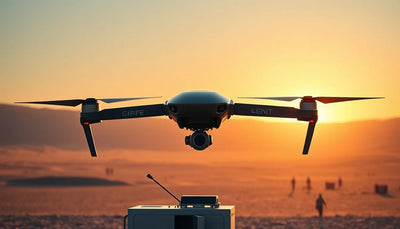
Kongsberg picks northern Poland for counter-drone production plant
Norway's Kongsberg will build a new production facility for counter-drone systems in northern Poland, according to Defense News. The move signals growing European demand for anti-UAS capability and could reshape procurement and supply-chain expectations for defense and commercial drone operators.

Quick answer
Norway's Kongsberg has decided to build a new production facility for counter-drone systems in northern Poland, according to Defense News.
- The plant will focus on counter-drone system production
- The facility will be located in northern Poland
- The move reflects growing European demand for anti-UAS capability
- Defense News reported the decision on October 13, 2026
Evidence: Defense News · AeroVironment unmanned systems solutions · Defense.gov official source
Fleet readiness
Keep DJI hardware available without overbuying new units.
Use defense and fleet news as a planning signal for repair support, inspected pre-owned aircraft, and replacement timing.

Norway's Kongsberg has decided to build a new production facility for counter-drone systems in northern Poland, according to a report published by Defense News on October 13, 2026. The decision marks another step in the expansion of European counter-UAS manufacturing capacity as demand for systems that can detect, track, and neutralize unauthorized drones continues to rise across the continent.
The report does not specify the exact city, production capacity, investment value, or expected completion date for the new plant. What is clear is that Kongsberg, a major Nordic defense and technology group, is committing physical production footprint to a region that has become a focal point for European security and defense industrial planning. For commercial drone operators, fleet managers, and buyers watching the defense-adjacent drone market, the announcement is a signal worth tracking.
What the source reports about the Kongsberg decision
According to Defense News, the Norwegian company has decided to build a new production facility for counter-drone systems in northern Poland. The reporting is source-limited, meaning the central development should be attributed directly to the named primary reporting source rather than to an official Kongsberg statement or Polish government confirmation. No additional official verification was available for this article.
The source does not provide details on which counter-drone product lines would be manufactured at the new Polish plant. Kongsberg's broader portfolio includes defense electronics, remote weapon stations, air defense systems, and maritime technologies, but the report focuses specifically on counter-drone systems as the intended output. Without verified spec context, no technical performance figures, detection ranges, or system capabilities should be assumed for the planned facility.
Northern Poland has emerged as a strategically relevant location for defense manufacturing in recent years. The region offers proximity to Baltic security concerns, established industrial logistics, and access to European Union and NATO procurement channels. For a Norwegian company, placing production capacity in Poland also aligns with broader patterns of defense industrial cooperation among Nordic and Central European states.
Why European counter-drone capacity is expanding
The Kongsberg decision fits a wider trend of European governments and defense contractors investing in counter-UAS technology. Unauthorized drone activity near airports, critical infrastructure, military installations, and public events has pushed regulators and security agencies to prioritize detection and mitigation systems. Defense News has consistently covered this shift, and the reported Polish plant represents a supply-side response to that demand.
For commercial drone operators, the growth of counter-drone infrastructure carries practical implications. Airspace awareness systems, geofencing enforcement, and anti-UAS sensors are becoming more common around sensitive sites. Operators flying near ports, energy facilities, government buildings, or large public venues should expect more frequent encounters with counter-drone detection equipment. Understanding where and how these systems are deployed can help pilots plan routes, avoid restricted zones, and reduce the risk of operational disruption.
Reboot Hub analysis suggests that the expansion of European counter-UAS manufacturing could also influence procurement timelines for security-focused buyers. If production capacity increases in Poland, European customers may see shorter lead times for certain counter-drone systems compared with suppliers dependent on non-European manufacturing. However, this remains an analytical observation rather than a verified fact from the source.
What this means for drone owners and the market
The reported Kongsberg plant is primarily a defense and security story, but it has secondary effects on the broader drone economy. Counter-drone investment tends to rise alongside public concern about rogue or unauthorized drone operations. That concern can shape regulation, airspace restrictions, and enforcement behavior, all of which affect commercial pilots and fleet planning. Buyers evaluating enterprise drone programs should monitor how counter-UAS policy evolves in Europe, since stricter enforcement environments can change where and how drones may operate.
For owners of pre-owned DJI drones and other commercial platforms, the practical takeaway is to stay current on airspace restrictions and counter-drone deployment zones. A drone that operates legally in one area may face detection or mitigation measures in another, particularly near defense sites or critical infrastructure. Pilots who fly for inspection, mapping, or security work should build route planning around known restricted zones and verify local rules before each mission. Reboot Hub's Drone Wiki is a useful reference point for operators who want to keep operational guidance and airspace considerations in one place. For owners evaluating service and lifecycle risk, Drone Wiki explains the relevant repair, parts, resale, or operational path.
Reboot Hub analysis: The second-hand drone market may feel indirect effects if counter-drone enforcement becomes more visible in Europe. Stricter detection environments can push some casual operators out of the market, while professional operators who invest in compliance and route planning are more likely to continue flying. That dynamic could support sustained demand for inspected pre-owned DJI drones among commercial users who need capable platforms without the full price of new enterprise hardware.
What buyers and fleet managers should watch next
The most important next step is to watch for official confirmation from Kongsberg or Polish authorities regarding the plant's location, timeline, and production scope. Defense News provided the initial report, but source-limited reporting means key operational details remain unverified. Buyers and fleet managers should avoid making procurement decisions based on assumptions about capacity, product lines, or delivery dates that have not been officially confirmed.
Reboot Hub analysis: Commercial operators should also track whether the new facility signals broader European investment in counter-drone export capacity. If Kongsberg or other European manufacturers increase production, some counter-UAS systems could become more accessible to non-military buyers such as airport operators, event security firms, and critical infrastructure managers. That could create new market opportunities for drone service providers who understand both drone operations and the security systems designed to monitor them.
For repair and maintenance businesses, the counter-drone expansion is a reminder that the drone ecosystem now includes both flying platforms and the ground-based systems that monitor them. While Reboot Hub focuses on DJI repair and pre-owned drone support, the broader market shift toward integrated airspace security could eventually influence how commercial operators think about fleet uptime, compliance documentation, and mission planning. Operators who treat airspace awareness as part of their operational toolkit will be better positioned as European counter-UAS infrastructure matures.
FAQ
Frequently asked questions
What did Kongsberg announce?
According to Defense News, Kongsberg has decided to build a new production facility for counter-drone systems in northern Poland. The report did not specify the exact location, investment value, or completion timeline.
Why does this matter for commercial drone operators?
Expanding European counter-drone production signals that detection and mitigation systems are becoming more common near sensitive sites. Commercial pilots should expect more airspace monitoring and should plan routes carefully to avoid restricted or enforced zones.
Should drone buyers change their plans because of this report?
Not immediately. The report is source-limited and lacks official confirmation of production details. Buyers and fleet managers should monitor for official Kongsberg or Polish government statements before making procurement or operational changes.
Which sources support this update?
The visible evidence links identify Defense News and AeroVironment unmanned systems solutions and Defense.gov official source; each source is used only for the claim it directly supports.
What remains subject to change?
Retail pricing, availability, product bundles and regulatory timelines can change. Readers should verify the latest terms with the named retailer, manufacturer or regulator before acting.
How should buyers or operators use this analysis?
Use the verified facts as a starting point, then compare mission fit, lifecycle support, maintenance needs and current procurement terms before making a purchase or fleet decision.
Sources consultées
- Defense News - primary source
- AeroVironment unmanned systems solutions - official company source
- Defense.gov official source - official government source
Reboot Hub Editorial propose des analyses d'achat, de réparation, de revente et d'exploitation pour les propriétaires de drones. Si vous constatez une erreur, contactez-nous pour une demande de correction conformément à notre politique éditoriale.