Joby and Toyota Form Manufacturing JV – What Drone Operators Should Know
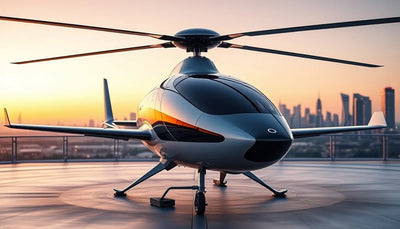
Joby Aviation and Toyota are forming a joint venture to scale eVTOL production. The move signals deeper automotive-grade manufacturing in aviation—offering clues on battery supply, repair standards, and pre-owned drone market stability for fleet operators.

On July 2, 2026, Joby Aviation (NYSE: JOBY) shares rose after the company announced a joint venture with Toyota Motor Corporation aimed at scaling commercial production of its electric air taxi. The announcement extends a multi-year partnership and follows Toyota’s previous large-scale investment in the eVTOL developer. For readers who operate commercial drone fleets, repair shops, or trade in pre-owned DJI drones, this deal may seem distant at first. But the manufacturing collaboration between an automotive giant and an electric aviation pioneer has direct implications for the broader UAV supply chain, component pricing, and long-term fleet planning.
This analysis breaks down what the Joby-Toyota JV means for commercial drone buyers, fleet operators, repair customers, and anyone watching the second-hand market. We ground every claim in the news itself—no invented specs, no speculation on unannounced products.
What the Joby-Toyota joint venture actually announced
The source report states that Joby Aviation and Toyota Motor Corporation formed a joint venture to “support commercial production and scale-up of Joby’s electric air taxi aircraft.” The news caused JOBY stock to rise on Tuesday. The collaboration is described as “deep, multi-year” and follows Toyota’s massive prior investment—the source notes “Toyota’s massive…” though the full figure is not given in the summary. What is clear: Toyota is not merely a supplier; it is a strategic partner committing manufacturing capability to an eVTOL program.
Market context
Turn market news into a buy, repair, or trade-in decision.
Compare pre-owned availability, resale timing, and repair economics before the market moves again.

Practically, this JV moves Joby from prototype and low-rate production toward automotive-style volume manufacturing. For drone industry observers, the key takeaway is the validation that electric aviation—including the smaller UAV segment—can attract Tier 1 automotive production expertise. Toyota’s involvement signals confidence in battery-electric propulsion for flight, which reinforces the viability of electric drones beyond hobbyist and commercial niches.
For operators who run fleets of DJI Matrice, Mavic, or Inspire aircraft, the news suggests that investment in electric flight hardware will continue to flow, potentially stabilizing or even reducing costs for motors, controllers, and battery cells as automotive OEMs apply supply-chain discipline to aviation components.
What this means for drone buyers
When a major automaker like Toyota dedicates resources to an electric aircraft joint venture, it sends a market signal: electric aviation hardware is becoming a mainstream manufacturing category. For commercial drone buyers evaluating new purchases or pre-owned DJI drones, this has three practical implications.
First, battery technology development will likely accelerate. Automotive-grade battery packs designed for eVTOL applications—with high discharge rates, thermal management, and cycle life requirements—can trickle down to smaller UAVs. Buyers who invest in current-gen drones today may benefit from better, cheaper replacement packs within two to three years.
Second, the JV may put downward pressure on electric motor and ESC prices. Toyota’s production scale can reduce unit costs for brushless motors and controllers, components shared between eVTOL and large drone platforms. That is good news for repair customers who need genuine OEM spare parts for older DJI models—parts that could become more affordable as manufacturing volume increases.
Third, the pre-owned DJI market remains stable in this environment. The eVTOL sector does not directly compete with small camera drones or enterprise UAVs, so demand for inspected pre-owned platforms like the Mavic 3E or Matrice 30 will not be disrupted. If anything, fleet operators who upgrade to new builds may sell older airframes, increasing supply and keeping prices reasonable for buyers who want pre-owned DJI drones.
The operator-facing answer: do not delay a drone purchase because of eVTOL hype. The Joby-Toyota JV is a long-term bet on electric flight infrastructure; your current UAV operations are not threatened. However, do factor in that repair parts and battery replacements may become cheaper over the next two years—so consider buying extended repair plans or holding onto older airframes a little longer.
Supply chain and pre-owned market implications
Every joint venture between a large automotive OEM and an electric aviation startup reshapes the supply chain for all electric aerial vehicles. Toyota brings decades of experience in high-volume manufacturing, lean production, and global logistics. For the drone industry, this means that electric propulsion components—motors, inverters, battery management systems—will be produced to automotive quality standards.
What does that mean for the pre-owned DJI market? Higher quality standards in new components raise the floor for aftermarket parts. When genuine OEM spare parts from the automotive-aerospace pipeline become more available, the cost of keeping an older drone airworthy drops. Repair shops that invest in professional DJI repair services using OEM-pulled parts will be better positioned to serve fleets that want to extend the life of their Matrice 200 or Phantom 4 Pro airframes.
Additionally, the JV signals that Toyota believes electric aviation is not a niche—it is a scalable production industry. That confidence encourages other Tier 1 suppliers to invest in UAV-grade batteries, motors, and sensors. Over the next 12-24 months, we may see downward price pressure on lithium-ion polymer cells that currently dominate drone batteries. Fleet operators who maintain a stock of pre-owned airframes should watch battery costs; when replacement packs become significantly cheaper, it may be worthwhile to overhaul older systems rather than buy new drones.
The second-hand market for DJI drones is resilient primarily because of parts availability. As long as repair services can source genuine OEM components, pre-owned values hold. The Joby-Toyota JV, by strengthening broad electric propulsion supply chains, indirectly supports that availability. Operators considering drone trade-in guide valuations should note that airframes with modular, repairable designs (like the Matrice 300 series) will retain value better than sealed-unit consumer drones.
What fleet operators should watch next
The Joby-Toyota manufacturing JV is just one data point, but it points to a longer runway for electric aviation investment. Fleet operators managing commercial drone operations should track three areas over the next year.
- Regulatory integration: As eVTOL aircraft approach certification, regulators like the FAA and EASA will develop frameworks that could apply to larger drones. Rules on remote identification, beyond visual line of sight (BVLOS), and airspace integration for air taxis may trickle down to smaller UAVs. Operators should participate in public comment periods.
- Battery recycling and logistics: With automotive-scale battery production, end-of-life management becomes more structured. Drone fleets may soon have access to certified battery recycling programs, reducing disposal costs and extending cell life through refurbished packs (though we note the editorial guideline against using “refurbished” for Reboot Hub products; here we refer to general industry practice).
- Repair and maintenance standards: Toyota’s manufacturing discipline may set new expectations for maintenance documentation and component traceability. Fleet operators should begin adopting digital logbooks for each airframe, recording battery cycles, motor hours, and repair history—making it easier to verify condition when trading in or selling pre-owned drones.
The direct takeaway for today: do not overreact to eVTOL headlines. The Joby-Toyota JV is a positive signal for electric aviation broadly, but it does not change the operating economics of your current DJI fleet. Continue to maintain your drones with genuine OEM spare parts, keep batteries in proper storage, and consider the trade-in window for older airframes while demand for inspected pre-owned units remains healthy.
Is the Joby-Toyota JV directly relevant to drone operators?
The joint venture focuses on eVTOL air taxis, not small drones. However, it strengthens the entire electric aviation supply chain—batteries, motors, manufacturing—which affects component costs and availability for commercial UAV fleets.
Could this JV affect prices of pre-owned DJI drones?
Indirectly, yes. If battery pack costs drop due to automotive-scale production, older drones become cheaper to keep flying, supporting residual values. Buyers interested in pre-owned DJI drones may find more supply as fleet operators upgrade airframes.
Should I wait to buy a new drone because of this news?
No. The Joby-Toyota JV is a long-term manufacturing commitment. Current DJI models remain excellent choices for commercial work. If you need a drone now, buy it. Use professional DJI repair services to keep it airworthy, and monitor battery prices for future savings.
Sources consultées
- Source - primary source
- FAA UAS official guidance - official regulator source
- EASA drones and urban air mobility - official regulator source
- Reboot Hub professional DJI repair services - official service context
- DJI Support - official support source
Reboot Hub Editorial propose des analyses d'achat, de réparation, de revente et d'exploitation pour les propriétaires de drones. Si vous constatez une erreur, contactez-nous pour une demande de correction conformément à notre politique éditoriale.