HoverAir Versa turns a pocket gimbal camera into a follow-me drone
HoverAir unveiled Versa, a pocket gimbal camera that snaps on propeller modules to become a self-flying AI camera. The hybrid design could reshape how creators and small fleets think about aerial gear.

HoverAir has introduced a product that challenges a long-standing assumption in the creator economy: that you need separate devices for ground-level gimbal shots and aerial follow-me footage. The Versa, unveiled today, is a pocket-sized handheld gimbal camera that can transform into a self-flying AI camera when users attach snap-on propeller modules. The announcement, reported by DroneDJ, positions the Versa as a dual-purpose tool for creators who have historically had to pack both a pocket camera and a drone to cover a shoot.
For commercial operators and serious hobbyists, the Versa is more than a novelty. It represents a design philosophy that could influence purchasing decisions, fleet composition, and even the second-hand market for dedicated camera drones. Instead of asking buyers to choose between portability and aerial capability, HoverAir is betting that a single device with modular propulsion can satisfy both needs. The concept is straightforward, but its implications for how operators plan gear, budget for repairs, and evaluate pre-owned equipment are worth examining closely.
The hybrid form factor and what it changes
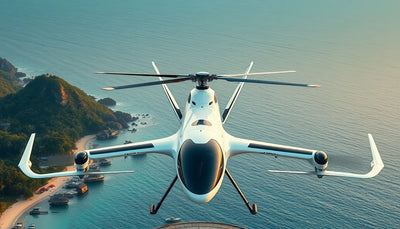
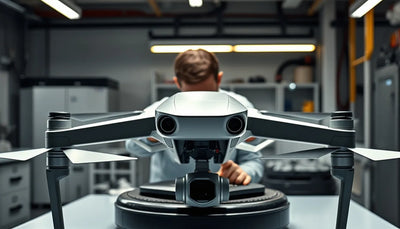
The core of the Versa is a handheld gimbal camera, a category that has become popular among solo creators and small production teams for its stability and ease of use. What sets the Versa apart is its ability to accept snap-on propeller modules, converting the handheld unit into a self-flying AI camera. This is not a drone that folds into a camera; it is a camera that becomes a drone when the operator needs aerial coverage.
DJI buying context
Match product news to hardware you can actually deploy.
Check inspected DJI aircraft, repair support, and trade-in timing before deciding whether to upgrade, repair, or wait.

This design choice has practical consequences. For a solo operator covering an event, a hike, or a real estate walkthrough, the Versa eliminates the need to carry two separate devices with separate batteries, chargers, and storage cases. The same gimbal that provides smooth ground footage can be fitted with propellers for a follow-me shot, then stripped back down for handheld work. That reduces the physical load and simplifies the pre-flight checklist.
For fleet managers, the hybrid concept raises a different question: does a modular device like this reduce the total cost of ownership compared to maintaining a dedicated handheld gimbal and a separate drone? The answer depends on how often each capability is used. An operator who shoots mostly ground-level content with occasional aerial inserts may find the Versa more efficient. A team that needs sustained aerial coverage for mapping or inspection will still require a dedicated aircraft with appropriate payload capacity.
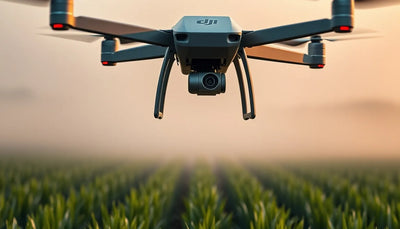
The follow-me AI camera positioning is also significant. HoverAir has built its reputation on follow-me drones, and the Versa extends that functionality into a device that does not need to be launched from a dedicated controller. The self-flying mode is designed to track the user, which suits solo creators, outdoor athletes, and small production crews that lack a dedicated drone pilot.
What this means for drone buyers
For buyers evaluating the Versa, the first consideration is whether a hybrid device can replace an existing camera drone in their kit. The Versa is not positioned as a high-altitude, long-range aerial platform. It is a self-flying AI camera, which suggests a focus on close-range, follow-me scenarios rather than cinematic flyovers or complex automated flight paths. Operators who primarily need those advanced capabilities should not assume the Versa replaces a dedicated drone.
The second consideration is workflow integration. A device that serves as both a handheld gimbal and a drone requires the operator to manage two distinct modes of operation. The physical transformation is simple, but the mental model for planning a shoot changes. You are no longer deciding whether to bring the drone; you are deciding whether to attach the propellers. That shift can simplify logistics for solo creators, but it also means the device must be reliable in both configurations.
Reboot Hub analysis: For buyers in the pre-owned market, the Versa introduces a new variable. As hybrid devices gain traction, they may affect demand for older, dedicated camera drones. Operators who want a compact, all-in-one solution may choose the Versa over a used DJI Mini or a similar lightweight drone. This could soften resale values for entry-level camera drones, while demand for higher-end models with specialized capabilities is likely to remain stable.
Repair considerations also change with a modular design. The snap-on propeller modules are a separate component from the gimbal camera body, which means damage to one part does not necessarily require replacing the entire unit. For buyers who prefer pre-owned DJI drones, this modularity is a reminder that repair costs depend heavily on how components are packaged. A device with separable propulsion and camera systems may offer more cost-effective repair paths than a fully integrated drone.
Commercial and fleet implications
Small production companies and solo commercial operators are the most obvious beneficiaries of the Versa concept. A real estate photographer who needs a quick aerial exterior shot and a stable interior walkthrough could use a single device for both. A wedding videographer covering an outdoor ceremony and a reception could transition from aerial follow-me footage to handheld gimbal work without switching devices.
Reboot Hub analysis: For larger fleets, the Versa is less likely to become a primary tool. Enterprise operations that require thermal imaging, RTK positioning, or heavy payload delivery will continue to rely on specialized aircraft. However, the Versa could serve as a secondary or backup unit for quick content capture, reducing the need to deploy a full-size drone for simple follow-me shots.
The modular approach also has implications for maintenance planning. A fleet that standardizes on hybrid devices needs spare propeller modules and a clear understanding of how the gimbal camera performs after repeated attachment cycles. The connection point between the camera body and the propeller modules is a potential wear point, and operators should factor that into their maintenance schedules. For those who rely on professional DJI repair services, the lesson is that modular designs can simplify repairs, but only if replacement modules are readily available.
Battery management is another operational consideration. A device that functions as both a camera and a drone draws power differently in each mode. Operators will need to understand how battery life changes when the propeller modules are attached, and whether the device supports hot-swapping between modes. These details were not disclosed in the announcement, but they will be critical for commercial users planning multi-hour shoots.
Market positioning and the pre-owned angle
HoverAir's move into the hybrid category is a direct response to the inconvenience of carrying multiple devices. The company already has a foothold in the follow-me drone segment, and the Versa extends that expertise into a form factor that competes with pocket gimbals and lightweight camera drones. The announcement does not include pricing or availability details, so it is too early to assess the Versa's value proposition against established options.
For the pre-owned market, the Versa's arrival could influence buyer behavior in two ways. First, creators who want a single-device solution may sell their dedicated camera drones to fund a Versa purchase. This could increase the supply of pre-owned lightweight drones, creating opportunities for budget-conscious buyers. Second, operators who already own a reliable camera drone may see no reason to switch, keeping demand for used DJI hardware steady.
Operators considering a trade-in should evaluate how often they actually use aerial footage. If the answer is occasional, a hybrid device like the Versa may be a better fit than a dedicated drone that spends most of its time in a case. The drone trade-in guide is a useful starting point for owners who are thinking about consolidating their gear. The key is to calculate the real cost of maintaining two devices versus one, including storage, batteries, and repair exposure.
The Versa also highlights a broader trend in consumer and prosumer drones: the convergence of ground and aerial capture. As manufacturers push toward multi-functional devices, the distinction between a camera and a drone becomes less clear. For buyers, this means more options but also more complexity in choosing the right tool. The Versa is a notable step in that direction, and its success will depend on execution, pricing, and reliability in both modes.
Is the HoverAir Versa a replacement for a dedicated camera drone?
For close-range follow-me shots and hybrid ground-aerial workflows, the Versa may replace a lightweight camera drone. For sustained aerial coverage, mapping, or payload work, a dedicated drone remains necessary. The Versa is best understood as a versatile addition rather than a universal substitute.
How does the Versa affect the pre-owned DJI drone market?
Reboot Hub analysis: The Versa could increase the supply of pre-owned lightweight camera drones as creators consolidate their gear into a single hybrid device. Demand for higher-end DJI models with specialized capabilities is likely to remain stable, since the Versa does not target those use cases.
What should operators consider before buying the Versa?
Operators should evaluate how often they need aerial footage, how the battery performs in each mode, and whether the snap-on propeller modules are durable enough for repeated use. Repair costs and module availability will also matter for long-term ownership, especially for commercial users who depend on reliable equipment.
Sources consultées
- DroneDJ - primary source
- DJI official product information - official company source
- DJI Support - official support source
Reboot Hub Editorial propose des analyses d'achat, de réparation, de revente et d'exploitation pour les propriétaires de drones. Si vous constatez une erreur, contactez-nous pour une demande de correction conformément à notre politique éditoriale.
Cet article constitue un commentaire de marché destiné aux exploitants et acheteurs de drones et ne constitue pas un conseil en investissement. Reboot Hub ne fournit aucun conseil financier et ne recommande aucune transaction sur titres.