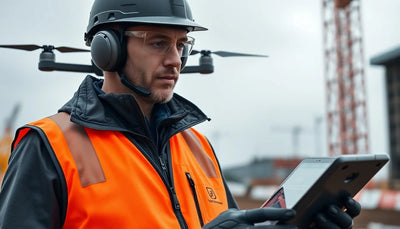
General Dynamics Shows Wolf XM30 and Counter-Drone Tech at AUSA
General Dynamics Land Systems is showing a 1/8 model of its Wolf XM30 Bradley replacement candidate and new counter-drone systems at AUSA this week. The display signals where tracked vehicle and counter-UAS procurement priorities are heading for defense buyers and adjacent commercial operators.

Quick answer
General Dynamics Land Systems is showcasing a 1/8 model of the Wolf XM30, its candidate to replace the M2 Bradley, alongside new counter-drone systems at AUSA this week.
- The Wolf XM30 is General Dynamics Land Systems' candidate for the M2 Bradley replacement program.
- The display includes a 1/8 scale model rather than a full-size vehicle.
- New counter-drone systems are being shown at the same event.
- The announcement was reported by Defense News on October 13, 2026.
Evidence: Defense News · AeroVironment unmanned systems solutions · Defense.gov official source
Fleet readiness
Keep DJI hardware available without overbuying new units.
Use defense and fleet news as a planning signal for repair support, inspected pre-owned aircraft, and replacement timing.

Verified facts
What the available evidence confirms
| Item | Detail | Source |
|---|---|---|
| Wolf XM30 | General Dynamics Land Systems candidate to replace M2 Bradley | Defense News |
| Display format | 1/8 scale model at AUSA | Defense News |
| Additional systems | New counter-drone systems showcased | Defense News |
| Event | AUSA, week of October 13, 2026 | Defense News |
General Dynamics Land Systems is using this week's Association of the United States Army (AUSA) gathering to showcase the Wolf XM30, the company's candidate to replace the M2 Bradley infantry fighting vehicle, according to reporting by Defense News. The display includes a 1/8 scale model of the vehicle rather than a full-size prototype, a practical choice for an indoor trade show floor where floor space and logistics constrain what manufacturers can present. Alongside the Wolf XM30, the company is also showing new counter-drone systems, signaling that tracked vehicle modernization and counter-UAS capability are being presented as connected parts of the same procurement conversation.
The AUSA event has long been a venue where defense contractors preview hardware concepts to military buyers, lawmakers, and industry analysts. What makes this particular display notable is not just the vehicle itself, but the pairing of a major ground combat platform with counter-drone systems. That combination reflects a broader shift in how militaries are thinking about battlefield protection and vehicle survivability. For commercial drone operators and the wider unmanned systems market, defense counter-drone development often trickles into adjacent technology areas, including detection, electronic warfare, and airspace awareness tools that eventually influence civilian and enterprise applications.
What the Wolf XM30 display actually shows
According to the Defense News report, General Dynamics Land Systems is presenting a 1/8 scale model of the Wolf XM30 at AUSA. The Wolf XM30 is described as the company's candidate to replace the M2 Bradley, a tracked infantry fighting vehicle that has been in U.S. Army service for decades. The use of a scale model rather than a full vehicle is not unusual for early-stage defense programs, where full prototypes may still be in testing or where transport and display costs make a reduced-scale representation more practical for a trade show environment.
The M2 Bradley replacement effort has been one of the more closely watched ground vehicle programs in recent years, with multiple defense contractors competing for a long-term production role. While the Defense News report does not provide detailed specifications for the Wolf XM30, the very fact that General Dynamics Land Systems is publicly attaching the Wolf name to the XM30 designation suggests the company is positioning the platform as a serious contender in the program. For readers outside the defense procurement world, the practical takeaway is that major ground vehicle programs are moving forward even as attention often focuses on drones and autonomous systems.
Counter-drone systems enter the same conversation
The Defense News report also notes that General Dynamics Land Systems is showcasing new counter-drone systems at AUSA alongside the Wolf XM30 model. The source does not provide detailed specifications, model names, or performance figures for these counter-drone systems, so specific capabilities should not be inferred. What is clear is that a major defense contractor is choosing to present counter-UAS technology in the same exhibition space as a next-generation armored vehicle, which suggests an integrated approach to survivability.
Counter-drone technology has become a priority for military forces operating in environments where inexpensive unmanned aerial systems can pose significant threats to armored vehicles, logistics convoys, and fixed positions. The pairing of counter-drone systems with a tracked vehicle program is commercially relevant because it indicates that protection against small drones is being treated as a core requirement rather than an afterthought. For commercial drone operators, this matters because defense investment in detection and mitigation technology can accelerate the development of sensors, signal analysis tools, and airspace monitoring systems that later appear in civilian or enterprise form.
What this means for drone owners and the market
For commercial drone buyers, fleet operators, and repair customers, the AUSA display is a reminder that defense procurement cycles influence the broader unmanned systems ecosystem in indirect but meaningful ways. Counter-drone development funded by military programs often drives advances in radio frequency detection, optical tracking, and electronic countermeasures. Those technologies can eventually shape the regulatory environment, the availability of detection equipment for critical infrastructure, and the types of airspace awareness tools that enterprise drone programs adopt.
Operators who fly DJI platforms or manage pre-owned DJI drones should pay attention to defense counter-UAS activity for one practical reason: the more sophisticated counter-drone systems become, the more likely it is that civilian airspace authorities and infrastructure operators will deploy detection and mitigation tools around sensitive sites. That does not mean commercial operators should expect immediate changes, but it does mean that understanding the direction of counter-UAS investment can help with long-term planning. For those evaluating drone maintenance, spare parts, or fleet expansion decisions, the Reboot Hub team maintains a Drone Wiki that can help operators understand how evolving defense and regulatory trends may intersect with commercial drone ownership and repair planning.
The pre-owned DJI market is also worth watching in this context. If defense and government agencies continue to prioritize counter-drone capabilities, some commercial operators may reassess where and how they fly, particularly near critical infrastructure or during large public events. That can influence demand for certain drone models, the availability of OEM-pulled parts, and the economics of professional repair services. None of this is immediate, but defense trade shows like AUSA often provide early signals about which technology areas will receive sustained funding and attention over the next several years. For owners evaluating service and lifecycle risk, Drone Wiki explains the relevant repair, parts, resale, or operational path.
What buyers and operators should watch next
Reboot Hub analysis: The most useful next step for a commercial operator or drone buyer is to monitor whether the counter-drone systems shown at AUSA generate follow-on announcements, contract awards, or more detailed technical disclosures. Defense News is likely to provide additional coverage if General Dynamics Land Systems releases specifications or if military officials comment on the Wolf XM30 program. For now, the source-limited nature of the report means that specific capabilities, timelines, and procurement outcomes remain uncertain.
Fleet managers and repair customers should also note that defense trade show activity rarely translates directly into commercial product changes overnight. However, sustained investment in counter-UAS technology can influence the regulatory conversation around drone operations, particularly in urban areas and near sensitive facilities. Operators who stay informed about these developments are better positioned to make decisions about fleet composition, maintenance schedules, and where to allocate budget for detection or compliance tools. The practical action after reading this report is to treat the AUSA display as an early indicator of continued defense interest in both ground vehicle modernization and counter-drone capability, and to watch for more detailed technical disclosures in the coming weeks.
FAQ
Frequently asked questions
What is the Wolf XM30?
The Wolf XM30 is General Dynamics Land Systems' candidate to replace the M2 Bradley infantry fighting vehicle, according to Defense News reporting from AUSA. The company is displaying a 1/8 scale model of the vehicle at the event.
What counter-drone systems is General Dynamics showing at AUSA?
General Dynamics Land Systems is showcasing new counter-drone systems at AUSA, according to Defense News. The report does not provide specific model names, technical specifications, or performance details for these systems.
Why should commercial drone operators care about this defense news?
Defense investment in counter-drone technology can influence sensor development, airspace awareness tools, and regulatory approaches that eventually affect commercial drone operations. Monitoring defense trade show activity helps operators anticipate long-term shifts in the unmanned systems market.
Which sources support this update?
The visible evidence links identify Defense News and AeroVironment unmanned systems solutions and Defense.gov official source; each source is used only for the claim it directly supports.
What remains subject to change?
Retail pricing, availability, product bundles and regulatory timelines can change. Readers should verify the latest terms with the named retailer, manufacturer or regulator before acting.
How should buyers or operators use this analysis?
Use the verified facts as a starting point, then compare mission fit, lifecycle support, maintenance needs and current procurement terms before making a purchase or fleet decision.
Sources consultées
- Defense News - primary source
- AeroVironment unmanned systems solutions - official company source
- Defense.gov official source - official government source
Reboot Hub Editorial propose des analyses d'achat, de réparation, de revente et d'exploitation pour les propriétaires de drones. Si vous constatez une erreur, contactez-nous pour une demande de correction conformément à notre politique éditoriale.