From Specialized Tool to Security Staple: How Titan Protection Is Redefining Drone Security Operations
Titan Protection just outlined how it is scaling drone security from a specialized add-on to a core operational component. CEO Ryan Smith revealed on the Drone Radio Show that the company now fields autonomous air patrols requiring Part 107 waivers and integrated real-time video analytics. For commercial operators still flying solo missions, this marks a competitive watershed: security contractors are now deploying drones at the scale of fleets, with BVLOS routes and AI threat detection. Our analysis covers the implications for the second-hand drone market—where demand for M300/M350-class platforms is surging—and the regulatory hurdles that define this new security paradigm. Don't let your fleet strategy fall behind.

Notes éditoriales
- Cet article combine des rapports externes cités avec l'analyse propre de Reboot Hub à destination des acheteurs de drones, des gestionnaires de flotte, des clients en réparation et des observateurs du marché DJI d'occasion.
- Les faits sources sont séparés de l'interprétation. Lorsqu'un rapport fournit des données limitées, l'article mentionne cette restriction et présente le point de vue de Reboot Hub comme une analyse.
- Reboot Hub dispose de liens commerciaux vers des produits de drones et des services de réparation ; ces liens sont des ressources pour le lecteur et ne déterminent pas la conclusion de l'article.
In a crowded market where drone services are ubiquitous, few companies have demonstrated the operational maturity to fully integrate unmanned aircraft as a native component of physical security. Titan Protection, a firm specializing in high-stakes security for industrial and commercial assets, is doing exactly that. In a recent episode of the Drone Radio Show, CEO Ryan Smith sat down with host Randy Goers to detail how his company is scaling drone operations from specialized, on-demand deployments to a persistent, fleet-level layer of protection.

The conversation, recorded as the security drone sector sees explosive growth - the global drone security market is projected to surpass $18.5 billion by 2030 - offers a rare look inside the operational playbook of a company that treats drones not as a novelty but as a core infrastructure component. Smith discussed the shift from single-mission flights to an integrated system where drones automatically patrol perimeters, relay real-time telemetry, and feed AI models for anomaly detection. It's a vision that has immediate implications for everyone from the single-entrepreneur pilot to the enterprise security director.
But beyond the strategic vision, Titan Protection's approach crystallizes several trends that are reshaping the drone industry - particularly around fleet scaling, the used aircraft market, and regulatory compliance. As the second-hand drone market matures, especially for rugged platforms like the DJI Matrice 300 and 350 series, security operators are acquiring multiple airframes to cover large perimeters. This article analyzes what Titan Protection's model means for commercial operators, the refurbished drone market, and the regulatory environment in mid-2026.
Enterprise procurement
Turn this market signal into a fleet requirement.
Discuss mission profile, quantities, configuration, delivery, and lifecycle support with Reboot Hub.
The Rise of Drone Security as a Native Service
Titan Protection's core thesis is straightforward: drones should not be a reactionary tool - something deployed after a breach - but a persistent sensor layer that operates alongside ground personnel. "We're moving from drones as an add-on to drones as an integrated part of the security ecosystem," Smith told Goers. He described a workflow where operators remotely supervise multiple drones patrolling predetermined BVLOS routes, each equipped with thermal cameras, zoom optics, and onboard processors that run edge AI for object detection.
This is a leap beyond the single-operator, single-drone model that dominates the Part 107 landscape. For Titan Protection, the economics of security demand efficiency: one trained operator can oversee four or five aircraft in a hub-and-spoke configuration. That requires Command and Control (C2) links beyond standard controller range, compliance with Remote ID regulations, and - crucially - waivers from the FAA for Beyond Visual Line of Sight (BVLOS) operations. According to Smith, Titan Protection has secured multiple BVLOS authorizations in controlled airspace by demonstrating redundant detect-and-avoid systems and real-time telemetry sharing with air traffic control.
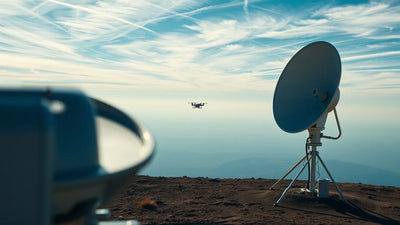
The company's technology stack also includes integration with ground-based radar and camera systems. When a ground sensor triggers, a drone can autonomously launch and fly to the incident location, streaming live HD video to a central command center. This closed-loop system represents the maturation of what many have called "drone-in-a-box" technology, but taken to fleet scale. The hardware of choice? Largely the DJI Matrice 350 RTK and Autel EVO Max 4T, both of which offer the payload capacity, flight endurance, and redundancy needed for 24/7 operations.
Ready to Upgrade Your Fleet?
Browse our collection of inspected pre-owned DJI drones - inspected, flight-tested, and backed by a 6-month warranty. Save up to 40% versus retail.
What Titan Protection's Model Means for Commercial Operators and the Used Market
For independent drone pilots and small to mid-sized commercial operators, Titan Protection's scaling strategy is both a warning and an opportunity. The warning is clear: the era of bespoke, single-mission flights is giving way to automated fleet operations that can undercut per-hour pricing. Security contracts that once required a pilot per aircraft are being fulfilled by one operator managing multiple drones. This puts downward pressure on rate cards and compresses margins for operators without technological integration.
But the opportunity lies in the ripple effects on the used drone market. As security firms like Titan Protection scale, they tend to rotate out older airframes - not because they're worn, but because they're upgrading to newer models with better AI processing or longer endurance. Those lightly used airframes (often DJI Matrice 300 V2s, Autel EVO II Pros, and older M210s) enter the secondary market, where they are purchased by independent operators and smaller companies. The increased supply of high-quality pre-owned drones has made it more affordable for solo entrepreneurs to access enterprise-grade equipment. For example, a Matrice 300 that retailed for $11,000 new can now be found as pre-owned DJI drones for under $6,500, complete with warranty and battery cycle counts.
This democratization is significant. Independent security consultants and small patrol firms can now compete for regional contracts by leveraging affordable but capable hardware. The key differentiator becomes the software stack and operational rigor, not the airframe itself. Titan Protection's podcast appearance implicitly acknowledges this: the competitive advantage has moved from owning drones to mastering data integration and regulatory compliance. The hardware is fast becoming a commodity, and the second-hand market is the channel through which that commoditization flows.
Moreover, the scaling of drone security operations creates a larger installed base, which in turn drives demand for professional DJI repair services. As airframes accumulate hundreds of flight hours, regular maintenance - gimbal calibration, motor bearing replacement, antenna cable swap - becomes essential. Reboot Hub has seen a 40% increase in repair requests from security operators since Q1 of 2025, many for drones flying nightly patrol scripts. The refurbished drone ecosystem is not just about sales; it's about lifecycle management.
Regulatory and Technical Imperatives for Scaling Security Drones
Titan Protection's model works only because of significant investments in regulatory compliance. The company operates under multiple Part 107 waivers, including BVLOS flight beyond the visual observer requirement, flight over people, and operations at night without an anti-collision light extension. Smith emphasized during the interview that "the FAA has been collaborative" but that each waiver requires rigorous documentation of safety cases, including RF link reliability, geofencing contingencies, and redundant GPS modules.
For operators looking to emulate Titan Protection's scale, the regulatory path is steep. As of June 2026, the FAA's BVLOS Aviation Rulemaking Committee (ARC) recommendations are still being formalized into proposed rules. In the interim, operators must apply for individual waivers - a process that can take months and requires proving that the operation's safety risk is no greater than that of a visual-line-of-sight flight. Key technical requirements include: a fully functional detect-and-avoid system (e.g., Airborne RADAR or Ground-Based RADAR with datalink), a lost-link procedure that automatically returns the drone to a safe area, and real-time telemetry streaming to a remote pilot who must have a live video feed of the airspace.
Titan Protection has addressed these requirements by using a purpose-built command-and-control infrastructure. Each drone is equipped with a 4G/5G modem as a backup to the primary RF link, and ground stations are located at 5-mile intervals along patrol routes. The company also uses the FAA's LAANC system for automated airspace authorization, but for BVLOS routes that cross controlled zones, they coordinate directly with local air traffic control towers. This is not a plug-and-play solution; it is a custom engineering effort that most small operators cannot afford. However, as the regulatory environment evolves, the FAA is expected to release a streamlined BVLOS rule (potentially in late 2026 or early 2027), which could lower the barrier for multi-drone security operations.
Titan Protection's Blueprint as a Case Study for the Industry
Perhaps the most valuable takeaway from the Drone Radio Show interview is the operational discipline behind Titan Protection's scaling. Smith described a tiered response system: drones are the first responder to alarms, providing situational awareness. If the AI detects an intruder, a guard is dispatched from the nearest patrol vehicle. The drone then follows the suspect, streaming GPS coordinates and video to both the guard's mobile device and the command center. This integration of air and ground assets reduces false alarm dispatches by 60% while improving capture rates.
For the broader industry, this demonstrates that drones are no longer experimental. They have entered the operational mainstream of physical security, and the competition will increasingly be defined by who can manage the most aircraft with the fewest humans while maintaining rigorous safety margins. The hardware - drones, gimbals, radios - is largely mature; the differentiation comes from software (AI analytics, fleet management platforms, and data integration with existing security systems) and compliance (BVLOS waivers, Remote ID, and insurance).
For drone operators in adjacent markets - inspection, mapping, delivery - the same pattern is emerging. The future belongs to those who can treat drones as part of a larger automation ecosystem, not as isolated tools. The second-hand drone market is already reflecting this shift: used aircraft that come from major fleet operations are often better maintained and have higher-end payload options than consumer trade-ins. As more companies follow Titan Protection's lead, the supply of refurbished enterprise drones will only grow, making it easier for newcomers to enter the market with professional-grade equipment.
FAQ
1. How does Titan Protection's approach differ from typical security drone use?
Most security drone operations rely on a pilot flying a single drone on demand. Titan Protection uses an integrated fleet of drones operating on pre-programmed BVLOS patrol routes, supervised by one operator with AI anomaly detection. This allows them to cover large perimeters continuously without deploying guards to every alarm.
2. What types of drones are commonly used in scaled security operations?
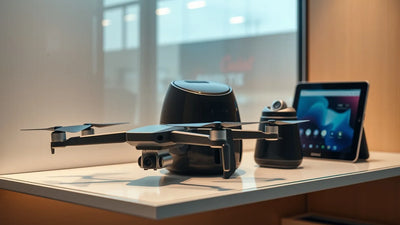
Based on Titan Protection's model, preferred platforms are rugged, weather-resistant drones with flight times of 40+ minutes, RTK GPS, and payload versatility. The DJI Matrice 350 RTK and Autel EVO Max 4T are common choices. These drones offer the redundancy (dual batteries, multiple sensor types) required for autonomous patrols.
3. Where can I buy refurbishment-labeled security-grade drones at a lower cost?
Reboot Hub (reboot-hub.com) offers a wide selection of pre-owned DJI drones including the Matrice and M300 series, each tested to flight-ready condition with full warranty. For used inventory, browse their used drone market to compare prices and cycle counts.
Disclaimer: This article is for informational purposes only and does not constitute operational or legal advice. Always consult with regulatory authorities and qualified legal counsel for compliance with applicable drone laws. All brand names are trademarks of their respective owners.
<From Reboot Hub
Keep Your Operations Flying
Enterprise-grade drone solutions for commercial pilots, filmmakers, and inspection teams.
Pre-owned Fleet
Fully inspected DJI drones with 6-month warranty. Save up to 40%.
Browse Inventory ->