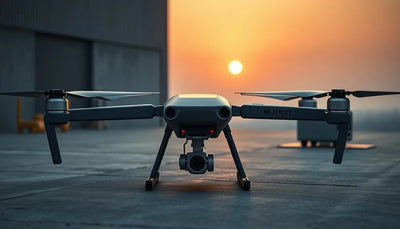
FCC Bars DJI and Autel Components from New US-Built Drones
The FCC will prohibit DJI and Autel components in newly built US drones starting 13 October, according to Camera Jabber. The change could reshape procurement, repair planning, and pre-owned DJI inventory decisions for commercial operators.

Quick answer
The FCC will bar DJI and Autel components from new US-built drones starting 13 October 2026, according to Camera Jabber.
- The restriction applies to new US-built drones, not necessarily existing units already in service.
- Commercial operators may need to reassess procurement and fleet expansion timelines.
- Repair and spare parts sourcing for affected models could face new scrutiny.
- Pre-owned DJI drones already in the US market may see renewed buyer interest.
Verified facts
Operator checklist
Turn policy news into a safer fleet decision.
Before changing aircraft, compare repair paths, available DJI inventory, and trade-in timing against the rule change.

What the available evidence confirms
| Entity | Reported Restriction | Effective Date |
|---|---|---|
| DJI components | Barred from new US-built drones | 13 October 2026 |
| Autel components | Barred from new US-built drones | 13 October 2026 |
Camera Jabber reports that the Federal Communications Commission will bar DJI and Autel components from new US-built drones starting 13 October 2026. The reported move targets components used in newly manufactured drones built in the United States, rather than a blanket ban on existing aircraft already in commercial service.
The development lands at a moment when many commercial operators, public safety agencies, and enterprise fleet managers are already reassessing hardware sourcing, repair pipelines, and long-term platform stability. For buyers and repair customers in the pre-owned DJI market, the reported restriction raises practical questions about parts availability, resale value, and the durability of existing fleets.
The reported FCC restriction and its scope
According to Camera Jabber, the FCC action bars DJI and Autel components from new US-built drones beginning 13 October 2026. The report frames the restriction as applying to newly built aircraft, which suggests that drones already manufactured, imported, or in service before the effective date are not automatically grounded by this specific measure.
That distinction matters for commercial operators. A fleet of DJI aircraft purchased and deployed before mid-October may continue operating under existing rules, but any new US-built drone incorporating DJI or Autel components would fall outside the reported restriction. Reboot Hub analysis suggests the practical effect could be felt most sharply in procurement cycles, where fleet managers weigh new hardware purchases against the long-term serviceability of existing platforms.
The source report does not detail enforcement mechanisms, component-level definitions, or how the FCC will classify integrated subsystems versus finished aircraft. Operators should treat those specifics as unresolved until further official guidance emerges.
What this means for drone owners and the market
For commercial drone owners, the reported restriction introduces a new layer of procurement risk. Buyers planning to expand fleets in late 2026 may need to evaluate whether new US-built platforms can meet operational requirements without DJI or Autel components, or whether existing pre-owned DJI aircraft offer a more predictable near-term path.
The pre-owned DJI market could see renewed interest from operators who prefer to stay on familiar platforms while regulatory clarity develops. Inspected pre-owned DJI drones and genuine OEM spare parts may become more attractive to buyers who want to extend the life of current aircraft rather than commit to a new platform with uncertain component sourcing. For repair customers, the reported FCC action raises a practical question: will OEM-pulled parts and professional DJI repair services remain a reliable way to keep existing fleets flying? Reboot Hub's Drone Wiki provides reference material for operators evaluating repair and ownership decisions in a shifting regulatory environment. For owners evaluating service and lifecycle risk, Drone Wiki explains the relevant repair, parts, resale, or operational path.
Fleet managers should avoid panic-driven decisions. The reported restriction targets new US-built drones, not the resale or repair of aircraft already in circulation. However, procurement teams may want to document the manufacturing origin and component history of any new aircraft under consideration, especially for public sector or federally funded programs where compliance scrutiny tends to be higher.
Repair, spare parts, and pre-owned DJI inventory
Repair economics could shift if component restrictions eventually extend beyond new manufacturing. For now, the reported FCC action does not prohibit the sale or installation of DJI or Autel parts into existing aircraft, but operators should monitor whether downstream guidance changes that picture.
Pre-owned DJI drones already in the US market may hold value precisely because they represent a known quantity. A pristine pre-owned DJI aircraft with documented maintenance history can offer a lower-risk path for operators who need additional units without committing to a new platform. Genuine OEM spare parts, pulled from decommissioned or damaged aircraft, may also become a more important part of fleet maintenance planning if new component sourcing tightens.
Camera Jabber's report does not specify whether the FCC restriction covers only complete drones or extends to individual modules, radios, or flight controllers. That ambiguity is itself a planning factor. Commercial operators with mixed fleets should consider auditing which aircraft were built in the US and which were imported, since the reported restriction applies specifically to new US-built drones.
What operators should watch next
The most immediate step for buyers and fleet managers is to separate confirmed facts from speculation. Camera Jabber reports the restriction and its 13 October effective date, but the source does not provide full regulatory text, compliance timelines, or enforcement details. Operators should watch for official FCC documentation to clarify scope.
For repair customers, the near-term practical answer is to keep maintenance records current and source parts from suppliers who can document OEM origin. For buyers, the reported restriction may strengthen the case for inspected pre-owned DJI aircraft as a bridge strategy while the regulatory landscape settles. The pre-owned market could absorb some demand from operators who would otherwise purchase new US-built platforms with uncertain component availability.
Reboot Hub analysis suggests that the commercial drone market is entering a period where regulatory signals will increasingly shape procurement, repair, and resale behavior. The reported FCC action is one data point, but it aligns with a broader pattern of US agencies scrutinizing Chinese-origin drone components. Operators who plan for component-level compliance now may face fewer disruptions later.
FAQ
Frequently asked questions
Does the FCC restriction ban all DJI drones in the US?
No. According to Camera Jabber, the reported restriction bars DJI and Autel components from new US-built drones starting 13 October 2026. It does not automatically ban existing DJI drones already in service or pre-owned aircraft in the US market.
Should commercial operators stop buying DJI drones?
Not necessarily. Operators should evaluate their specific procurement needs, regulatory exposure, and maintenance plans. Pre-owned DJI drones and genuine OEM spare parts may remain viable options while the regulatory picture develops.
Will the restriction affect drone repair services?
The source report does not indicate that repairing existing DJI drones is restricted. However, operators should monitor official FCC guidance for any downstream changes affecting spare parts, component sales, or repair workflows.
Which sources support this update?
The article distinguishes reported information from analysis and does not present an unverified source as official confirmation.
What remains subject to change?
Retail pricing, availability, product bundles and regulatory timelines can change. Readers should verify the latest terms with the named retailer, manufacturer or regulator before acting.
How should buyers or operators use this analysis?
Use the verified facts as a starting point, then compare mission fit, lifecycle support, maintenance needs and current procurement terms before making a purchase or fleet decision.
Sources consultées
- Camera Jabber via Google News - primary source
Aucune documentation officielle supplémentaire n'était disponible au moment de la publication.
Reboot Hub Editorial propose des analyses d'achat, de réparation, de revente et d'exploitation pour les propriétaires de drones. Si vous constatez une erreur, contactez-nous pour une demande de correction conformément à notre politique éditoriale.