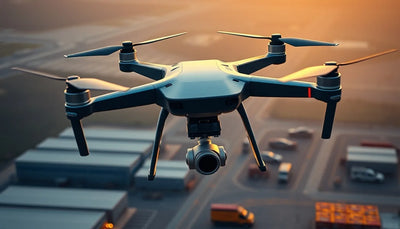
Canada's Drone-Killing Sandbox Puts Counter-UAS Tech to a $1M Test
A Canadian counter-drone testing ground is drawing companies into a competitive $1 million challenge, sharpening focus on how unmanned aircraft are detected and stopped. The event signals rising commercial demand for reliable counter-UAS systems and fresh scrutiny of drone risk management.

Quick answer
A Canadian counter-drone testing event, reported by CBC as a drone-killing 'Sandbox,' is hosting companies competing for a $1 million prize to demonstrate counter-UAS capabilities.
- CBC reports the event as a competitive counter-drone sandbox in Canada
- Companies are competing for a $1 million prize
- The focus is on detecting and stopping unmanned aircraft
- The development highlights growing commercial and security interest in counter-UAS systems
Evidence: AeroVironment unmanned systems solutions
Fleet readiness
Keep DJI hardware available without overbuying new units.
Use defense and fleet news as a planning signal for repair support, inspected pre-owned aircraft, and replacement timing.

Canada has become the stage for a high-stakes counter-drone competition, with companies vying for a $1 million prize inside what CBC describes as a drone-killing "Sandbox." The event places counter-UAS technology under direct operational pressure, testing how well systems can detect, track, and neutralize unmanned aircraft in a controlled environment.
The CBC report frames the sandbox as a competitive proving ground rather than a single-vendor demonstration. That distinction matters for the broader drone industry. When multiple companies compete for a prize tied to stopping drones, the market is signaling that counter-UAS capability is no longer a niche military concern. It is becoming a commercial and public-safety priority with real procurement implications.
Inside the counter-UAS sandbox competition
According to CBC, the Canadian sandbox brings companies together to compete for a $1 million prize. The central challenge is straightforward: demonstrate an effective way to stop an unmanned aircraft. The reporting does not specify a single winning technology, which suggests the field is open to different interception approaches, detection methods, and operational concepts.
For commercial drone operators, the sandbox is a reminder that the airspace environment is changing. Counter-drone systems are being tested not only against hobbyist aircraft but also against the same categories of drones used in enterprise inspection, mapping, delivery, and public-safety work. A system designed to stop a drone does not distinguish between a careless operator and a legitimate commercial mission. That reality makes counter-UAS development directly relevant to fleet planning and airspace access.
Reboot Hub analysis: the competition structure points to a market where counter-drone capability is being treated as an urgent, investable problem. A $1 million prize is modest compared with large defense contracts, but it is enough to attract startups, integrators, and established security firms. The sandbox format also allows buyers and regulators to observe performance side by side, which can accelerate procurement decisions later.
Why counter-drone testing is becoming a commercial signal
CBC's reporting places the sandbox in Canada, but the implications extend well beyond one country. Counter-UAS testing events are increasingly used to evaluate how drones can be detected near airports, critical infrastructure, public venues, and government facilities. Each successful test raises the profile of counter-drone vendors and pushes the conversation toward standards, certification, and repeatable performance.
For drone buyers and fleet operators, this is not simply a defense story. It is a risk-management story. The more visible counter-UAS testing becomes, the more likely that airspace authorities, venue operators, and enterprise clients will ask harder questions about drone identification, flight authorization, and operator accountability. A commercial drone program that ignores counter-drone trends may face friction when bidding for sensitive or high-security work.
The sandbox also highlights a practical gap. Many commercial drones are not designed to evade or survive counter-UAS measures. Operators flying expensive inspection or mapping platforms need to understand that a security system may not distinguish between a threat and a permitted flight. That makes clear flight planning, visible identification, and compliance more important than ever.
What this means for drone owners and the market
The Canadian sandbox is a forward-looking indicator for the commercial drone market. When governments and private entities invest in stopping drones, they are also investing in the rules, sensors, and enforcement tools that will shape where and how drones can operate. For owners of DJI platforms and other commercial aircraft, the practical takeaway is to treat counter-UAS awareness as part of operational readiness, not as an abstract defense topic. For owners evaluating service and lifecycle risk, Drone Wiki explains the relevant repair, parts, resale, or operational path.
Reboot Hub analysis: Pre-owned drone buyers should pay attention to how counter-drone trends affect resale value and fleet utility. A drone that remains compliant, identifiable, and well-maintained is more likely to retain value in an environment where security scrutiny is rising. Operators who keep clear maintenance records and understand local airspace restrictions can position their aircraft as lower-risk assets. For those evaluating pre-owned DJI drones or planning professional DJI repair, the Drone Wiki offers a useful reference point for understanding platform details and ownership considerations.
The counter-UAS market also influences procurement behavior. Enterprise buyers may begin asking vendors how their drones perform in environments with active counter-drone sensors. A fleet that cannot be clearly identified or safely recovered after an interception attempt may become harder to insure or deploy. That shifts value toward platforms with strong support ecosystems, available spare parts, and transparent repair paths.
What operators should watch next
The CBC report does not name a winner or specify which counter-drone methods performed best. That leaves the competitive outcome open, but the existence of the sandbox itself is the more durable signal. Operators should watch for follow-on announcements about which companies advanced, which technologies were tested, and whether any results influence Canadian or international procurement.
Fleet managers should also monitor whether counter-UAS testing leads to new operating restrictions near sensitive sites. A high-profile counter-drone event can prompt venue owners and infrastructure operators to adopt detection systems more quickly. That may require drone teams to update flight authorizations, carry additional identification equipment, or adjust mission planning around newly monitored zones.
For the pre-owned market, the sandbox reinforces a simple principle: drones that are well-documented, properly maintained, and easy to identify will remain more attractive as the operating environment becomes more regulated. Buyers should prioritize aircraft with clear histories and available genuine OEM spare parts, while sellers should preserve maintenance records that demonstrate responsible ownership.
FAQ
Frequently asked questions
What is Canada's drone-killing sandbox?
It is a counter-drone testing event reported by CBC in which companies compete for a $1 million prize by demonstrating systems capable of stopping unmanned aircraft in a controlled environment.
Why should commercial drone operators care about counter-UAS testing?
Counter-UAS testing signals growing security scrutiny of drone operations. Operators may face new detection systems, airspace restrictions, and client requirements, especially near sensitive infrastructure or public venues.
Does the sandbox affect the pre-owned drone market?
Reboot Hub analysis: Indirectly, yes. As counter-drone awareness rises, well-maintained and clearly identifiable drones are likely to hold value better. Buyers and sellers should emphasize maintenance records, compliance, and platform support when evaluating pre-owned aircraft.
Which sources support this update?
The visible evidence links identify AeroVironment unmanned systems solutions; each source is used only for the claim it directly supports.
What remains subject to change?
Retail pricing, availability, product bundles and regulatory timelines can change. Readers should verify the latest terms with the named retailer, manufacturer or regulator before acting.
How should buyers or operators use this analysis?
Use the verified facts as a starting point, then compare mission fit, lifecycle support, maintenance needs and current procurement terms before making a purchase or fleet decision.
Sources consultées
- CBC via Google News - primary source
- AeroVironment unmanned systems solutions - official company source
Reboot Hub Editorial propose des analyses d'achat, de réparation, de revente et d'exploitation pour les propriétaires de drones. Si vous constatez une erreur, contactez-nous pour une demande de correction conformément à notre politique éditoriale.