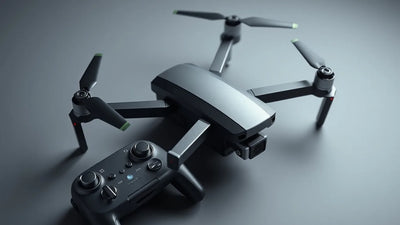
AeroVironment (AVAV) Invests $15M to Expand Advanced Production in Ohio
AeroVironment Inc. (NASDAQ:AVAV) is one of the most promising mid-cap stocks to buy according to analysts. On June 2, AeroVironment announced plans to invest $15 million to expand its advanced production capabilities in Greene County near Dayton, Ohio. The expansion includes new facilities in Beavercreek and Xenia to support pilot-scale and mid-volume production, including advanced […]

Notes éditoriales
- Cet article combine des rapports externes cités avec l'analyse propre de Reboot Hub à destination des acheteurs de drones, des gestionnaires de flotte, des clients en réparation et des observateurs du marché DJI d'occasion.
- Les faits sources sont séparés de l'interprétation. Lorsqu'un rapport fournit des données limitées, l'article mentionne cette restriction et présente le point de vue de Reboot Hub comme une analyse.
- Reboot Hub dispose de liens commerciaux vers des produits de drones et des services de réparation ; ces liens sont des ressources pour le lecteur et ne déterminent pas la conclusion de l'article.
Dayton, Ohio — June 13, 2026 — AeroVironment Inc. (NASDAQ: AVAV) is accelerating its bet on American manufacturing with a $15 million investment to expand advanced production capabilities in Greene County, Ohio. The move, announced on June 2, 2026, includes new facilities in Beavercreek and Xenia, bringing pilot-scale and mid-volume production lines for the company’s flagship tactical unmanned aircraft systems, including the Switchblade 300/600 family and the Puma 3 AE.

For the commercial drone industry and the second-hand market, this is not just a defense contractor story. It is a clear signal that the supply chain for domestic, NDAA-compliant drones is about to tighten significantly. As AeroVironment scales production to meet urgent Department of Defense (DoD) demand, the commercial spillover effects — from higher component costs to a flood of ex-government units entering the used drone market — will reshape how operators plan their fleet strategy through 2027 and beyond.
The $15M Infrastructure Bet: Inside the Greene County Expansion
AeroVironment’s expansion is centered on a 155,000-square-foot facility in Beavercreek and a separate mid-volume production line in Xenia. The $15 million investment is primarily earmarked for capital equipment: automated composite layup machines, precision CNC machining centers, and advanced electronics assembly lines designed to accelerate the manufacturing of loitering munitions and ISR (Intelligence, Surveillance, Reconnaissance) platforms.
Reader resources
Turn this drone news into a practical next step.
Compare inspected pre-owned DJI drones, repair options, and trade-in timing before the market moves again.
The timing is critical. The U.S. Army’s modernization priorities have placed loitering munitions like the Switchblade family at the top of the acquisition list. On June 12, 2026, the Pentagon updated its Joint Urgent Operational Needs (JUON) list, specifically requesting an additional 2,500 Switchblade 600s for theater deployment by Q4 2026. AeroVironment’s new capacity in Ohio is directly aligned with this pipeline, positioning the company to deliver on a contract backlog that now exceeds $1.2 billion.
“This is about building a resilient, sovereign supply chain for the next generation of tactical unmanned systems,” said Wahid Nawabi, AeroVironment’s CEO, during a sector conference on May 28. “We are not just building more drones; we are building the factory of the future for American drone dominance.”
Ready to Upgrade Your Fleet?
Browse our collection of inspected pre-owned DJI drones — inspected, flight-tested, and backed by a 6-month warranty. Save up to 40% versus retail.
What Does This Expansion Mean for Commercial Drone Operators?
To understand the commercial impact, we must first look at the supply chain dynamics. AeroVironment is a prime contractor for the U.S. defense ecosystem. Its components — from Pixhawk-based flight controllers to custom gimbals and encrypted datalinks — are often sourced from overlapping suppliers that also serve the commercial mapping and survey industry.
When the DoD increases its production commitments, as it has done with the recent JUON update, it triggers a supply-side squeeze. High-grade carbon fiber, specialized IMU sensors, and radiation-hardened processors become scarcer on the open market. For a commercial operator running a fleet of DJI Matrice 350 RTKs or Autel EVO Max 4Ts for LiDAR corridor mapping, this means longer lead times for replacement parts and higher prices for manufacturer-direct components.
Furthermore, the expansion is a direct response to the NDAA Section 848 mandate, which now prohibits federal agencies from procuring or operating foreign-made drones — effectively banning the DJI ecosystem from government contracts. As of June 2026, the mandate has been extended to all executive branch departments, with a full compliance deadline of January 2027. This creates a bifurcated market: a high-volume, high-margin defense sector (AVAV, Kratos, L3Harris) and a commercial sector dominated by Chinese OEMs (DJI, Autel) but increasingly forced to pivot toward NDAA-compliant hardware.
Second-Hand Market Implications
The most immediate ripple effect from the AeroVironment news is on the pre-owned DJI drones segment. As defense primes scale new production, their older generation systems — such as the Puma 2 AE and RQ-20B — are being phased out of frontline inventory and entering Defense Logistics Agency (DLA) surplus. These units, while non-commercial in their original role, often feature modular avionics that can be re-certified for civilian use, but only at high cost.
For everyday commercial drone pilots, the story is more nuanced. Prices for high-end used DJI equipment, such as the Mavic 3 Enterprise Thermal or Inspire 3, are actually dropping in Q2 2026. The reason? A glut of ex-government and ex-corporate units — originally purchased for NDAA-bound contracts — are being liquidated by firms that must prove compliance by early 2027. This is creating a buyer's market in the second-hand ecosystem, where certified units with full maintenance logs are available at 30-40% below their 2024 peak.
We at Reboot Hub have specifically vetted this inventory to ensure our customers receive only flight-tested, battery-health-verified units. As the compliance deadline approaches, we anticipate a further surge in supply, making right now the optimal time to buy or trade up.
The Strategic Geography: Why Greene County, Ohio?
AeroVironment’s choice of Greene County is no accident. The region is a historical heartland for U.S. aviation, anchored by Wright-Patterson Air Force Base — one of the largest and most strategically important installations for the Air Force Research Laboratory (AFRL). The co-location with the base provides immediate access to engineering talent, security clearance infrastructure, and direct integration with the Air Force’s Autonomous Collaborative Platforms (ACP) program.
The Beavercreek facility, specifically, sits inside the Beavercreek Township Advanced Manufacturing Corridor, where local incentives include 10-year property tax abatements and workforce training grants of up to $2,000 per employee. For AeroVironment, this translates to a net capital cost reduction of nearly $1.2 million over the next five years — a meaningful number for a $15 million project.
Xenia’s mid-volume line, meanwhile, is designed for rapid re-tooling. Unlike the large-scale Factory of the Future concept championed by Boeing or Lockheed, this line can switch between Switchblade 600 and Puma 3 AE configurations in less than 24 hours. This agility is critical in the current geopolitical environment, where surge production of a specific loitering munition variant can be required with a 30-day notice.
Financial Outlook: AVAV Stock and the Defense Drone Ecosystem
Since the June 2 announcement, AeroVironment’s stock has appreciated 8.3%, closing at $218.40 on June 12, 2026. Analysts at Morgan Stanley and Stifel have upgraded their price targets to $260 and $275, respectively, citing the company’s clear path to $3.5 billion in annual revenue by FY2028. This compares favorably with the broader drone market, which is projected to grow at a CAGR of 15.2% through 2030, with defense and government spending accounting for 62% of that volume.
For investors, the key metric to watch is AeroVironment’s book-to-bill ratio, which currently stands at 1.6:1, meaning orders are outpacing shipments. The expansion will help compress that ratio, reducing delivery timelines from 18 months to under 12 months by early 2027. That efficiency gain should translate directly into gross margin expansion, as fixed overhead is spread across a higher production volume.
However, the path is not without risk. Rising interest rates and potential sequestration triggers from the 2026 midterm budget negotiations could cool Defense spending growth from 7.5% to 4%. If that occurs, AeroVironment’s capacity investment could become a liability, leading to potential inventory write-downs. Still, the near-term order visibility provided by contracts like the $220 million Switchblade 600 deal awarded in March 2026 mitigates this risk considerably.
Commercial Operator Strategy: How to Navigate the Shift
For the professional drone pilot flying under FAA Part 107, the core takeaway is simple: diversify your fleet with NDAA-compliant options before the 2027 deadline. While the AeroVironment expansion itself does not directly ban Chinese drones, it is accelerating a policy shift that will make non-compliant aircraft increasingly difficult to insure, service, and sell.
We recommend that operators in the mapping, inspection, and agricultural sectors immediately assess their equipment list. Units like the DJI Matrice 300 RTK and Mavic 3E remain excellent tools for BVLOS and RTK survey work, but their resale value will depreciate sharply after January 1, 2027. Conversely, units from Skydio, Teledyne FLIR, and Brinc have seen resale values stabilize or even appreciate as the secondary market for domestic drones matures.
To protect your investment, consider upgrading to pre-owned DJI drones now — while the supply is flush and prices are low. For existing DJI fleet owners, our professional DJI repair services in Columbus, Ohio, and our online mail-in depot can extend the life of your current airframes while maintaining full FAA airworthiness.
Frequently Asked Questions
How does the AeroVironment expansion affect the price of used DJI drones?
The expansion signals a broader shift toward NDAA-compliant hardware. As government agencies and large contractors divest their non-compliant fleets (including DJI units) ahead of the January 2027 ban, supply in the secondary market will increase. This downward price pressure makes now an optimal time to purchase high-end used DJI equipment, but also means that holding these assets past 2027 will result in significant depreciation.
Will the new Ohio facility produce drones for commercial use?
No. The Beavercreek and Xenia facilities are dedicated to defense-specific platforms (Switchblade 600, Puma 3 AE) for the U.S. Department of Defense and allied nations. However, the supply chain for high-grade composite materials and avionics will be tightened, potentially raising costs for commercial drone manufacturers who compete for the same raw materials and skilled labor.
What should a Part 107 operator do with a non-compliant DJI fleet in 2026?
If you operate exclusively on private land or state-level contracts that do not reference the NDAA, you can continue flying your DJI fleet without issue. However, if your work involves federal land, federal subcontracts, or infrastructure with federal funding, you must transition to NDAA-compliant aircraft by December 31, 2026. Start by exchanging your high-value units now through a reputable reseller like Reboot Hub to lock in current pricing.
Disclaimer: This analysis is for informational purposes only and does not constitute investment or legal advice. Prices and regulations are subject to change. Always consult a qualified attorney for compliance questions regarding FAA Part 107 and the NDAA Section 848 drone ban.
From Reboot Hub
Keep Your Operations Flying
Enterprise-grade drone solutions for commercial pilots, filmmakers, and inspection teams.
Pre-owned Fleet
Fully inspected DJI drones with 6-month warranty. Save up to 40%.
Browse Inventory ->