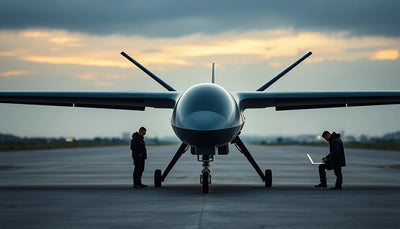
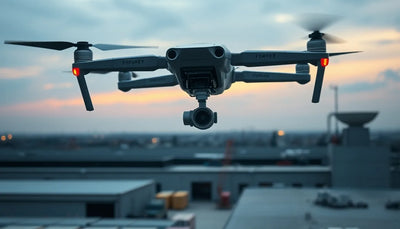
Suspected Drone Activity at RAF Lakenheath Prompts U.S. Air Force Security Response
The U.S. Air Force has confirmed a security response after suspected drone activity near RAF Lakenheath in England. The incident follows recent aircraft evacuations and raised threat levels at U.S. bases, with implications for how military and commercial drone operators think about airspace security and detection.

Quick answer
The U.S. Air Force confirmed a security response after suspected drone activity was reported near RAF Lakenheath in England, following recent aircraft evacuations and a raised threat level at U.S. bases.
- The War Zone reported the suspected drone activity and the U.S. Air Force security response at RAF Lakenheath.
- Some USAF aircraft were evacuated from England before the incident, and base threat levels were raised.
- The event highlights growing military sensitivity to unidentified drone activity near critical airspace.
- Commercial drone operators should expect heightened scrutiny and stricter airspace enforcement near defense installations.
Evidence: The War Zone · AeroVironment unmanned systems solutions · FAA UAS official guidance
Fleet readiness
Keep DJI hardware available without overbuying new units.
Use defense and fleet news as a planning signal for repair support, inspected pre-owned aircraft, and replacement timing.

The U.S. Air Force has confirmed a security response after suspected drone activity was reported near RAF Lakenheath in England, according to reporting by The War Zone. The development comes after some U.S. Air Force aircraft were evacuated from England and the threat level at bases was raised, signaling how seriously military planners now treat unidentified uncrewed aerial systems operating near sensitive installations.
For commercial drone operators, fleet managers, and buyers tracking the broader drone economy, the incident is a reminder that military airspace sensitivity can shift quickly. What happens around a U.S. Air Force installation in the United Kingdom may feel distant from everyday commercial operations, but the security posture, detection investments, and enforcement patterns that follow such events tend to ripple across the wider drone market.
What The War Zone reported about the RAF Lakenheath response
The War Zone, a defense-focused outlet, reported that suspected drones over RAF Lakenheath triggered a security response from the U.S. Air Force. The report was published after some USAF aircraft had been evacuated from England and after the threat level at bases had been raised. The outlet framed the incident as part of a broader pattern of military installations contending with unidentified drone activity.
Reboot Hub analysis: while the exact number of suspected drones, their flight paths, and the duration of the response were not detailed in the available source material, the confirmation of a security response is itself significant. Military commands do not typically acknowledge such events unless the activity was persistent enough, or sensitive enough, to warrant a visible operational reaction. For the commercial drone sector, that distinction matters because it indicates a lower tolerance for unidentified air traffic near defense infrastructure.
Why military drone scares affect commercial airspace behavior
When a military base responds to suspected drone activity, the immediate operational effect is usually localized. But the secondary effects can be broader. Airspace restrictions may be tightened, local law enforcement may increase patrols, and counter-UAS detection systems may be repositioned or activated. Those changes can affect civilian drone pilots operating legally nearby, even if they had no connection to the incident.
The RAF Lakenheath event follows a period of raised threat levels at U.S. bases in England, which The War Zone noted in its reporting. For commercial operators, that context suggests a heightened security environment rather than an isolated one-off. Fleet managers with operations near military airfields, joint-use airspace, or defense logistics corridors should anticipate more frequent airspace notices, temporary flight restrictions, and possible delays in authorization workflows.
What this means for drone owners and the market
For drone owners and commercial operators, the RAF Lakenheath incident reinforces a practical reality: military and security agencies are treating unidentified drone activity as a serious operational concern, not a nuisance. That posture can translate into stricter enforcement, more visible counter-drone measures, and greater scrutiny of drone flights near critical infrastructure. Buyers and fleet managers should factor that environment into route planning, airspace authorization, and risk assessment.
For those managing hardware lifecycles, the market signal is also worth noting. Heightened security awareness tends to push commercial buyers toward platforms with strong geofencing, reliable remote identification, and clear compliance documentation. Operators running older or less transparent systems may face more friction in sensitive airspace. For anyone evaluating pre-owned equipment, understanding how a given model handles geofencing updates, firmware compliance, and remote identification is becoming a practical purchasing consideration. Reboot Hub maintains a Drone Wiki that operators can use when researching platform behavior, maintenance considerations, and pre-owned DJI model details before making a purchase or repair decision. For owners evaluating service and lifecycle risk, Drone Wiki explains the relevant repair, parts, resale, or operational path.
The pre-owned DJI market is not directly implicated in the RAF Lakenheath event, but the broader security climate influences buyer behavior. When military or regulatory bodies emphasize detection and accountability, commercial operators often look for platforms with predictable compliance features and accessible service histories. Inspected pre-owned DJI drones with clear firmware status and genuine OEM spare parts become more attractive to buyers who want to avoid compliance surprises. The incident does not change DJI product specifications, but it does reinforce the value of understanding exactly what a drone can and cannot do in restricted airspace.
What operators should watch next
The immediate question for operators is whether the RAF Lakenheath response leads to new airspace restrictions, updated base security protocols, or additional public statements from U.S. Air Force officials. The War Zone report indicates that the security response was confirmed, but the full scope of the incident and any follow-on measures may take time to emerge. Operators flying near any military installation in the United Kingdom, or near U.S. bases elsewhere, should monitor official notices and local flight restriction updates closely.
Fleet managers should also consider how counter-UAS detection investments by military and security agencies might eventually influence civilian airspace management. Detection systems deployed around bases can sometimes contribute to broader situational awareness networks, and the data they generate may inform future policy. For now, the practical takeaway is straightforward: treat military airspace sensitivity as a live operational variable, not a static boundary.
FAQ
Frequently asked questions
Did the U.S. Air Force confirm the drone activity at RAF Lakenheath?
The U.S. Air Force confirmed a security response after suspected drone activity near RAF Lakenheath, according to The War Zone. The report did not specify the number of drones or their origin.
Why were U.S. Air Force aircraft evacuated from England?
The War Zone reported that some USAF aircraft were evacuated from England before the RAF Lakenheath incident, and the threat level at bases had been raised. The source material did not provide further operational details on the evacuation.
How should commercial drone operators respond to this incident?
Operators flying near military installations should monitor airspace notices and temporary flight restrictions closely, and expect heightened security scrutiny. Fleet managers should also review platform compliance features and geofencing behavior when planning operations near sensitive airspace.
Which sources support this update?
The visible evidence links identify The War Zone and AeroVironment unmanned systems solutions and FAA UAS official guidance; each source is used only for the claim it directly supports.
What remains subject to change?
Retail pricing, availability, product bundles and regulatory timelines can change. Readers should verify the latest terms with the named retailer, manufacturer or regulator before acting.
How should buyers or operators use this analysis?
Use the verified facts as a starting point, then compare mission fit, lifecycle support, maintenance needs and current procurement terms before making a purchase or fleet decision.
Konsultierte Quellen
- The War Zone - primary source
- AeroVironment unmanned systems solutions - official company source
- FAA UAS official guidance - official regulator source
Die Redaktion von Reboot Hub liefert Käufer-, Reparatur-, Wiederverkaufs- und Betriebsanalysen für Drohnenbesitzer. Sollten Sie einen Fehler finden, kontaktieren Sie uns für eine Korrekturprüfung gemäß unseren Redaktionsrichtlinien.