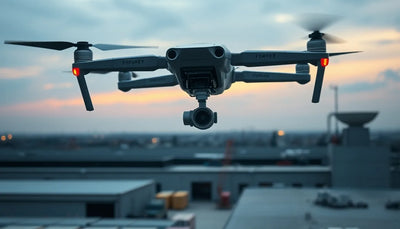
MSI Unveils Next-Generation EAGLS Counter-Drone Platform
Defense News reports MSI is advancing its EAGLS counter-drone platform with a next-generation EAGLS X variant focused on modular, cost-effective air defense. The shift signals broader demand for scalable counter-UAS systems as drone threats expand across commercial and security environments.

Quick answer
MSI is developing a next-generation EAGLS counter-drone platform called EAGLS X, emphasizing modular and cost-effective air defense capabilities, according to Defense News.
- Defense News reports MSI is advancing its EAGLS counter-drone air defense platform
- The next-generation variant is referred to as EAGLS X
- The approach focuses on modular, cost-effective counter-drone capabilities
- The development reflects broader demand for scalable counter-UAS systems
Evidence: Defense News · AeroVironment unmanned systems solutions · DIU Blue UAS
Fleet readiness
Keep DJI hardware available without overbuying new units.
Use defense and fleet news as a planning signal for repair support, inspected pre-owned aircraft, and replacement timing.

Defense News reported on November 13 that MSI is advancing its EAGLS air defense platform with a next-generation variant called EAGLS X, built around modular and cost-effective counter-drone capabilities. The reporting frames the development as part of a broader industry push to make counter-UAS systems more adaptable and affordable as drone threats become more widespread.
For commercial drone operators, fleet managers, and buyers in the pre-owned DJI market, the announcement matters less for its military specifics and more for what it signals about the direction of counter-drone technology. As defense contractors prioritize lower-cost, modular systems, the same pressures are shaping how regulators, security agencies, and enterprise buyers think about drone detection and mitigation in civilian airspace.
What MSI's EAGLS X development signals
According to the Defense News report, MSI's EAGLS platform is an air defense system designed to counter drone threats, and the company is now developing EAGLS X as a next-generation evolution. The emphasis is on modularity and cost-effectiveness, two qualities that have become central to counter-UAS procurement discussions globally.
Modularity in this context means systems that can be reconfigured, upgraded, or scaled without replacing entire platforms. For defense buyers, that reduces long-term costs and speeds up adaptation to new drone technologies. For the commercial sector, the same logic applies to detection and mitigation tools that airports, stadiums, and critical infrastructure operators are increasingly evaluating.
Why cost-effective counter-drone systems matter now
The Defense News coverage highlights a practical reality: countering a drone often costs far more than the drone itself. A modular, cost-effective approach like the one MSI describes aims to close that gap. This is not a niche military concern. Civilian drone incidents near airports, prisons, and public events have pushed security planners to look for affordable, scalable responses.
For drone owners, the rise of more accessible counter-UAS systems introduces a new operational consideration. Pilots flying in controlled or sensitive areas may encounter detection systems more frequently, even if they are operating legally. Understanding where and how counter-drone technology is being deployed can help operators avoid misunderstandings and plan flights more carefully.
What this means for drone owners and the market
The development of EAGLS X does not directly change regulations for commercial drone pilots, but it reflects a security environment where counter-drone capability is becoming more common and more affordable. Buyers evaluating pre-owned DJI drones should pay attention to this trend because it influences how airspace authorities and private security providers approach drone activity. A drone that is perfectly legal to own and fly can still draw scrutiny in areas where counter-UAS systems are active.
Fleet operators and repair customers should also note that the modular philosophy behind EAGLS X mirrors a broader market shift toward systems that can be updated rather than replaced. For drone owners, that reinforces the value of maintaining aircraft with genuine OEM spare parts and professional DJI repair, since well-maintained hardware remains operationally relevant longer. Readers tracking these shifts can find practical reference material in the Drone Wiki. For owners evaluating service and lifecycle risk, Drone Wiki explains the relevant repair, parts, resale, or operational path.
The pre-owned DJI market is particularly sensitive to changes in how drones are perceived by security stakeholders. If counter-drone systems become cheaper and more widely deployed, some enterprise buyers may delay fleet expansion or seek additional compliance assurances. On the other hand, operators who demonstrate responsible flight practices and properly maintained equipment are better positioned to operate in environments where scrutiny is increasing.
What operators should watch next
The Defense News report does not provide technical specifications, timelines, or procurement details for EAGLS X. That leaves open questions about how quickly the platform will mature and whether its modular approach will influence civilian counter-UAS products. Operators should monitor whether similar cost-focused design language appears in commercial drone detection systems marketed to airports, utilities, and event venues.
For now, the practical takeaway is straightforward: counter-drone technology is becoming more modular and more affordable, which means drone operators should expect broader deployment of detection and mitigation tools in shared airspace. Staying informed about where these systems are being installed, and keeping aircraft in verifiable condition, is a sensible response for buyers, pilots, and fleet managers alike.
FAQ
Frequently asked questions
What is MSI's EAGLS X platform?
EAGLS X is a next-generation counter-drone air defense platform that MSI is developing, according to Defense News. The reporting describes it as emphasizing modular and cost-effective capabilities.
Does EAGLS X affect commercial drone regulations?
Reboot Hub analysis: No direct regulatory change is reported. However, the development signals that counter-drone systems are becoming more affordable and modular, which could lead to wider deployment in civilian and security environments.
Should drone buyers be concerned about counter-drone systems?
Buyers should stay informed rather than alarmed. Legal drone operations remain lawful, but increased counter-UAS deployment means pilots should be more aware of where detection systems are active and keep their aircraft well-maintained with genuine parts.
Which sources support this update?
The visible evidence links identify Defense News and AeroVironment unmanned systems solutions and DIU Blue UAS; each source is used only for the claim it directly supports.
What remains subject to change?
Retail pricing, availability, product bundles and regulatory timelines can change. Readers should verify the latest terms with the named retailer, manufacturer or regulator before acting.
How should buyers or operators use this analysis?
Use the verified facts as a starting point, then compare mission fit, lifecycle support, maintenance needs and current procurement terms before making a purchase or fleet decision.
Konsultierte Quellen
- Defense News - primary source
- AeroVironment unmanned systems solutions - official company source
- DIU Blue UAS - official government source
Die Redaktion von Reboot Hub liefert Käufer-, Reparatur-, Wiederverkaufs- und Betriebsanalysen für Drohnenbesitzer. Sollten Sie einen Fehler finden, kontaktieren Sie uns für eine Korrekturprüfung gemäß unseren Redaktionsrichtlinien.