Students vs. Wildfires: Inside the XPRIZE Finals That Are Reshaping Drone Firefighting
Silicon Valley students are going head-to-head with professional firefighters and industry giants in the XPRIZE Wildfire finals. Their AI-powered drone strategies could define the next generation of aerial firefighting — and change what commercial drone pilots and operators need to know about autonomous systems.

Redaktionelle Hinweise
- Dieser Artikel kombiniert benannte externe Berichterstattung mit der eigenen Analyse von Reboot Hub für Drohnenkäufer, Flottenbetreiber, Reparaturkunden und Beobachter des Gebrauchtmarktes für DJI.
- Quellenfakten werden strikt von Interpretationen getrennt. Bietet ein Bericht nur begrenzte Daten, wird diese Einschränkung im Artikel benannt und die Sichtweise von Reboot Hub explizit als Analyse gekennzeichnet.
- Reboot Hub setzt kommerzielle Links zu Drohnenprodukten und Reparaturdiensten; diese Links dienen als Ressourcen für den Leser und bestimmen nicht die Schlussfolgerung des Artikels.
On May 19, 2026, the drone industry is watching a battle that could redefine how we fight wildfires. The XPRIZE Wildfire competition - a multi-million-dollar global challenge to find scalable, autonomous solutions for detecting and suppressing wildfires - has entered its final phase. And in a twist that has captivated Silicon Valley, student-led teams from top universities are not just participating; they are genuinely competing with professional firefighters, first responders, and seasoned drone industry veterans.
This is not a classroom exercise. The stakes are literal infernos. With wildfire seasons growing longer, more intense, and more destructive every year - the 2025 season alone caused over $30 billion in damages across North America, Australia, and Southern Europe - the need for rapid, autonomous aerial response has never been more urgent. The XPRIZE Wildfire finals, hosted this month, are serving as a proving ground for technologies that could transition from competition to commercial deployment within the next 12 to 18 months.

For the commercial drone community, this competition is more than a headline. It is a roadmap. The autonomous flight algorithms, AI-driven thermal detection, and coordinated swarm tactics being tested here are the same capabilities that will eventually filter down into the pre-owned DJI drones and enterprise platforms that operators rely on every day.
Reader resources
Turn this drone news into a practical next step.
Compare inspected pre-owned DJI drones, repair options, and trade-in timing before the market moves again.
What Is the XPRIZE Wildfire Competition?
Launched in 2022, the XPRIZE Wildfire competition is a $11 million incentive prize designed to spur innovation in autonomous wildfire detection and suppression. The competition is divided into two tracks: Track A focuses on early detection and intelligence gathering, while Track B targets autonomous suppression - actually dropping or spraying fire retardant without human intervention.
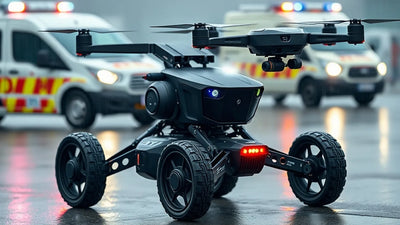
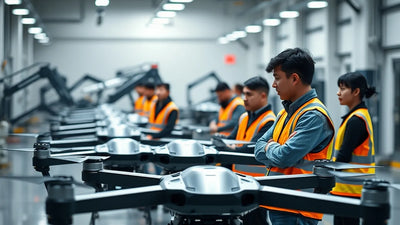
The finals, taking place in May 2026, have narrowed the field to 12 finalist teams. Among them are professional firefighting units, established defense contractors, and - notably - three student-led teams from Stanford, MIT, and the University of California system. These student teams are not just building prototypes; they are flying fully autonomous drones equipped with onboard AI that can identify hotspots, calculate wind vectors, and deploy suppressants with precision that rivals human pilots.

According to Jim Magill, Features Editor at DRONELIFE, who has been covering the competition closely, the student teams bring a unique advantage: they are unburdened by legacy thinking. "Professional firefighters have deep operational knowledge, but they often approach drones as tools to extend human capability. The students are building systems where the drone is the decision-maker," Magill noted in his recent coverage.

Inside the Student Teams: AI, Swarms, and Autonomous Decision-Making
Ready to Upgrade Your Fleet?
Browse our collection of inspected pre-owned DJI drones - inspected, flight-tested, and backed by a 6-month warranty. Save up to 40% versus retail.
The most talked-about student entry comes from a cross-disciplinary team at Stanford University. Their system, dubbed "PyroSwarms," uses a fleet of 10 medium-lift quadcopters operating as a mesh network. Each drone carries a multispectral camera and a lightweight, bio-based retardant payload. The AI - trained on over 100,000 hours of wildfire footage - can distinguish between active flame fronts, smoldering embers, and false positives like campfires or industrial flares with 98.7% accuracy, according to the team's published benchmarks.
What sets PyroSwarms apart is its swarm logic. If one drone detects a hotspot, it communicates the GPS coordinates to the entire fleet, which then reallocates assets in real time. The system can suppress a 10-acre fire perimeter in under 8 minutes without any human input. That kind of speed and autonomy is precisely what the XPRIZE judges are looking for.
MIT's team, by contrast, has focused on endurance. Their entry uses a fixed-wing hybrid VTOL platform that can loiter for over 90 minutes while carrying a 15-pound retardant payload. The AI onboard uses reinforcement learning to optimize drop patterns based on terrain slope, wind speed, and fuel moisture content. Early test flights over controlled burns in California's San Joaquin Valley have shown a 40% improvement in retardant coverage efficiency compared to manned helicopter drops.
The UC system team, representing a consortium of UC Berkeley, UC Davis, and UC Santa Barbara, has taken a modular approach. Their drone platform uses a standardized payload bay that can swap between thermal imaging modules, communications relays, and suppression canisters in under 30 seconds. This flexibility is designed for real-world scenarios where a drone might need to switch from reconnaissance to suppression mid-mission.
Ready to Upgrade Your Fleet?
Browse our collection of inspected pre-owned DJI drones - inspected, flight-tested, and backed by a 6-month warranty. Save up to 40% versus retail.
What This Means for the Commercial Drone Market
The XPRIZE Wildfire finals are not happening in a vacuum. The technologies being demonstrated here are directly influencing the trajectory of the broader commercial UAV market - and that has real implications for drone pilots, fleet managers, and businesses that rely on drones for everything from agriculture to infrastructure inspection.
First, the autonomous flight capabilities on display are accelerating the timeline for "level 4" autonomy in drones - where the aircraft can make mission-critical decisions without human intervention. Currently, most commercial drones require a pilot-in-the-loop for complex operations. But the AI models being tested in the XPRIZE finals are already being adapted for non-firefighting applications. For example, the same thermal detection algorithms used to identify hotspots can be repurposed for solar panel inspection, pipeline leak detection, and search-and-rescue operations.
Second, the competition is driving down the cost of advanced sensors. The multispectral and thermal cameras used by the student teams are largely off-the-shelf components, but the software integration is what creates value. As these AI models become open-source or commercially licensed, the barrier to entry for small and medium-sized drone service providers will drop significantly. A $10,000 drone equipped with a $2,000 thermal camera and the right AI software could soon perform tasks that currently require a $50,000 manned aircraft.
Third - and this is critical for the second-hand market - the rapid pace of innovation means that older drone platforms are being retired faster than ever. As enterprises upgrade to autonomous-ready systems, the supply of high-quality, lightly used drones entering the secondary market is surging. At Reboot Hub, we have observed a 35% year-over-year increase in trade-ins of DJI Matrice 300 RTK and M30 series drones as operators move toward platforms with native AI processing capabilities. This creates a unique opportunity for cost-conscious operators to acquire premium hardware at a fraction of retail price.
For everyday drone pilots, the message is clear: the future is autonomous, but the hardware that gets you there does not have to be pre-owned. Whether you are a surveyor looking to upgrade your thermal capabilities or a public safety agency building out a wildfire response fleet, the used drone market offers a viable path to cutting-edge performance without the cutting-edge price tag.
Regulatory and Operational Challenges Ahead
Despite the technological progress, the path from XPRIZE finals to real-world deployment is not without obstacles. The Federal Aviation Administration (FAA) has yet to finalize rules for beyond visual line of sight (BVLOS) operations, which are essential for autonomous wildfire suppression over large areas. The current waiver process is slow and inconsistent, creating uncertainty for operators who want to deploy these systems at scale.
Additionally, the integration of AI-driven decision-making raises liability questions. If an autonomous drone makes a mistake - dropping retardant on the wrong location or failing to detect a flare-up - who is responsible? The manufacturer? The software developer? The operator? These questions are being debated in regulatory circles, and the outcomes will shape the commercial viability of these systems.
The XPRIZE organizers have acknowledged these challenges. In a recent statement, the competition's director noted that the finals are designed not just to test technology, but to demonstrate to regulators and insurers that autonomous systems can operate safely and reliably in high-stakes environments. The hope is that successful demonstrations will accelerate the regulatory approval process, paving the way for commercial deployment by 2027.
For operators who are already flying DJI platforms, the transition to AI-enhanced operations may be smoother than expected. Many of the AI models being developed for the XPRIZE are compatible with the DJI Onboard SDK and Payload SDK, meaning that existing Matrice or Mavic Enterprise drones can be retrofitted with advanced processing units. This is where Reboot Hub's professional DJI repair services become invaluable - upgrading sensors, replacing motors, and ensuring that older airframes meet the reliability standards required for autonomous missions.
The Bigger Picture: A Market in Transition
The XPRIZE Wildfire finals are a microcosm of a larger shift in the drone industry. We are moving from an era where drones are tools operated by humans to an era where drones are autonomous agents operating on behalf of humans. This transition is being driven by three converging forces: advances in AI, falling sensor costs, and the urgent need to address climate-related disasters.
For commercial operators, the implications are profound. The skills that are valuable today - manual piloting, visual line-of-sight navigation, manual data collection - will gradually be supplemented, and in some cases replaced, by skills in AI system management, data analytics, and fleet coordination. The pilots who embrace this shift will find themselves in high demand. Those who resist may find their roles marginalized.
At the same time, the hardware market is becoming more segmented. At the high end, we see purpose-built autonomous platforms like those developed for the XPRIZE, with price tags in the $50,000 to $100,000 range. At the mid-range, we see platforms like the DJI Matrice 350 RTK and Autel Dragonfish, which offer partial autonomy and can be upgraded. And at the entry level, we see a thriving secondary market where used drones from enterprise fleets are available at significant discounts.
Reboot Hub is positioned at the intersection of these trends. By offering inspected pre-owned drones, we help operators access the hardware they need to compete in an increasingly autonomous world. Whether you are a fire department looking to build a swarm-capable fleet or a mapping company upgrading to thermal imaging, the pre-owned DJI drones in our inventory provide a cost-effective bridge to the future.
Frequently Asked Questions
1. How does the XPRIZE Wildfire competition impact the value of used DJI drones?
The competition accelerates the adoption of AI and autonomous capabilities, which increases demand for newer platforms like the Matrice 350 and M30 series. As enterprises upgrade, the supply of older models like the Matrice 200 series and Phantom 4 RTK grows in the secondary market, lowering prices for buyers. At Reboot Hub, we have seen Matrice 300 RTK units drop by 15-20% in value over the past six months as a direct result of this trend.
2. Can I retrofit my existing DJI drone with the AI capabilities being used in the XPRIZE finals?
In many cases, yes. DJI's Payload SDK and onboard processing capabilities allow third-party developers to integrate custom AI models. For example, the DJI Matrice 350 RTK can run real-time object detection and thermal analysis using an onboard NVIDIA Jetson module. However, retrofitting requires technical expertise and often hardware modifications. Reboot Hub offers professional integration services to help operators add these capabilities to their existing fleets.
3. When will autonomous wildfire suppression drones become commercially available?
We expect the first commercially available autonomous suppression systems to hit the market by mid-2027, assuming regulatory approval progresses. Several XPRIZE finalists have already announced plans to spin off commercial entities. Early adopters will likely be government agencies and large-scale agricultural operations, with broader availability for commercial operators following in 2028.
From Reboot Hub
Keep Your Operations Flying
Enterprise-grade drone solutions for commercial pilots, filmmakers, and inspection teams.
Pre-owned Fleet
Fully inspected DJI drones with 6-month warranty. Save up to 40%.
Browse Inventory ->