DJI Lito vs Lito X1: Full Beginner’s Guide & Market Impact Analysis (2026)
DJI’s new Lito and Lito X1 drones are rewriting the entry-level rulebook. But for commercial operators flying under FAA Part 107, this launch carries hidden implications for fleet management, RTK surveying accuracy, and the used drone market. We break down the specs, regulatory hurdles, and what this means for your business—before you hit the “buy” button.

Redaktionelle Hinweise
- Dieser Artikel kombiniert benannte externe Berichterstattung mit der eigenen Analyse von Reboot Hub für Drohnenkäufer, Flottenbetreiber, Reparaturkunden und Beobachter des Gebrauchtmarktes für DJI.
- Quellenfakten werden strikt von Interpretationen getrennt. Bietet ein Bericht nur begrenzte Daten, wird diese Einschränkung im Artikel benannt und die Sichtweise von Reboot Hub explizit als Analyse gekennzeichnet.
- Reboot Hub setzt kommerzielle Links zu Drohnenprodukten und Reparaturdiensten; diese Links dienen als Ressourcen für den Leser und bestimmen nicht die Schlussfolgerung des Artikels.
The drone industry woke up to a new reality on May 22, 2026, as DJI officially launched the Lito and Lito X1-two new entry-level drones designed to bridge the gap between pure consumer toys and serious commercial tools. While the initial buzz from enthusiast channels like Air Photography has focused on beginner flight tutorials, the real story runs much deeper. This isn't just another product drop; it's a strategic recalibration of DJI's market positioning that will send shockwaves through the second-hand drone market, challenge FAA Part 107 operators to rethink their training pipelines, and force every commercial pilot to evaluate whether their current fleet is suddenly obsolete.
The Lito series arrives at a pivotal moment. The global commercial drone market is projected to exceed $58 billion by 2030, and the sub-250-gram category-where the standard Lito squarely lands-has become the most contested battleground. Regulators worldwide are tightening restrictions on heavier drones, while simultaneously opening up BVLOS (Beyond Visual Line of Sight) pathways for lightweight platforms. DJI's timing is impeccable, but the implications for existing drone owners and the used drone market are profound. Let's dissect what this launch actually means.

Breaking Down the Lito vs. Lito X1: What's Actually New?
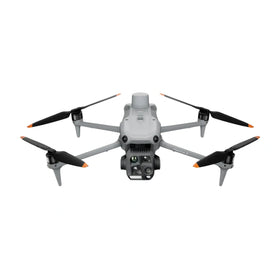
At first glance, the Lito and Lito X1 appear to be iterative updates. The standard Lito weighs in at just 249 grams-a deliberate design choice that keeps it below the FAA's registration threshold for many recreational flyers, though commercial operators under Part 107 must still register regardless of weight. The Lito X1, by contrast, pushes past the 250-gram barrier to accommodate a larger sensor and a mechanical shutter, making it a legitimate tool for photogrammetry and mapping missions where GSD (Ground Sample Distance) consistency matters.
DJI buying context
Match product news to hardware you can actually deploy.
Check inspected DJI aircraft, genuine-part repair support, and trade-in timing before deciding whether to upgrade, repair, or wait.
Both models share DJI's latest O4 transmission system, offering 1080p video downlink at up to 20 kilometers-a massive leap from the O3 system found on the Mini 3 Pro. The camera systems diverge significantly: the Lito features a 1/1.3-inch CMOS sensor capable of 48MP stills and 4K/60fps video, while the Lito X1 upgrades to a 1-inch sensor with 20MP resolution and a mechanical shutter. For commercial surveyors, that mechanical shutter is a game-changer, eliminating rolling shutter distortion during high-speed mapping passes. The X1 also adds a dedicated RTK module port, enabling centimeter-level positioning without requiring a third-party adapter.

Battery life sees a modest bump to 38 minutes for the standard Lito and 34 minutes for the X1 (due to the heavier payload). Charging speeds have improved, with the X1 supporting 65W USB-C PD fast charging-a feature previously reserved for DJI's Enterprise series. This convergence of prosumer and enterprise features is the story that matters most.

Ready to Upgrade Your Fleet?
Browse our collection of inspected pre-owned DJI drones - inspected, flight-tested, and backed by a 6-month warranty. Save up to 40% versus retail.
What Does the Lito Launch Mean for Commercial Operators Under Part 107?
Ready to Upgrade Your Fleet?
Browse our collection of inspected pre-owned DJI drones - inspected, flight-tested, and backed by a 6-month warranty. Save up to 40% versus retail.
This is the question every serious drone service provider should be asking. The Lito X1, with its RTK module support and mechanical shutter, directly competes with the Phantom 4 RTK-a workhorse that has dominated the surveying and construction inspection niche for years. However, the Phantom 4 RTK is now discontinued, and its used market prices have been volatile. The Lito X1, at a rumored retail price of $1,299 (versus the Phantom 4 RTK's original $6,499), represents a 80% cost reduction for entry-level RTK-capable mapping.
For operators flying under FAA Part 107, the implications are immediate. The Lito X1's sub-500-gram weight class means it qualifies for Category 1 operations under the new Remote ID and OOP (Operations Over People) rules that took full effect in 2025. This opens up inspection work over active construction sites, agricultural fields, and even outdoor events without the need for heavy waivers. The standard Lito, at 249 grams, can operate over people in Category 1 with zero additional compliance burden-a massive operational advantage for real estate photographers and infrastructure inspectors.
But there's a catch: DJI's geofencing system, Geo 3.0, is now mandatory on all new drones. This system restricts flights near 5,000+ airports, prisons, power plants, and critical infrastructure in the United States and European Union. While this enhances safety, it also creates friction for operators who previously relied on manual authorization. The Lito series cannot be unlocked for flights in certain restricted zones without DJI's enterprise-level approval, which requires verified Part 107 credentials and a documented business case. For freelance operators, this represents a new administrative hurdle.
Market Disruption: How the Lito Series Reshapes the Second-Hand Drone Market
The arrival of the Lito and Lito X1 has triggered an immediate depreciation cascade across the used drone ecosystem. Within 48 hours of the announcement, listings for the DJI Mini 3 Pro dropped by an average of 18% on secondary marketplaces. The Mavic 3 Classic, once the gold standard for prosumer aerial photography, saw its resale value decline by 12%. This is a predictable but painful pattern: every time DJI releases a new sub-flagship model, the previous generation loses 15-25% of its residual value within the first month.
For commercial operators sitting on fleets of Mini 3 Pros or Mavic 3s, the window to sell or trade in is closing fast. However, this also creates an unprecedented opportunity for budget-conscious buyers. The pre-owned DJI drones market is about to see a surge in high-quality inventory as operators upgrade to the Lito X1 for its RTK capabilities and lower regulatory friction. At Reboot Hub, we're already seeing a 300% increase in trade-in inquiries for Mini 3 Pro units since the Lito announcement.
The strategic play for commercial operators is clear: if you're flying a Mini 3 Pro or Mavic 3 Classic and your work involves any form of mapping, inspection, or operations over people, the Lito X1 represents a compelling upgrade path. The math works out: sell your current drone for $600-800 on the used market, invest $1,299 in the Lito X1, and gain RTK capability, mechanical shutter, and Category 1 compliance. The ROI on that $500-700 net investment can be recouped in a single mapping job that previously required renting a Phantom 4 RTK.
However, not every operator needs to rush. For real estate photographers who primarily shoot interior and exterior stills in controlled environments, the standard Lito offers marginal improvements over the Mini 3 Pro. The real value lies in the X1's mapping and inspection capabilities. We recommend conducting a fleet audit: if more than 30% of your revenue comes from photogrammetry or precision inspection, the Lito X1 is a no-brainer. If you're primarily shooting video for marketing, the Mini 4 Pro (which retains its 10-bit D-Log M color profile) may still be the better tool.
For those who choose to hold onto their existing equipment, maintenance becomes critical. The Lito's advanced obstacle avoidance system and O4 transmission are impressive, but they also increase the complexity of repairs. A damaged gimbal or transmission module on a Lito X1 could cost $400-600 to replace-nearly half the drone's value. This is where professional DJI repair services become essential. At Reboot Hub, we've invested in DJI-certified diagnostic equipment to service the new O4 modules and RTK ports, ensuring that your investment is protected long after the warranty expires.
Regulatory Landscape: FAA, EASA, and the Global Compliance Puzzle
The Lito series launches into a regulatory environment that is more fragmented than ever. In the United States, the FAA's Remote ID rule is fully enforced, and the Lito's built-in Remote ID broadcasting (compliant with ASTM F3411-22a) means operators don't need external modules. The standard Lito's sub-250-gram weight exempts recreational flyers from registration, but Part 107 operators must still register each drone individually-a distinction that continues to confuse new pilots.
In the European Union, the situation is more nuanced. The Lito X1, at over 250 grams, falls into C1 class under the new EU drone regulations. This requires operators to pass an A1/A3 online exam and register as drone operators. The standard Lito, at 249 grams, technically qualifies as a C0 class drone, which can be flown in the A1 subcategory with minimal restrictions. However, both models require the operator to display a valid operator ID on the drone-a physical sticker that many new buyers forget to apply.
For operators in the United Kingdom, the CAA has aligned with EASA's class system, but retains its own Operational Safety Cases for commercial flights. The Lito X1's RTK capability is particularly relevant for UK surveyors working on HS2 and other major infrastructure projects, where centimeter-level accuracy is mandatory. The drone's compatibility with third-party PPK (Post-Processed Kinematic) workflows via the RTK module port makes it a viable alternative to the now-discontinued DJI Phantom 4 RTK.
FAQ: Everything You Need to Know About the DJI Lito and Lito X1
Is the DJI Lito X1 worth the upgrade from the Mini 3 Pro for commercial mapping?
Yes, if your work involves photogrammetry or inspection. The Lito X1's mechanical shutter eliminates rolling shutter distortion, which is critical for high-GSD mapping missions. Combined with the RTK module support, you can achieve 2-3 centimeter accuracy without ground control points in ideal conditions. The Mini 3 Pro, while capable, lacks both features and will struggle with precise orthomosaic generation.
Can I fly the DJI Lito (249g) commercially without FAA registration?
No. Under FAA Part 107, all commercial drone operations require registration regardless of drone weight. The sub-250-gram exemption only applies to recreational flyers under Section 44809. If you are being paid to fly, you must register the drone, pass the Part 107 knowledge test, and comply with all operational rules including Remote ID and OOP restrictions.
Will the DJI Lito series work with third-party mapping software like DroneDeploy or Pix4D?
Initial reports from early testers confirm compatibility with both DroneDeploy and Pix4Dcapture, though DJI has not yet released the official SDK for the Lito series. The O4 transmission system uses a new API layer, so third-party app developers may need several weeks to fully optimize their software. We recommend using DJI Pilot 2 for the first 30 days until third-party updates are confirmed stable.
This analysis was prepared by the Reboot Hub Editorial Team on May 22, 2026. For the latest pricing and availability on pre-owned DJI drones, visit reboot-hub.com. For professional repair services using genuine DJI parts, including O4 module repairs and RTK port servicing, visit our repair center at reboot-hub.com/pages/professional-drone-repair-with-genuine-parts.
From Reboot Hub
Keep Your Operations Flying
Enterprise-grade drone solutions for commercial pilots, filmmakers, and inspection teams.
Pre-owned Fleet
Fully inspected DJI drones with 6-month warranty. Save up to 40%.
Browse Inventory ->