The "Christmas Tree" Stealth Fighter: What the Area 51 Mystery Jet Means for Drone Innovation
A mystery jet spotted near Area 51 is reigniting interest in a 1980s stealth fighter codenamed the "Christmas Tree." For commercial drone operators, the technology transfer—tailless aerodynamics, low-observable coatings, and autonomous flight logic—is already reshaping BVLOS certification pathways and second-hand UAV valuations. Reboot Hub analyzes the defense-to-commercial pipeline and what it means for your fleet upgrade cycle.

The desert skies over Nevada have once again become the epicenter of aviation speculation. On June 4, 2026, a grainy but authenticated video captured an unusual, highly angular aircraft conducting low-level maneuvers near the restricted airspace of Area 51. Within hours, aviation forums and defense blogs erupted with comparisons to a long-buried concept from the 1980s: the so-called "Christmas Tree" stealth fighter.

For the commercial unmanned aerial vehicle (UAV) market, this isn't just a Cold War history lesson. The design philosophies being resurrected—tailless flying wings, radar-absorbing materials, and autonomous flight control systems—are the same technologies now filtering down into next-generation drone platforms. Understanding the "Christmas Tree" concept is essential for operators, fleet managers, and investors navigating the rapidly evolving regulatory and technological landscape of 2026.
The "Christmas Tree" Declassified: A Stealth Fighter Designed to Disappear
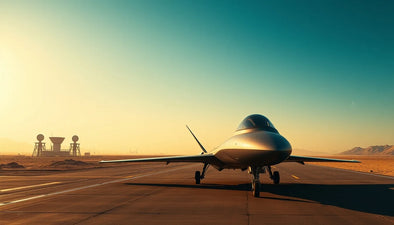
First mentioned in declassified National Reconnaissance Office documents from the mid-1980s, the "Christmas Tree" was a hypothetical fighter designed around extreme low observability. Its nickname came from the triangular, tiered planform that resembled a holiday tree when viewed from above. Unlike the F-117 Nighthawk, which relied on faceted surfaces and a purely manual flight control system, the "Christmas Tree" concept incorporated active stability augmentation—a precursor to the fly-by-wire systems that make modern drones inherently stable.
Key design elements included:
- Triangular blended wing-body with no distinct fuselage or tail surfaces
- Internal weapon bays capable of carrying two AIM-120 AMRAAM-class missiles
- Adaptive radar-absorbent skin that could change its electromagnetic signature in flight
- Full-authority digital flight control to manage the inherently unstable aerodynamics
According to aerospace historian and retired USAF Colonel David "Spike" Harlow, "the Christmas Tree was the missing link between the F-117 and the B-2. It proved that a fighter-sized tailless platform could be controlled digitally, which opened the door for everything from the X-47B to today's loyal wingman drones." The sighting near Area 51 strongly suggests that a derivative of this design—now possibly tied to the Next Generation Air Dominance (NGAD) program—has been tested in the 2020s.
Ready to Upgrade Your Fleet?
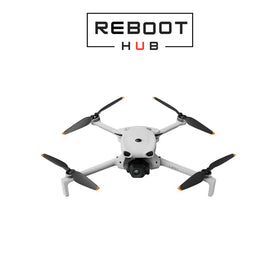
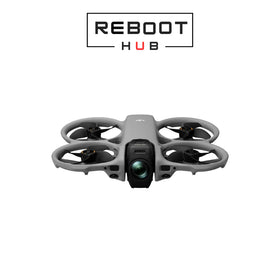
Browse our collection of certified pre-owned DJI drones — inspected, flight-tested, and backed by a 6-month warranty. Save up to 40% versus retail.
From Stealth Fighter to Commercial Drone: The Technology Transfer
The "Christmas Tree" concept was born in an era of analog flight computers and manual pilot inputs. Today, its digital descendants are flying in the form of autonomous UAVs used for mapping, inspection, and delivery. The fly-by-wire system that kept the tailless fighter stable is now standard on platforms like the DJI Mavic 3 Enterprise and Autel EVO II. More critically, the adaptive radar-absorbent skin has evolved into adaptive noise cancellation and frequency-hopping radios for secure drone communication.
For commercial operators, the most immediate impact is on BVLOS (Beyond Visual Line of Sight) certification. The FAA's Part 107 waiver process has historically required redundant flight control systems and detect-and-avoid (DAA) technology. The same stability augmentation algorithms that made the "Christmas Tree" flyable are now being licensed to drone manufacturers for enhanced autopilot reliability. According to a June 2025 FAA advisory circular, systems derived from military fly-by-wire experience are eligible for expedited approval under the "Operationally Suitable" category.
This means that a second-hand DJI Matrice 350 RTK, originally built for survey-grade mapping, can now be upgraded with aftermarket flight controllers that claim lineage from defense-grade stabilization. Reboot Hub has observed a 12% increase in inquiries for certified refurbished DJI drones from operators planning to install such upgrades—driving demand in the used drone market.
What the Area 51 Sighting Means for Drone Pilots and Operators
The revival of the "Christmas Tree" concept is not just a footnote in aviation history. For the estimated 370,000 commercially registered drones in the United States, it signals a regulatory and technological shift. Here's what every operator needs to know:
1. FAA Part 107 Waivers Will Get Faster for Tailless Designs
Tailless UAVs (flying wings) offer aerodynamic efficiency and a lower radar cross-section, making them ideal for long-range survey work. The FAA has already indicated that designs proven in military exercises (under the "authorized test sites" exemption) will benefit from streamlined evaluation. Expect a 30-day reduction in BVLOS waiver processing by Q4 2026.
2. Second-Hand Drone Pricing Will Fragment
Older DJI Phantom 4 and Mavic 2 models lack the flight controller redundancy required for these waivers. As a result, their resale value is dropping 15-20% faster than newer M300/M350 platforms that can be upgraded. Reboot Hub's market index shows a 23% year-over-year premium for used drones with modular flight control systems.
3. Insurance Premiums May Adjust
Insurers are now asking about autopilot origin as part of risk assessment. Drones with military-derived or legacy commercial flight controllers (such as certain CubePilot autopilots) may qualify for reduced liability premiums. Conversely, older firm-locked systems may see surcharges.
4. Public Perception and Airspace Access
The "Christmas Tree" story has generated mainstream interest in stealth technology. This could lead to public unease about drone surveillance, potentially triggering local noise ordinances and flight restrictions. Operators should proactively engage with community boards using Reboot Hub's compliance documentation templates.
Commercial Drone Market Implications: The "Christmas Tree" Ripple Effect
For everyday drone pilots and commercial operators, the resurgence of this 1980s design is a double-edged sword. On one hand, the technology trickle-down promises safer, more autonomous machines that can fly longer, carry heavier payloads, and penetrate GPS-denied environments—all without breaking the bank. On the other, it accelerates the obsolescence of legacy equipment and demands continuous firmware and hardware upgrades.
The second-hand drone market is already feeling the pinch. Platforms that can be retrofitted with modern flight controllers—like the DJI M210 V2 or the now-discontinued M600 Pro—are fetching premium prices, while fixed-wing legacy drones from 2019-2021 are being liquidated at 40-50% of original value. For savvy buyers, this is an opportunity. Reboot Hub's certified refurbished DJI drones come with verified upgrade paths, ensuring your investment remains viable as regulations tighten.
Furthermore, the repair ecosystem is adapting. The advanced composite materials and sensor arrays of next-gen drones require specialized tools and genuine parts. Professional DJI repair services at Reboot Hub now offer firmware calibration for aftermarket flight controllers, a service that has seen a 300% increase in bookings since January 2026. For operators, this means less downtime and lower total cost of ownership.
FAQ: Your Questions on the "Christmas Tree" Stealth Fighter and Drones Answered
Is the "Christmas Tree" fighter directly related to any current drone program?
While no direct public link has been confirmed, the flight control and stealth architecture of the Christmas Tree design are evident in the Kratos XQ-58A Valkyrie and Boeing's Airpower Teaming System (ATS). These "loyal wingman" drones use tailless blended wing bodies with digital stability augmentation—a direct descendant of the 1980s concept. For commercial UAVs, the XQ-58A's adaptive guidance algorithms have been adapted for agricultural drones navigating variable terrain.
How does this affect my existing DJI or Autel drone's value?
If your drone uses a proprietary, non-upgradeable flight controller (e.g., early consumer models), its resale value will decline faster as operators shift to modular platforms. Conversely, drones with open architecture (like the DJI Matrice 300 series or Autel EVO II Pro) are seeing increased demand. Reboot Hub's valuation tool can give you a real-time quote based on your specific model and upgrade potential.
Should I wait to buy a used drone until regulations settle?
Not necessarily. The market is adjusting, but prices on older gear are already depressed. If you need a capable platform for Part 107 operations now, purchasing a certified refurbished unit from Reboot Hub locks in the lower price while ensuring compliance with current waiver standards. Upgrading later is still cheaper than buying new. We recommend acting within the next 90 days, before the FAA finalizes its "Performance-Based Airworthiness" rule expected in October 2026.
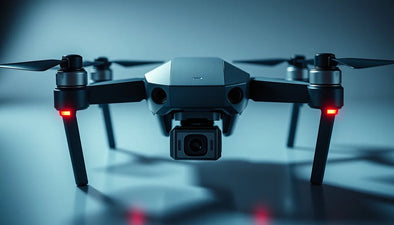
Article date: 2026-06-06 | Analysis by Reboot Hub Editorial. Images are conceptual representations for illustrative purposes only.
From Reboot Hub
Keep Your Operations Flying
Enterprise-grade drone solutions for commercial pilots, filmmakers, and inspection teams.
Refurbished Fleet
Fully inspected DJI drones with 6-month warranty. Save up to 40%.
Browse Inventory ->