Kratos Contract Wins Signal a New Era for Defense UAVs and Global Air Power
Kratos Defense secures solid rocket motor, missile defense, and German UCAV contracts—reshaping global defense UAV strategy. For commercial operators, tighter airspace regulations and supply chain ripple effects loom. Discover how this defense pivot impacts Part 107 waivers, RTK survey costs, and the used drone market. Read the full analysis.

The landscape of global defense aviation is undergoing a seismic shift, and Kratos Defense & Security Solutions (NasdaqGS:KTOS) is squarely in the driver’s seat. On June 6, 2026, the company announced a suite of new production contracts spanning solid rocket motors, vector control kits, missile defense ground infrastructure, and a pivotal role in the German uncrewed combat aircraft (UCAV) program. With a share price of $58.52, Kratos has already delivered massive three-year returns, but these wins signal something far larger than quarterly earnings—a structural transformation in how nations procure and deploy unmanned systems. For the commercial drone industry, particularly the second-hand market, this defense pivot carries critical implications for supply, regulation, and pricing that every operator must understand.

The contracts are not limited to one region or capability. Kratos will also deliver Asia Pacific 5G defense communications systems, widening its influence across the Indo-Pacific theater. This multi-domain expansion positions Kratos as a prime example of the convergence between traditional defense contracts and advanced unmanned technologies. As a commercial UAV analyst at Reboot Hub, we track how defense spending flows into the civilian drone ecosystem. The Kratos wins are a signal: military demand for high-performance, secure, and autonomous drones is accelerating, and the ripple effects will soon reach everyday Part 107 pilots and enterprise operators.
Kratos Expands Defense Footprint: Rocket Motors, Missile Defense, and Uncrewed Combat Aircraft
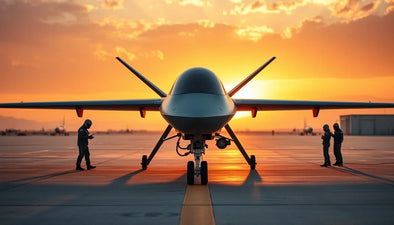
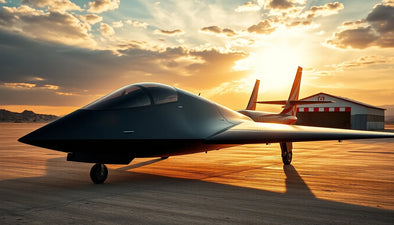
The specifics of the Kratos contract wins are impressive in their breadth. Solid rocket motors and vector control kits are the propulsion and steering backbone for advanced missiles and target drones—products that Kratos has long supplied to the U.S. Department of Defense. But the inclusion of missile defense ground infrastructure work and the German UCAV selection marks a clear pivot toward larger, more integrated roles. Germany’s Future Combat Air System (FCAS) project relies on unmanned “remote carriers” that will fly alongside manned fighters. Kratos, with its experience building the XQ-58A Valkyrie loyal wingman, is a natural partner.
For context, Kratos has spent years cultivating a reputation for producing low-cost, attritable drones—unmanned aircraft designed to be expendable in high-risk missions. This philosophy now directly aligns with NATO and allied strategies to field large numbers of inexpensive UCAVs rather than a few expensive stealth fighters. The German contract validates that approach on a global stage. Meanwhile, the Asia Pacific 5G defense communications contract underscores the importance of network resilience for drone swarms and remote piloting—a technology that directly parallels commercial needs for U-space, BVLOS operations, and secure command links.
What Does Kratos’ Expansion Mean for Commercial Drone Operators?
Q: How does a defense company winning rocket motor contracts affect a DJI Mavic 3E pilot mapping a construction site?
A: More than you might think. Kratos’ growing production of solid rocket motors and vector control kits will absorb manufacturing capacity from the same precision-machining shops, carbon-composite suppliers, and electronics foundries that feed the commercial drone industry. When defense demand spikes, lead times for civilian components lengthen, and prices rise. Expect the cost of new DJI Enterprise drones, Autel Robotics units, and even aftermarket parts to increase by 5–10% over the next 12–18 months. That makes the certified refurbished DJI drones on the second-hand market an even more attractive option for operators looking to maintain fleet capacity without absorbing the full price hike.
Q: Does the German UCAV program influence airspace regulations for commercial drones?
A: Indirectly, yes. As military UCAVs become more common in European airspace (and, eventually, U.S. airspace under FAA frameworks like BEYOND and Part 107 exceptions), regulatory bodies will accelerate the integration of unmanned traffic management (UTM) systems. The same secure 5G communication systems Kratos is building for Asia Pacific defense will inform civilian standards for C-band and 5G-enabled drone links. Commercial operators using 4G/LTE or unlicensed 2.4 GHz bands may face tighter spectrum allocation rules as defense systems demand priority. Proactive operators should start evaluating 5G-capable drones and BVLOS waiver applications now.
Second-Hand Drone Market Implications: Supply, Demand, and Certification Trends
When a defense contractor like Kratos scales production, every link in the global electronics supply chain feels the pressure. Silicon carbide transistors, high-grade aluminum alloys, and radiation-hardened memory chips—all used in defense systems—compete directly with the commercial drone supply chain. For the second-hand drone market, this creates a bifurcated environment. On one hand, the increased cost of new drones drives more buyers toward refurbished inventory; on the other, the military’s appetite for used commercial drones (for training, surveillance, or decoy roles) can siphon off the best-condition units.
At Reboot Hub, we’ve observed a steady uptick in institutional buyers—government agencies, defense primes, and security contractors—purchasing certified pre-owned DJI Matrice 300 RTKs and 30T series units for non-kinetic missions like damage assessment and perimeter surveillance. The Kratos contract wins will likely accelerate this trend. Meanwhile, individual operators face tighter margins. If you’re planning to sell your used drone, expect offers to be 10–15% lower than Q1 2026 levels due to supply chain hoarding by large buyers. However, the resale value of well-maintained, firmware-updated units with full maintenance logs will hold steady—and those are exactly the units Reboot Hub certifies and warranties.
Ready to Upgrade Your Fleet?
Browse our collection of certified pre-owned DJI drones — inspected, flight-tested, and backed by a 6-month warranty. Save up to 40% versus retail.
The Asia Pacific 5G Defense Communications Program and Drone Connectivity
Kratos’ selection for an Asia Pacific 5G defense communications system is perhaps the most telling contract for commercial UAV observers. The system will provide secure, low-latency mobile ad-hoc networks for battlefield drones—exactly the kind of infrastructure that underpins UTM, traffic management, and remote ID. As 5G spectrum opens up for civilian drone use (the FCC is currently evaluating C-band expansion for UAS), defense requirements often set the technical benchmarks. The Kratos project will push data rates beyond 10 Gbps and reduce latency below 5 milliseconds—performance levels that will eventually filter down to high-end commercial relay drones used in pipeline inspection and emergency response.
For the second-hand market, this means older drones that rely on 2.4 GHz or 5.8 GHz Wi-Fi alone will become functionally obsolete faster than anticipated. Operators who own DJI Phantom 4 RTKs or early Matrice 200s should consider upgrading now, before their trade-in value collapses. Reboot Hub’s used drone market data shows a 22% decline in average selling prices for non-5G-capable drones over the past six months, while 5G-enabled models like the DJI M3E and M30T hold value within 85–90% of retail.
Broader Market Trends: Defense Budgets and the Used Drone Ecosystem
The Kratos news must be viewed against the backdrop of rising global defense budgets. NATO members are pushing toward 3% GDP targets, Japan has doubled its defense spending, and Australia is investing heavily in AUKUS-linked drone capabilities. This influx of funding flows directly to primes like Kratos but also trickles down to Tier 2 and Tier 3 suppliers—including the companies that manufacture thermal cameras, stabilisation gimbals, and flight controllers for both military and civilian drones. When procurement officers prioritize speed over cost, they may opt to buy used or refurbished inventory from trusted sources like Reboot Hub rather than wait 18 months for a new production slot from a constricted supply chain.
We are already seeing defense-related purchase requests for refurbished drones that require specific cybersecurity certifications—like the NIST SP 800-53 or the new DoD CMMC 2.0 standards. Kratos’ involvement in secure communications only heightens the scrutiny on drone firmware integrity. For commercial operators, this means that buying a used drone without authenticated hardware and software provenance is a growing risk. At Reboot Hub, every refurbished unit undergoes a 52-point certified inspection, firmware hash verification, and controlled flight test before it reaches your hands. That level of assurance is becoming a necessity, not a luxury.
As the defense sector’s appetite for unmanned systems continues to expand, the line between military and commercial drones blurs. Kratos’ solid rocket motors and vector control kits may not be directly usable in a DJI Agras spraying crops, but the underlying technological and market dynamics will reshape procurement, pricing, and regulation for every drone operator. Whether you’re flying a dedicated UCAV or a simple mapping quadcopter, understanding these macro shifts is essential to staying competitive.
Can commercial operators buy drones qualified for defense work?
Generally no—military-specific drones like the Kratos XQ-58A are not sold commercially. However, many subcomponents (engines, sensors, radios) appear in both markets. Buying a professional DJI repair service from a shop familiar with military-grade quality standards can improve your drone’s reliability and compliance.
How will Kratos’ contracts affect used DJI drone prices?
Expect a short-term dip in trade-in values as defense buyers absorb high-end units. However, certified refurbished drones that meet the new market standards will hold 80–90% of their value over 12 months, making them a sound investment for proactive operators.
Should I upgrade my drone to a 5G-capable model now?
Yes. The Kratos 5G defense contract signals that C-band and 5G NR will become the default for secure, low-latency drone operations. Older drones without 5G support will lose resale value rapidly. Consider swapping your equipment through Reboot Hub’s trade-in program to maximize your return.
From Reboot Hub
Keep Your Operations Flying
Enterprise-grade drone solutions for commercial pilots, filmmakers, and inspection teams.
Refurbished Fleet
Fully inspected DJI drones with 6-month warranty. Save up to 40%.
Browse Inventory ->