Phantom Twist: A Drone That Spins Itself into Near Invisibility
A first look at the Phantom Twist concept reveals a drone that uses rapid spinning to become nearly invisible. This analysis explores the engineering approach, potential commercial uses, and what buyers should consider before the technology reaches the market.

A recent first look at a novel drone concept, called the Phantom Twist, has captured the attention of the commercial UAV industry. The design reportedly achieves a state of near invisibility by spinning its entire airframe at high speed. While initial coverage comes from a consumer tech blog, the underlying idea could have meaningful implications for fleet operators, security professionals, and the broader market for pre-owned and current-generation drones. This analysis unpacks what is known about the Phantom Twist concept and explores what operators should watch for as the technology develops.
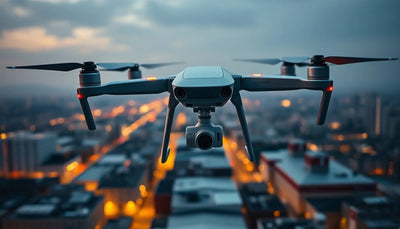
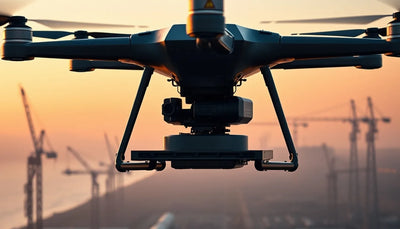
The Phantom Twist is not a production drone, but rather a concept that demonstrates a unique approach to reducing visual detection. By spinning the body of the drone itself, the craft becomes extremely difficult to track with the naked eye or standard optical sensors. The source description emphasizes that this "spinning" effect creates a kind of invisibility, making the drone nearly disappear during flight. For commercial operators who work in sensitive environments—such as perimeter surveillance, infrastructure inspection in contested airspace, or wildlife monitoring where minimal disturbance is critical—such a feature could provide a meaningful operational advantage.
Understanding the spinning invisibility concept
The core innovation behind the Phantom Twist is that it uses rotational motion to break up the visual outline of the drone. Traditional stealth designs rely on shape, materials, and coatings to reduce radar or visual signatures. The Phantom Twist instead introduces motion as a camouflage layer. When the entire airframe rotates at a sufficient speed, the human eye and standard cameras struggle to lock onto a fixed shape, making the drone appear blurred or even transparent. The source article refers to this as "near invisibility," a term that should be interpreted as reduced detectability rather than total stealth.
Market context
Turn market news into a buy, repair, or trade-in decision.
Compare pre-owned availability, resale timing, and repair economics before the market moves again.

From an engineering standpoint, implementing such a design requires solving significant challenges in aerodynamics, power management, and payload integration. A spinning airframe must maintain stable flight while carrying sensors or cameras that may need to remain stationary relative to the ground. The article does not specify how Phantom Twist addresses these issues, but the very existence of a working concept suggests that at least one team has found a workable approach. For fleet operators, the practical takeaway is that visual detection avoidance may soon become a commercially viable feature, potentially changing how drones are deployed for clandestine or low-observation missions.
Another factor to consider is the impact on acoustic signature. Rapid spinning could alter the sound profile of the drone, either making it quieter (if the blades are integrated into the spinning body) or louder (if the mechanism introduces additional noise). The source does not mention sound, so we cannot draw firm conclusions. However, any operator evaluating stealth drones should prioritize acoustic data once it becomes available.
Commercial implications for fleet operators
The Phantom Twist concept arrives at a time when commercial drone operators are seeking ways to differentiate their services and reduce friction with the public or authorities. Visual detectability is a concern for many applications: utility inspection in residential areas, security patrols at sensitive facilities, and film production on location all benefit from drones that attract less attention. If the spinning invisibility technology can be miniaturized and integrated into a reliable platform, it could open new contracts for operators who specialize in discrete aerial surveillance.
For existing fleet owners, the development of such technology also reinforces the importance of maintaining the value of their current assets. A drone that is visually detectable today will still perform its core functions, but its resale value may decline if a competitor offers stealth capabilities. Commercial buyers on the second-hand market should monitor these trends carefully. When groundbreaking features emerge, older models often become more affordable, presenting an opportunity for cost-conscious operators. The pre-owned DJI market, in particular, could see increased supply if fleet owners upgrade to stealth-capable platforms in the future.
Operators who rely on DJI's ecosystem for spare parts and repairs should note that any new stealth drone will likely use proprietary components that are not interchangeable with existing models. Until the Phantom Twist or similar products reach the market, there is no reason to change current purchasing behavior. However, fleet managers should begin including "visual stealth capability" as a potential evaluation criterion in their long-term procurement roadmaps. This does not mean abandoning DJI platforms, which remain the most versatile and well-supported choice for the majority of commercial missions.
One concrete action commercial drone buyers can take today is to consult a drone trade-in guide to understand the current value of their equipment. As new technology lurks on the horizon, timing a trade-in or upgrade becomes a strategic decision. Waiting too long could mean selling into a saturated market, while acting early can maximize capital for future investments.
What this means for drone buyers
For drone buyers, the Phantom Twist first look carries both excitement and caution. The concept demonstrates that UAV design is far from mature, and that breakthrough features can still emerge from outside the established manufacturers. Buyers who are considering a major fleet purchase in the next 12 to 18 months should weigh whether visual stealth is a priority for their mission profile. If it is, they may want to delay procurement until concrete specifications and pricing are published. If not, current-generation drones offer proven reliability, robust support, and strong resale value—especially in the pre-owned market.
Second-hand buyers have a particular advantage during periods of technological transition. When new capabilities debut, early adopters often sell their older but still capable equipment to fund the upgrade. This creates a buyer's market for inspected pre-owned DJI drones. Operators who do not require cutting-edge stealth can acquire high-quality platforms at reduced prices. For example, a pre-owned DJI drones from the Mavic or Matrice series can still perform excellent commercial work, and their open availability of spare parts makes them cost-effective to maintain.
Repair customers should also keep the Phantom Twist development in mind. Any drone that spins its entire body will likely have a unique failure mode: imbalance, bearing wear, or gyroscopic instability. If you are planning to buy a Phantom Twist-type drone in the future, ensure that manufacturer repair support (if applicable) or a certified service center is available. For now, no such service exists, so sticking with platforms supported by established repair networks is the safer bet.
Ultimately, the Phantom Twist concept reinforces a key lesson for drone buyers: do not let novelty override practical considerations. Wait for independent testing, verified range and endurance figures, and a track record of reliability before committing capital. In the meantime, the current generation of drones remains highly capable and cost-effective.
Fleet planning considerations
Fleet operators who manage large numbers of drones must think about interoperability and maintenance logistics when evaluating new technology like the Phantom Twist. A stealth spinning drone may require different pilot training, battery configurations, and software interfaces than conventional multirotors. Retrofitting an existing fleet to support a new airframe can be disruptive. Therefore, fleet managers should assess the total cost of ownership for any new platform, including training hours, spare part inventory, and downtime for repairs.
From a regulatory perspective, a drone that is visually hard to detect may raise new compliance questions. Many jurisdictions require drones to be clearly visible to other airspace users, especially during daytime operations. A near-invisible drone could violate those rules unless specific exemptions are granted. Fleet operators should engage with aviation authorities early if they plan to deploy such technology, to ensure they remain within legal boundaries. The source does not mention any regulatory approvals for Phantom Twist, so this remains an open issue.
Reboot Hub analysis: For the pre-owned Drone market, the emergence of a stealth spinning drone is likely to accelerate depreciation of older models that cannot be upgraded. However, the effect will be gradual. Most commercial operators do not replace their entire fleet annually, so demand for second-hand drones will remain steady for years. Repair services will need to adapt as drones become more mechanically complex, but the core business of fixing DJI drones with genuine OEM parts will continue as long as those platforms remain in service.
What is the Phantom Twist drone?
The Phantom Twist is a concept drone that reportedly achieves near invisibility by spinning its entire airframe at high speed. The source article describes it as a first look, meaning concrete specifications and commercial availability have not been announced.
Could this technology affect the value of my current drone?
If stealth spinning technology becomes commercially successful, it could reduce demand for older, visually detectable models, potentially lowering resale values. However, the impact will be gradual and depends on actual performance, regulatory acceptance, and price.
Should I wait to buy a drone until the Phantom Twist is released?
That depends on your operational needs. If discrete visual operations are critical, waiting for validated specs may be wise. For most commercial missions, current platforms from DJI and other established manufacturers provide excellent value, especially when purchased on the pre-owned market.