ParaZero Lands Third DefendAir Pod Order from Top Israeli Defense Unit
ParaZero received another DefendAir Net Pod order from a tier-1 Israeli defense firm’s third business unit for autonomous counter-UAS integration. This repeat demand signals sustained investment in drone capture technology and carries implications for commercial drone operators and the pre-owned market.

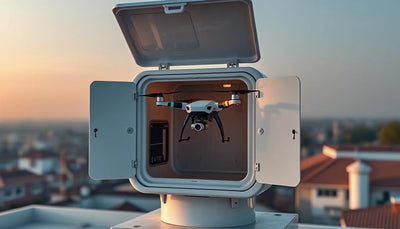
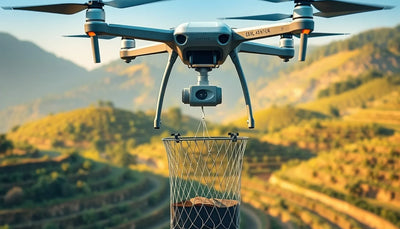
ParaZero Technologies (Nasdaq: PRZO) announced on July 24, 2026, that it has received a new order for its DefendAir Net Pod system from a third business unit within a tier-1 Israeli-based global defense company. The order includes dedicated engineering support for integration into an autonomous Counter-UAS system. This is not a first-time purchase—the same defense conglomerate had already ordered from at least two other business units—confirming that the DefendAir system is being rolled out across multiple programs within one major defense customer.
For commercial drone operators and fleet managers, this kind of repeat defense procurement matters far beyond the stock ticker. It signals that counter-UAS technology is moving from evaluation into field deployment at scale. Physical capture systems like the Net Pod, which use a net to intercept and bring down rogue drones, are being adopted alongside jammers, lasers, and kinetic interceptors. The implications for airspace access, drone design, and the second-hand market for commercial drones are tangible and worth following closely.
A third business unit: why repeat orders matter
The source release explicitly states that this is the “third business unit within a tier-1 Israeli-based global defense company” placing an order for the DefendAir Net Pod. The previous two units had already placed orders, and the new one adds dedicated engineering support for integration. That pattern—three separate internal customers within one parent organization—indicates institutional confidence and a broadening deployment plan rather than a single trial.
Fleet readiness
Keep DJI hardware available without overbuying new units.
Use defense and fleet news as a planning signal for repair support, inspected pre-owned aircraft, and replacement timing.

Reboot Hub analysis: For defense contractors, integrating a physical capture system into an autonomous Counter-UAS platform requires substantial engineering work: automation of launch, aim, and recovery; safe handling of captured drones; and compatibility with existing command-and-control networks. The inclusion of engineering support in this order suggests the customer is moving toward operational readiness, not just lab testing. The practical implication for commercial drone operators is that such systems are likely to be deployed at sensitive sites—airports, military bases, border zones, and critical infrastructure—where they can physically intercept and detain drones. This raises the stakes for operators who inadvertently fly into restricted airspace; a net pod capture can damage a drone and may result in forfeiture or legal action.
How this shapes the counter-UAS industry
ParaZero’s DefendAir Net Pod belongs to a category of counter-UAS solutions that favor low collateral risk over brute force. Unlike radio-frequency jammers that can disrupt communications for other aircraft or kinetic kill systems that risk falling debris, a net pod physically captures a drone and brings it to the ground in a controlled manner. The source describes it as part of an “autonomous Counter-UAS system,” meaning the detection, tracking, and interception decisions are handled by software and sensors without human trigger.
This autonomy is a significant trend. Defense and security clients increasingly want systems that can react to drone incursions in seconds, especially in swarming scenarios where a human operator cannot keep up. For fleet operators flying in urban or peri-urban areas, the proliferation of autonomous counter-UAS systems means that a simple flight-plan deviation could trigger an interception before you have time to correct course. The source does not provide technical specifications for the Net Pod—range, payload capacity, or altitude ceiling—so we avoid speculating. However, the mere fact that a tier-1 Israeli defense firm is deploying this hardware across multiple business units suggests it meets real operational requirements. Operators should check local airspace rules and consider whether their aircraft carry electronic identification that could reduce unwarranted interception.
What this means for drone buyers
For anyone actively buying, selling, or maintaining commercial drones—particularly pre-owned DJI models—this news reinforces several strategic considerations. First, defense-grade counter-UAS systems are being procured in volume, and those systems will be deployed in areas where commercial drones often fly: near airports, industrial plants, ports, and government buildings. The risk of a net-based intercept is no longer theoretical. Second, the response from some operators may be to invest in DJI’s geofencing and remote identification features, which can help avoid no-fly zones and provide digital proof of compliance. Older DJI models that lack native Remote ID or have outdated firmware may be less suitable for operations near sensitive infrastructure.
On the second-hand market, we are already seeing a bifurcation. Pristine pre-owned DJI drones with up-to-date firmware and verified module serial numbers command a premium because they can still operate in increasingly regulated airspace. Conversely, early Phantom 4 series or Mavic Pro models without Remote ID add-ons see softer demand. Buyers on a budget should consider a pre-owned DJI drone that includes a working Remote ID module or can be upgraded. For operators with existing fleets, our drone trade-in guide offers a clear path to upgrading to current-generation hardware before counter-UAS systems become a daily obstacle in your operating area.
Another angle is part availability and repair. If a drone is captured by a net pod, there is a high probability of propeller, motor, airframe, or gimbal damage. Having access to genuine OEM spare parts is critical for a timely return to service. Operators who run mixed fleets should ensure their repair shop is certified to work with DJI-specific components and can source OEM parts quickly. Our professional DJI repair services use only legitimate parts and can turn around most physical-damage repairs within 48 hours.
Operational and procurement strategies for fleet managers
The source release emphasizes “dedicated engineering support for integration,” which is a reminder that even proven commercial off-the-shelf products require customization when tied into larger systems. For fleet managers, this parallel is instructive: integrating a new drone model into an existing workflow—whether for mapping, inspection, or security—demands more than just plug-and-play. Payload compatibility, software integration, ground control station configuration, and pilot training all factor into total cost of ownership.
As counter-UAS systems become more common, fleet managers should also assess their own operational risk profile. If you plan to fly near any site that might deploy active drone defense, consider the following: (1) register all aircraft with the appropriate authority and maintain visible Remote ID transmission; (2) train pilots to respond to interception alerts or communications from security personnel; (3) budget for potential drone loss or damage caused by counter-UAS measures. The commercial drone insurance market is still evolving on this front, so ask your broker about coverage for interception-related damage.
From a procurement standpoint, the second-hand market may offer an affordable entry point for building a dedicated fleet for lower-risk operations, while deploying newer, more compliant aircraft for high-stakes missions. The demand for inspected pre-owned DJI drones is unlikely to wane, but the condition and firmware version will increasingly differentiate value. Buyers should request a full flight-log review and firmware snapshot before committing to any used unit.
What is the DefendAir Net Pod system?
According to the source release, DefendAir Net Pod is a system developed by ParaZero that uses a net to physically capture rogue drones. It is designed to be integrated into autonomous Counter-UAS platforms, meaning the system can detect, track, and intercept without manual control. The source does not provide technical specifications such as range or payload weight.
How does this order affect commercial drone operators?
The receipt of a third order from a single defense customer indicates that counter-UAS net-based capture is moving beyond testing into field deployment. Commercial operators who fly near sensitive sites face an increased risk of interception if they enter restricted airspace. This should prompt a review of flight planning software, Remote ID compliance, and insurance coverage for drone damage caused by defensive systems.
Should I sell my current DJI drone because of this news?
Not necessarily. The counter-UAS threat is site-specific, and most commercial operations will remain unaffected as long as pilots respect airspace boundaries. However, if your drone lacks Remote ID, has outdated firmware, or is a model known for frequent geofencing conflicts, it may be worth trading it for a newer unit. Our trade-in guide can help you evaluate the current market value of your aircraft and identify a suitable replacement.
Sources consulted
- Yahoo Finance market report - primary source
Additional official documentation was not available at publication time.
Reboot Hub Editorial adds buyer, repair, resale, and operational analysis for drone owners. If you spot an error, contact us for correction review through our editorial policy.