Normal Police Adds Flock DFR in First Responder Drone Pilot
The Normal Police Department will add a Flock DFR unit to its six-drone fleet in a one-year $50,000 pilot. We analyze what this means for commercial operators, fleet buyers, and the second-hand drone market.

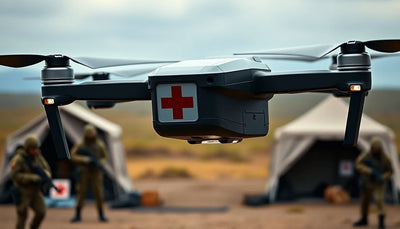
The Normal Police Department (NPD) is preparing to add a seventh aircraft to its existing six-drone fleet, this time a Flock Drone as First Responder (DFR) platform. On June 15, 2026, the Town of Normal Council approved a $50,000 purchase for a one-year pilot program, making this both the department's first Flock system and its first drone explicitly designed for the DFR mission model.

For commercial UAV analysts, this procurement offers a clear signal: public-safety drone fleets are moving beyond general aerial observation toward integrated, vendor-specific response systems. The NPD already operates six drones, but dedicating a new platform to automated first-responder deployment represents a shift in how police aerial assets are budgeted, trained, and maintained. At $50,000 for a single unit plus a one-year pilot, the price tag is notable for a segment where used DJI Matrice 300 or 30 series drones often trade for far less on the secondary market. Understanding what this deployment means for buyers, fleet managers, and repair shops requires reading between the lines of the council's approval.
Why the Flock DFR model matters for public-safety fleets
The council's decision to fund a one-year pilot rather than a permanent acquisition signals caution. DFR systems-where a drone is stationed in a weatherproof dock and launched automatically in response to incidents-reduce pilot response time but introduce new infrastructure costs. The $50,000 line item covers only the Flock drone and likely its associated software, not the ground-based dock, integration with dispatch, or ongoing data storage. Existing six-drone NPD fleet likely includes older units that require manual piloting, so the Flock addition creates a two-tier capability: traditional piloted drones for planned operations, and an autonomous first-responder drone for rapid calls.
This mirrors a trend observed in other mid-size municipal fleets since 2024. The Flock system's emphasis on real-time video streaming to dispatch and automated flight paths means the department will need to update its command-and-control workflows. For commercial operators and fleet buyers, the key takeaway is that DFR is not a simple add-on-it demands dedicated hardware, software subscriptions, and training. A $50,000 purchase price for a single drone plus one-year pilot suggests the recurring cost of the service may be as significant as the hardware itself.
What this means for drone buyers
If you are a commercial operator or a fleet manager evaluating whether to adopt a DFR system versus expand an existing fleet of piloted drones, the Normal case offers a real-world cost baseline. At roughly $50,000 for a single Flock unit and pilot, you are paying for integration and security-focused software, not just flight hardware. For the same budget, you could purchase a lightly used DJI Matrice 350 RTK with a Zenmuse H20T camera, a dock, and still have funds left for batteries and training. The trade-off is purpose-built DFR integration versus multi-mission flexibility.
Fleet readiness
Keep mission-ready DJI hardware available without overbuying new units.
Reboot Hub helps teams source inspected pre-owned DJI platforms, repair genuine components, and keep essential spare parts moving.
Buyers considering used or refurbished drones should note that police fleet upgrades often release older aircraft to the secondary market. NPD's existing six drones may become surplus if the Flock pilot proves successful and the department shifts more budget to vendor-specific platforms. That could mean a short-term supply increase of well-maintained, part-number-checked drones from public agencies-good news for budget-conscious buyers. However, any sale of used drones will likely require a public tender or auction, so timing is uncertain.
For those looking at refurbishment-labeled options, the Normal purchase reinforces that police-grade maintenance logs and flight hours are valuable. A drone that has served in a municipal fleet-even a non-DFR one-is likely to have been kept to higher uptime standards than a privately owned unit. When evaluating used stock, prioritize units with documented service records. Reboot Hub's pre-owned DJI drones provide that assurance with manufacturer-grade parts and testing.
Implications for fleet operators and repair customers
Fleet operators in both public safety and commercial sectors should watch how Normal handles maintenance and repair for its new Flock drone. Because the Flock platform is purpose-built and likely uses proprietary components, the department may be locked into vendor-only repair channels. This is a stark contrast to the DJI-dominated landscape where independent repair shops-including Reboot Hub's professional DJI repair services-offer competitive turnaround times and genuine parts for popular models like the Matrice 4 series, Mavic 3 Enterprise, and Phantom 4 platforms.
If your organization operates a mixed fleet of DJI and vendor-specific systems, you should plan for two separate maintenance pipelines. DJI drones benefit from a large third-party repair ecosystem, competitive parts pricing, and field-swappable modules. A Flock DFR or similar purpose-built platform may require shipping to the manufacturer for software updates or hardware repairs, potentially increasing downtime. The one-year pilot structure of the Normal contract implies that the department has a built-in exit option if repair costs or reliability do not meet expectations.
From a repair customer's perspective, the presence of vendor-locked drones in a fleet does not threaten the availability of repair services for DJI equipment-in fact, as more agencies experiment with specialized platforms, the demand for reliable aftermarket support for mainstream drones may hold steady or grow. Operators who stick with widely supported airframes benefit from a deeper pool of skilled repair technicians and faster parts procurement.
Second-hand drone market impact
The Normal Police procurement is a small-scale event, but it reflects a broader pattern: public agencies are beginning to allocate line items for DFR-specific drones, which in turn could accelerate turnover of older, general-purpose aircraft. Over the next 12 to 18 months, as more departments follow Normal's lead and pilot DFR systems, the secondary market may see an uptick in listings from police fleets selling off pre-DFR drones. These units are often mission-capable and maintained to commercial standards, making them attractive to agricultural surveyors, inspectors, and other commercial pilots who prioritize reliability over the latest features.
Commercial buyers should also note that DFR systems often require a full-stack subscription, including cloud storage and dispatch integration. If Normal's pilot does not convert to a permanent program, the $50,000 investment has limited resale value outside other Flock users. That risk is one reason the used market for vendor-specific platforms remains shallow. By contrast, DJI drones retain strong resale liquidity because of their large install base and compatibility with multiple commercial software platforms. A Matrice 300 or 30 series, for instance, can be easily repurposed from police patrol to agricultural mapping.
For fleet managers evaluating whether to enter a DFR contract, the Normal example suggests starting with a single-unit pilot before committing to multiple systems. That way, you can assess total cost of ownership-including repair, software fees, and training-without over-committing to a platform that may not fit your operational needs. And if you plan to offload older drones to fund the new purchase, be realistic about timelines and pricing, as auction processes can take months.
Is the Flock DFR drone similar to a DJI dock-based system?
Both Flock DFR and DJI's Dock solution (used with Matrice 3D/3TD series) share the concept of automated deployment and return. However, as of June 2026, the Normal Police procurement provides no technical specifications on how Flock compares to DJI's ecosystem. Without verified specs, operators should treat them as distinct products with different software integrations, service agreements, and possibly different flight performance. Buyers should request side-by-side demonstrations from vendors when comparing DFR systems.
Will this pilot affect used DJI drone prices in the short term?
Not directly. The Normal Police purchase is a single $50,000 contract for one drone plus a one-year pilot. That volume is too small to shift the national supply of used DJI drones. However, if this pilot is part of a wider shift among U.S. police departments toward Flock or similar proprietary DFR systems, the cumulative effect could reduce demand for general-purpose piloted DJI drones from public agencies over the next two to three years, potentially increasing supply on the secondary market.
What should a fleet operator do when considering a DFR system like Normal Police bought?
First, ensure you have a clear operational requirement for automated first-responder deployment-not all missions benefit from a drone arriving before an officer. Second, calculate total cost over two years, including hardware, dock installation, software subscription, maintenance, and training. Third, compare the vendor's repair policies and parts availability against your required uptime. Finally, consider starting with a single-unit pilot, as Normal did, to validate the system before scaling. Document flight hours, incident response times, and maintenance incidents during the pilot to inform a data-driven renewal decision.
From Reboot Hub
Keep mission-ready DJI hardware available without overbuying new units.
Reboot Hub helps teams source inspected pre-owned DJI platforms, repair genuine components, and keep essential spare parts moving.
Pre-owned DJI drones
Inspected pre-owned aircraft with warranty coverage and clear condition grading.
Browse inventory ->Genuine-part repair
Diagnostics, repair planning, and component replacement for working DJI fleets.
Book a repair ->OEM spare parts
Batteries, propellers, gimbals, and essential DJI components for faster recovery.
Shop parts ->