Joby and Toyota JV: What It Means for Drone Investors and Operators
Joby Aviation shares rose 7% after announcing a manufacturing joint venture with Toyota. The deal signals deep industrial backing for electric aviation, affecting drone capital flows, component supply, and used-market confidence for fleet operators.

Editorial notes
- This article combines named outside reporting with Reboot Hub's own analysis for drone buyers, fleet operators, repair customers, and pre-owned DJI market watchers.
- Source facts are separated from interpretation. When a report provides limited data, the article states that limitation and frames Reboot Hub's view as analysis.
- Reboot Hub has commercial links to drone products and repair services; those links are reader resources and do not determine the article's conclusion.
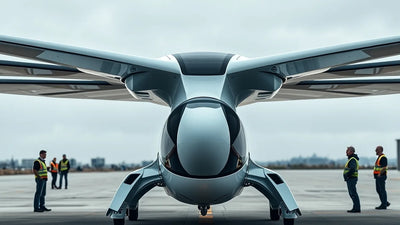
Joby Aviation (NYSE:JOBY) shares gained 7% on Tuesday after the company announced a manufacturing joint venture with Toyota Motor Corporation to produce the S4 Series electric vertical take-off and landing (eVTOL) aircraft. The deal is more than a production agreement; it represents a major vote of confidence from one of the world's largest automakers in the commercial viability of electric aviation. This signal ripples through the drone sector by influencing investor sentiment, component supply chains, and the strategic outlook for fleet operators who are watching urban air mobility converge with traditional unmanned systems.

The manufacturing partnership in context
Under the joint venture, Toyota will contribute its manufacturing expertise, lean production methods, and supply chain infrastructure to scale Joby's S4 eVTOL aircraft. Joby brings its certified aircraft design, flight testing history, and regulatory progress with the FAA. The move echoes earlier automotive-aerospace tie-ups such as Hyundai's Urban Air Mobility division and Geely's investment in Volocopter, but Toyota's global production scale and reputation for quality control make this partnership particularly weighty.
For drone sector watchers, the key takeaway is that a company with Toyota's resources is betting that electric vertical flight will become a mass-market transportation segment. That bet justifies continued investment in battery technology, electric propulsion, and lightweight materials — all of which are directly relevant to the commercial drone ecosystem. When an automotive giant commits to volume production of eVTOLs, it signals that the underlying technology stack is mature enough to leave the lab and enter the assembly line.
From a capital markets perspective, the JV may attract additional institutional investors to the eVTOL and drone space. Joby's stock rise is a leading indicator; if the partnership reduces manufacturing risk and accelerates time to market, other publicly traded drone and eVTOL companies could see a rising tide. However, it also heightens competition for top engineering talent and specialized components such as high-capacity batteries, electric motors, and composite airframes. Fleet managers should monitor whether supply constraints for these items push up prices for drone components in the near term.
Market and sector signal
The Joby-Toyota JV sends a clear market signal: mainstream industrial manufacturing is ready to embrace electric aircraft at scale. This reduces the technology risk premium that has weighed on the eVTOL sector and, by extension, the broader drone market. Investors who were hesitant about the sector's ability to produce certified aircraft in volume now have a concrete example of a global automaker taking a hands-on role.
Purchase timing
Use market shifts to buy smarter, not faster.
When pricing, earnings, or supply news moves the drone market, compare certified pre-owned options and repair paths before committing new capital.
For public-company traders, the immediate signal is bullish for Joby, but there are spillover effects for other electric aviation stocks and drone manufacturers. Companies like Archer Aviation, Lilium, and Vertical Aerospace may see renewed interest as the industry validation effect spreads. Additionally, suppliers of electric propulsion systems, batteries, and composite materials — many of which also serve the drone industry — could experience increased demand. This demand pressure may lead to shorter lead times and better pricing for drone OEMs if automakers bring down component costs, or it could create bottlenecks if production ramps conflict.
The signal also affects second-hand drone market dynamics. When large industrial players bet on new electric aircraft, used fleets of older drones and eVTOL prototypes may lose value as the technology leap accelerates. Operators with older platforms should plan for faster depreciation and explore refurbishment or resale timing strategies. Reboot Hub's certified refurbished drone inventory offers a cost-effective bridge for fleet managers who want to upgrade without absorbing the full depreciation of new units.
Another important dimension is regulatory momentum. Toyota's involvement brings lobbying weight and safety credibility that could speed up FAA certification pathways for eVTOLs. A faster path to commercial operations for eVTOLs could also pull forward regulations for unmanned traffic management (UTM) and airspace integration, which will directly affect drone operators. Fleet managers should watch for regulatory consultation announcements from the FAA and EASA that may be influenced by this JV.
What this means for drone buyers
Drone buyers — whether enterprise fleet operators, repair customers, or individual pilots — may wonder how a carmaker-eVTOL joint venture affects their next purchase decision. The direct impact is not immediate, but there are strategic considerations.
First, the JV validates the long-term viability of electric flight technology. This means that investing in electric drone platforms today is a bet on a technology trajectory that a company like Toyota endorses. Buyers who were worried that eVTOL might be a passing fad can feel more confident in the underlying technology.
Second, as Toyota scales eVTOL production, component costs for batteries, motors, and flight controllers could come down thanks to shared supply chains. That could make high-end commercial drones more affordable in the 2027–2029 timeframe. Buyers with flexibility in their purchasing schedule may want to defer large fleet upgrades by maintaining current hardware through professional repair and genuine spare parts. Reboot Hub's repair services use OEM components to extend the service life of existing DJI fleets, allowing operators to wait for the next cost-reduction wave.
Third, the JV highlights the importance of robust ground infrastructure for electric aircraft. For drone operators, this parallels the value of docking stations and automated launch systems. Consider the DJI Dock 3, which according to verified specifications weighs 55 kg and measures 640 × 745 × 770 mm when closed. It operates in temperatures from -30 to 50 °C, is rated IP56 for weather resistance, and can handle landing winds up to 12 m/s. These specs demonstrate that drone infrastructure is already mature enough for demanding industrial applications — a stepping stone toward the more complex vertiports eVTOLs will require. Buyers looking to automate their drone operations can deploy such systems now with confidence that the underlying technology is aligned with where the industry is heading.
Implications for fleet operators and the used market
Fleet operators should take several concrete actions in response to this signal. First, review capital allocation: if you are considering a large fleet expansion, evaluate whether OEM prices will drop in the next 12–18 months as eVTOL supply chains mature. In the interim, using refurbished drones from a trusted source can preserve capital while maintaining operational capability.
Second, monitor the used drone market for liquidation events. When institutional capital flows strongly into new platforms, some operators may sell older equipment to fund upgrades. This creates buying opportunities for value-conscious fleet managers. However, be careful to assess the remaining useful life of any used drone. Professional diagnosis and repair services can help verify condition before purchase.
Third, consider the resale timing of your own fleet. If you hold DJI aircraft that are three to four years old, you might want to sell them before a new wave of more capable, cheaper platforms arrives. The used drone market is sensitive to technological leaps; a Toyota-backed eVTOL does not directly compete with a DJI Phantom, but it signals that rapid electrification progress may accelerate the obsolescence of older battery chemistry and flight controllers. MTS Radar from Reboot Hub can help track market trends and price movements in the second-hand segment.
Finally, repair readiness becomes more important as the industry evolves. If new platforms from a Toyota supply chain change connector standards or battery form factors, ensuring that your existing fleet can be kept flying with genuine OEM parts is a prudent hedge. Reboot Hub's spare parts inventory covers DJI products extensively, allowing operators to postpone fleet replacement while the eVTOL and drone market converge.
How does the Joby-Toyota JV affect DJI drone prices?
Not directly, but indirectly. If Toyota's manufacturing scale reduces the cost of electric propulsion and battery components worldwide, DJI may pass on savings to consumers within 12–24 months. For now, prices remain stable. Buyers should not rush purchases based on this news but can feel reassured about the long-term direction of electric drone technology.
Should I sell my used drone now because of this news?
Not necessarily. The second-hand market is influenced more by supply and demand for specific models than by distant eVTOL production plans. However, if you are already considering an upgrade, the JV reinforces that electric flight is a growth sector, meaning demand for older technology may soften over time. It is a good moment to assess your fleet's residual value and potentially sell before a broader technology shift.
What should a fleet operator do with this information?
Treat the JV as a signal to maintain flexibility. Avoid locking into long-term leases on equipment that may become obsolete faster than anticipated. Invest in repair capabilities and spare parts to extend the life of current drones. Monitor capital markets for further investment in electric aviation suppliers, as that will indicate the pace of change. Use tools like MTS Radar to track second-hand pricing and make informed timing decisions for buying or selling used drones.
From Reboot Hub
Use market shifts to buy smarter, not faster.
When pricing, earnings, or supply news moves the drone market, compare certified pre-owned options and repair paths before committing new capital.
Certified DJI drones
Inspected pre-owned aircraft with warranty coverage and clear condition grading.
Browse inventory ->Genuine-part repair
Diagnostics, repair planning, and component replacement for working DJI fleets.
Book a repair ->OEM spare parts
Batteries, propellers, gimbals, and essential DJI components for faster recovery.
Shop parts ->