Insta360 Patent Reveals Foldable Drone Aimed at DJI Neo 2
A newly published Insta360 patent details a foldable drone design that directly targets the ultra-portable DJI Neo 2 segment. We examine the patent’s implications for fleet operators, buyers, and the pre-owned DJI market.

A patent filing from Insta360, discovered and reported by Geeky Gadgets this week, reveals the company’s plans to develop a foldable drone aimed squarely at DJI’s popular Neo 2. While the document remains a design patent and not a confirmed product, it provides the clearest signal yet that Insta360—best known for 360-degree cameras—intends to compete in the ultra-portable drone market. For commercial operators, fleet managers, and second-hand drone buyers, this development is worth tracking closely.
The patent describes a quadcopter with folding arms and a compact body, similar in concept to DJI’s Mini series but with a form factor specifically designed to rival the Neo 2’s palm-sized portability. Because no verified technical specifications or launch timeline have been disclosed, operators should treat this news as an early indicator of market direction rather than a imminent product launch. However, even at this stage, the filing has immediate relevance for drone procurement decisions, parts planning, and pre-owned asset valuation.
The Patent and What It Reveals
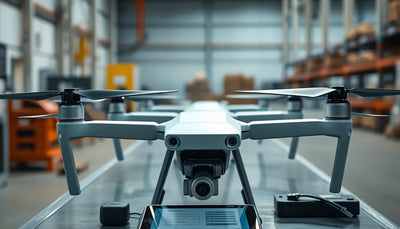
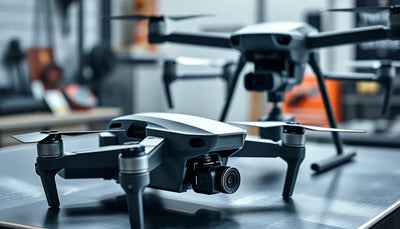
Insta360’s patent application, filed with the relevant intellectual property office, shows a drone with symmetrically folding arms that tuck into the central body. The design prioritises a flat, stowable profile that could fit into a pocket or small carrying case. According to the source report from Geeky Gadgets, the patent explicitly positions the device as a rival to the DJI Neo 2—a model that launched earlier this year and has become a favourite among content creators and light commercial users for its sub-250 gram weight and palm-sized form factor.
DJI buying context
Match product news to hardware you can actually deploy.
Check inspected DJI aircraft, repair support, and trade-in timing before deciding whether to upgrade, repair, or wait.

Beyond the foldable arms, the patent suggests an integrated camera system that may leverage Insta360’s expertise in wide-angle and 360-degree capture. However, the document does not specify sensor size, recording resolutions, or stabilisation modes. Without verified spec context, we cannot confirm whether the future product would include obstacle avoidance, transmission range, or intelligent flight modes comparable to the Neo 2. What is clear is that Insta360 is investing in the mechanical design required to enter a segment currently dominated by DJI.
Reboot Hub analysis: For repair customers and parts resellers, a new entrant like Insta360 would mean a new ecosystem of OEM-pulled parts and component supply chains. If the drone reaches production, it could create opportunities for independent repair shops to stock Insta360-specific arms, motors, and camera modules. Until then, the patent serves as a reminder that the ultra-portable drone market is not a one-company race.
How Insta360 Could Compete with DJI
Insta360’s competitive advantage lies in its camera technology. The company has built a strong reputation among action sports and travel enthusiasts with its 360-degree cameras and advanced software stitching. Applying that imaging expertise to a drone would allow Insta360 to offer a unique value proposition: a foldable drone that captures fully spherical footage without the need for gimbal adjustments. This could appeal to real estate marketers, event videographers, and inspection teams who need immersive visuals from a small aerial platform.
DJI’s Neo 2 currently leads the ultra-portable category with a balance of weight, camera quality, and autonomous features. Insta360 would need to match or exceed the Neo 2’s flight time, wind resistance, and ease of use to gain market share. The patent suggests a focus on portability, but flight performance and camera quality will determine whether commercial operators see it as a viable alternative.
For buyers considering a Neo 2 purchase today, the existence of a patent does not justify delaying a decision. DJI’s product is proven, widely supported, and available from sources including pre-owned DJI drones that have been inspected and certified. Insta360 has not announced a release date, and patent filings often do not result in consumer products. However, the filing does signal that competition in the sub-250 gram segment is intensifying, which could eventually lead to better features and pricing for end users.
What this means for drone buyers
For individual buyers and small fleet operators, the key takeaway is one of timing and value retention. The DJI Neo 2 is currently a strong investment for anyone needing a portable, capable drone for aerial photography, light inspection, or training. Its resale value is supported by DJI’s dominant ecosystem and high demand. However, the prospect of a credible rival could soften resale prices if Insta360 launches a competitive product within the next 12 to 18 months.
If you are planning to buy a Neo 2 and intend to keep it for several years, the patent changes little. The drone will continue to perform its role regardless of future competitors. But if you typically trade in drones every one to two years, you may want to monitor Insta360’s progress. A new entrant could depress second-hand Neo 2 values slightly, as buyers might hold out for the newcomer. In that case, purchasing a pristine pre-owned DJI drone today at a lower entry point could minimise depreciation risk.
Repair customers should note that Insta360’s potential entry would create a second source for genuine OEM spare parts and service options. More competition in the hardware layer typically drives down repair costs and improves parts availability across the board. For now, all standard maintenance and repair for DJI Neo 2 drones is best handled through professional DJI repair services that use OEM-pulled parts and follow factory procedures.
Operator-facing answer: Fleet managers evaluating ultra-portable options should continue with proven DJI Neo 2 purchases for current operational needs, as a patent does not guarantee a product launch. Allocate a small portion of your planning budget to monitor Insta360’s product pipeline and be ready to reassess when concrete specifications emerge.
Implications for the Pre-owned DJI Market
Any credible threat to DJI’s dominance in the ultra-portable segment has a direct impact on the pre-owned DJI drone market. When alternative products gain traction, the pool of used DJI drones expands as some operators switch platforms. This increased supply can push down prices for pre-owned Neo 2 units, making them more accessible to budget-conscious buyers. Conversely, if Insta360’s entry is delayed or fails to materialise, DJI’s resale values will remain stable, supported by the brand’s reliability and extensive spare parts network.
For resellers and trade-in programmes, the patent introduces a mild uncertainty. They may need to adjust their pricing models for the Neo 2 to account for a potential shift in demand. However, given the early stage of the patent process, it would be premature to mark down Neo 2 inventory. The drone trade-in guide at Reboot Hub’s trade-in guide offers a framework for evaluating trade value based on current market data, which remains favourable for DJI Neo 2 sellers at this time.
Reboot Hub analysis: Longer term, if Insta360 delivers a foldable drone with compelling specifications, it could create a two-player dynamic in the ultra-portable category. That would benefit buyers through price competition and innovation, while putting pressure on DJI to refresh the Neo 2 sooner than planned. For anyone holding pre-owned DJI drones, the smart move is to sell or trade in while demand is still strong, especially if you are not planning to keep the drone for more than two years.
What is the Insta360 patent about?
The patent, reported by Geeky Gadgets, describes a foldable quadcopter drone with a compact design that Insta360 intends as a rival to the DJI Neo 2. It focuses on portability and may integrate the company’s 360-degree camera technology, but no production timeline or detailed specifications have been confirmed.
When could the Insta360 foldable drone be launched?
The source data does not provide a launch date. Patent filings often precede actual products by several months to years, and many patents never lead to commercial releases. Operators and buyers should treat this as a competitive signal, not an imminent product announcement.
Should I wait to buy a DJI Neo 2 because of this patent?
No. The DJI Neo 2 is a proven, readily available drone with strong support and a mature second-hand market. Waiting for an unannounced product from a new competitor introduces unnecessary delay for current operational needs. If you are concerned about resale value, consider purchasing a pre-owned DJI Neo 2 at a lower entry point to reduce exposure to depreciation.