Hydrogen Fuel Cell Powertrain and Record Order for Heavy-Lift Drones
Intelligent Energy unveiled a 120kW hydrogen fuel cell powertrain for heavy-lift fixed-wing drones while announcing its largest commercial UAV order. The IE-FLIGHT 120 targets payloads from 331 to 1,653 pounds, signaling growing confidence in hydrogen as a clean, high-energy alternative for long-endurance operations beyond battery limits.

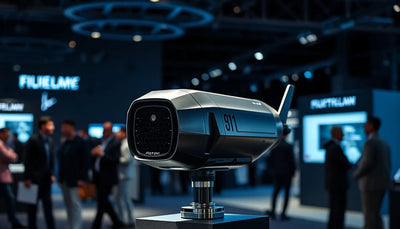
Intelligent Energy, a longtime developer of hydrogen fuel cell technology, has announced the unveiling of a 120 kW hydrogen fuel cell powertrain built specifically for heavy-lift fixed-wing drones. At the same time, the company confirmed it has received the largest commercial UAV order in its history, though it did not disclose the number of units or the customer. The new IE-FLIGHT 120 powertrain is aimed at aircraft capable of carrying payloads between 331 and 1,653 pounds (150 to 750 kilograms)—a segment that has historically relied on internal combustion engines, large battery banks, or hybrid-electric systems. This dual announcement signals a turning point for operators who have been waiting for a clean, energy-dense alternative to extend endurance without adding prohibitive weight.
Hydrogen as a heavy-lift enabler
The IE-FLIGHT 120 is not a complete drone; it is a powertrain module designed to be integrated into existing or new fixed-wing airframes. Hydrogen fuel cells generate electricity through an electrochemical reaction, producing only water vapor as a byproduct, which gives them a clear advantage over both fossil-fuel engines and battery-electric systems in terms of energy density and emissions. The 120 kW rating positions this powertrain well above typical battery-electric solutions for heavy-lift platforms, which often struggle to provide sustained power for flights lasting more than an hour while carrying a significant payload. According to Intelligent Energy, the unit targets aircraft with payload capacities spanning roughly five times the lower limit, indicating that the design can scale across different mission profiles—from long-distance cargo delivery to surveillance and agricultural spraying. Operators considering the transition should understand that adopting hydrogen requires a new support infrastructure, including compressed hydrogen storage, refueling equipment, and safety protocols, all of which must be factored into fleet planning. The source data does not include flight time projections, compatibility with specific airframes, or pricing, so fleet managers should expect to seek detailed integration support from Intelligent Energy before committing to a purchase.
Record order: Commercial confidence or proof of concept?
The announcement of the largest commercial UAV order in Intelligent Energy’s history adds weight to the notion that hydrogen is moving from experimental demonstrations toward real-world fleet operations. While the order size and customer remain undisclosed—likely due to competitive or security reasons—the fact that a buyer committed to a substantial number of these powertrains suggests that at least one operator has validated the technical and economic viability of the IE-FLIGHT 120 within its own operational context. For the broader market, this serves as a signal that hydrogen-powered heavy-lift drones are no longer a hypothetical. It may encourage other fleet operators to initiate their own evaluations, especially those running mixed fleets that include conventional combustion-engine fixed-wing drones for long-endurance tasks. The order could also stimulate supply chain development for hydrogen refueling services, compressed hydrogen tank certification, and specialized maintenance providers. However, without more details on delivery timelines and total order value, it remains unclear whether this is a single large deployment or a multi-year phased rollout. Fleet managers should monitor Intelligent Energy’s announcements and industry trade shows for technical demonstrations and integration updates.
Market context
Turn market news into a buy, repair, or trade-in decision.
Compare pre-owned availability, resale timing, and repair economics before the market moves again.

What this means for drone buyers
For commercial drone buyers—whether purchasing pre-owned DJI drones for light-duty work, investing in new heavy-lift platforms, or maintaining existing fleets—the Intelligent Energy announcement has indirect but important implications. The heavy-lift segment is distinct from the mostly battery-electric rotorcraft that dominate the pre-owned DJI market, but both share the fundamental challenge of energy management. As hydrogen fuel cells prove themselves in the heavy-lift fixed-wing arena, the technology may eventually trickle down to smaller platforms, including multirotors used in crop spraying, surveying, and logistics. Buyers who currently rely on battery-based systems should continue to assess their mission requirements realistically: if endurance beyond one or two hours is critical, and payload capacity is high, hydrogen today offers a viable path. Conversely, for typical inspection and mapping jobs within visual line of sight, current lithium-polymer batteries and the thriving pre-owned DJI ecosystem remain cost-effective and operationally simple. Fleet operators evaluating a shift toward hydrogen should also consider how to responsibly retire older equipment. A structured program, such as the drone trade-in guide offered by Reboot Hub, can help manage the transition while recovering value from surplus assets. The takeaway is to stay informed, but not rush—hydrogen is now a proven commercial option for heavy-lift missions, but the infrastructure and integration support are still developing in many regions.
Strategic considerations for fleet managers
Fleet managers who operate heavy-lift fixed-wing drones should add hydrogen fuel cell powertrains to their long-term planning horizons. The IE-FLIGHT 120’s payload range makes it suitable for a variety of commercial applications, including remote cargo delivery, large-area mapping, search and rescue, and agricultural spraying at scale. However, moving to hydrogen involves more than swapping a power module. Managers must evaluate the availability of hydrogen fuel in their operating areas—both the cost per kilogram and the logistics of refueling at remote worksites. They will also need to invest in technician training and possibly partner with specialized maintenance providers. While the source data does not mention specific service intervals, fuel cells generally require periodic stack maintenance and replacement of balance-of-plant components such as compressors and humidifiers. For operators with deep fleets of battery-powered drones, this represents a new skill set that may be sourced externally. The record order suggests that at least one large operator has already solved these challenges, but smaller operators may benefit from joining a consortium or leasing hydrogen infrastructure rather than building it from scratch. As the technology matures, the secondary market for conventional heavy-lift drones may also see increased supply as early adopters upgrade to hydrogen platforms, potentially creating opportunities for buyers seeking pre-owned combustion or battery drones at lower prices. Fleet planners should model total cost of ownership over three-to-five-year horizons, accounting for fuel, maintenance, safety training, and carbon offset benefits, before making procurement decisions.
How does the IE-FLIGHT 120 compare to existing heavy-lift power solutions?
The source data does not provide direct performance comparisons against internal combustion engines, hybrid-electric systems, or battery packs. What is specified is the powertrain’s peak power output of 120 kW and its target payload range of 331 to 1,653 pounds, which places it squarely in the upper performance tier of heavy-lift fixed-wing drones. Operators should request detailed performance curves and integration documentation directly from Intelligent Energy to evaluate flight endurance, climb rate, and operational costs relative to their current baseline.
What does this record order mean for the commercial drone market?
The order represents the largest commercial UAV order in Intelligent Energy’s history, indicating that at least one customer has enough confidence in the IE-FLIGHT 120 to place a substantial multi-unit commitment. This may accelerate hydrogen adoption across the industry by demonstrating commercial viability and encouraging other operators to follow. However, without visibility into the order’s size, timing, and the specific market segment (cargo, defense, agriculture, etc.), it is premature to conclude that hydrogen has achieved broad market acceptance. Continued monitoring of similar announcements from other fuel cell manufacturers will provide a clearer picture.
Should I consider hydrogen drones for my fleet now?
If your operations require heavy payloads (several hundred pounds) and long endurance beyond what battery-electric systems can economically provide, hydrogen fuel cell powertrains like the IE-FLIGHT 120 warrant serious evaluation. The record order shows that integration and operational challenges are being solved. However, you must assess your local hydrogen supply chain, initial capital costs, training needs, and service support availability. For lighter-duty missions within battery range, the existing pre-owned DJI drone ecosystem continues to offer excellent value and simplicity.
Sources consulted
- DroneXL.co - primary source
Additional official documentation was not available at publication time.
Reboot Hub Editorial adds buyer, repair, resale, and operational analysis for drone owners. If you spot an error, contact us for correction review through our editorial policy.