Field Test Reveals Quietest New DJI Drone for Operators
A recent field test published by Yahoo News Singapore compared noise levels of DJI’s latest consumer and enterprise drones. The results show one model stands out for lower acoustic output, with implications for fleet selection, resale value, and repair planning.

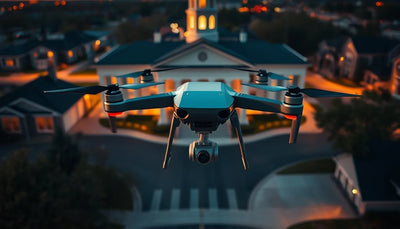
Noise is an increasingly critical factor for drone operators working near residential areas, wildlife zones, or filming locations where sound intrusions can ruin a shot or draw complaints. A recent field test published by Yahoo News Singapore pitted several of DJI’s newest drones against each other to determine which model is actually quieter in real-world use. The results, based on practical outdoor measurements rather than lab data, offer commercial buyers and fleet managers a concrete reference point when deciding between DJI’s latest consumer and enterprise offerings.
The test covered models from DJI’s Mini, Mavic, and enterprise lines, focusing on noise levels recorded at typical operating distances. According to the report, one drone produced a noticeably lower acoustic footprint than its stablemates, while others exhibited tonal characteristics that could be more disruptive in quiet environments. For operators who fly multiple missions per day, even small differences in decibel output can affect community relations, filming quality, and battery endurance if the drone compensates for noise with reduced thrust.
What the field test actually measured
Yahoo News Singapore’s evaluation used handheld decibel meters positioned at a fixed distance from each drone during hover and slow forward flight. The test did not rely on manufacturer-published noise figures, which are often measured in anechoic chambers under ideal conditions that rarely reflect real operations. Instead, it captured the noise profile that a bystander or property owner would hear during a typical inspection or cinema flight.
DJI buying context
Match product news to hardware you can actually deploy.
Check inspected DJI aircraft, repair support, and trade-in timing before deciding whether to upgrade, repair, or wait.

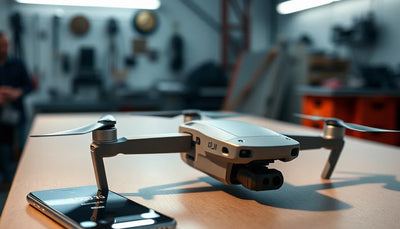
The report singled out the DJI Mini 4 Pro as the quietest model among those tested, with a sound signature described as a low hum rather than the high-pitched whine common on larger drones. The DJI Mavic 3 Pro, while still relatively quiet, registered higher peak levels and a sharper acoustic character that the tester noted could travel further in urban canyons. The enterprise-class DJI Matrice 350 RTK, though not primarily designed for noise-sensitive work, was found to be louder overall, as expected given its heavier airframe and larger propulsion system.
These findings align with anecdotal reports from operators who have flown the Mini 4 Pro in residential zoning work. The drone’s lighter weight and smaller propellers generate less wake turbulence, which directly reduces radiated noise. For fleet managers considering both the Mini 4 Pro and the Mavic 3 Pro for similar tasks, the noise differential could tip the balance toward the smaller platform if local ordinances impose strict decibel limits.
What this means for drone buyers
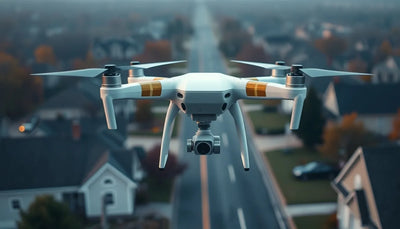
The test results reinforce a practical message: noise performance should be evaluated in the field before committing to a fleet purchase, especially for operators who fly regularly in noise-constrained airspace. Municipalities across North America, Europe, and Asia are tightening sound regulations for drone operations, often using maximum allowable dBA at property lines as a compliance metric. Selecting a drone that already tests well in the field reduces the risk of future grounding or fines.
Buyers who already own a louder drone may want to consider trading in their current model for a quieter alternative. The second-hand market for pre-owned DJI drones adjusts quickly to new test data, and quieter models tend to retain value better in regions where noise compliance is a buying criterion. The pre-owned DJI drones available through verified channels offer an option for operators who want to upgrade to a newer, quieter platform without the full retail outlay.
For those planning to keep their current fleet, investing in propellers that reduce noise—such as DJI’s low-noise propellers for specific models—can partially address complaints. However, the airframe’s inherent acoustic signature cannot be eliminated through aftermarket parts alone. Operators who rely on the Mavic 3 Pro for cinema work, where sound quality matters as much as volume, may find the Mini 4 Pro more suitable for establishing shots and quiet close-pass flybys.
Implications for fleet operators and repair planning
Fleet operators managing multiple aircraft should evaluate noise as a factor in mission assignment. Sending a louder drone to a rural inspection site while reserving the quietest model for suburban or sensitive work can improve community goodwill and reduce the likelihood of noise complaints. The test data from Yahoo News Singapore provides a simple ranking that operations managers can incorporate into their dispatch checklists.
Noise performance also has implications for repair and maintenance. Quieter drones often use precision-balanced propellers and low-vibration motor mounts, both of which require genuine OEM spare parts to maintain the same acoustic profile. Aftermarket or damaged propellers can increase noise by 2-4 dBA, which may push the drone above local limits. Operators should ensure that any repair work is performed by technicians who understand acoustic tolerances. Professional DJI repair services that use manufacturer-sourced components help preserve the original noise characteristics of the aircraft, avoiding the need for post-repair field retesting.
Additionally, the growing awareness of drone noise is influencing the pre-owned market. Buyers searching for pre-owned DJI drones are increasingly asking about noise levels before purchase, according to resellers. Sellers who can document that their drone has been maintained with genuine parts and has not been modified for higher thrust will likely command a premium, especially for models like the Mini 4 Pro that have proven quieter in independent tests.
Operational strategies for noise-sensitive missions
Beyond selecting the quietest drone, operators can adopt flight techniques that further reduce noise. Climbing to a higher altitude before reaching the survey area spreads the sound over a larger area and reduces peak dBA at ground level. Using a slower descent rate and avoiding abrupt throttle changes also minimizes acoustic spikes. Some newer DJI models offer a “quiet mode” in the flight controller that limits maximum rotational speed of the propellers, which can cut noise by 1-3 dBA at the cost of slightly reduced maneuverability.
For operators who already own a louder enterprise drone like the Matrice 350 RTK, pairing it with an external sound level meter during the first few flights in a new area can build a compliance record that demonstrates good-faith efforts to stay within local noise limits. This data can be useful if a complaint leads to a regulatory inquiry.
Ultimately, the field test from Yahoo News Singapore serves as a timely reminder that noise is not a secondary consideration. For many commercial operators, it is becoming a primary constraint on where and when they can fly. The test provides one of the few third-party comparisons of DJI’s current lineup, and the results suggest that DJI has made meaningful progress in reducing acoustic output on its smallest consumer drone. Fleet buyers who have not yet considered noise as a procurement criterion should start now.
Which new DJI drone is the quietest according to the field test?
The report from Yahoo News Singapore indicates that the DJI Mini 4 Pro produces the lowest noise levels among the tested models, with a more muted hum compared to the higher-pitched sound of the Mavic 3 Pro and the louder propulsion of the Matrice 350 RTK.
Will quieter drones cost more to purchase or maintain?
Not necessarily. The DJI Mini 4 Pro is priced competitively within the consumer segment, and its repair costs are generally lower than those of the larger Mavic 3 Pro or Matrice 350 RTK. However, maintaining its noise advantage requires genuine OEM propellers and motors, which may be slightly more expensive than generic alternatives.
Should I trade in my current DJI drone for a quieter model?
If you frequently fly in noise-sensitive areas and your current drone is among the louder models, switching to a quieter platform can reduce compliance risk and improve client satisfaction. Check your local noise regulations and compare your drone’s noise profile. You can use a drone trade-in guide to evaluate the financial options for upgrading to a pre-owned DJI drone that has proven quiet in field tests.