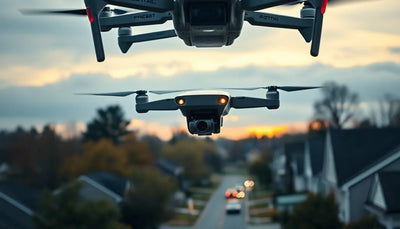
DJI Simplifies European BVLOS Approvals: What Operators Need to Know
DJI has streamlined the process for obtaining European BVLOS approvals, reducing paperwork and validation steps. This change lowers barriers for commercial drone operators seeking beyond visual line of sight operations, impacting fleet planning, drone procurement, and the pre-owned DJI market.

DJI has taken a significant step to simplify the regulatory pathway for drone operators pursuing beyond visual line of sight (BVLOS) approvals in Europe. According to a recent report, the company has introduced changes that make the approval process “much easier” for commercial users. While the exact details of the procedural updates have not been fully disclosed, the announcement signals a notable shift in how DJI is engaging with European regulators and the broader operator community.
For fleet operators, repair customers, and buyers of both new and pre-owned DJI drones, this development carries practical consequences. BVLOS operations have long been a bottleneck for scaling drone services, from pipeline inspection to agricultural monitoring. Easier approvals mean more operators can legally fly beyond the pilot’s line of sight, which in turn influences equipment choices, maintenance schedules, and the secondary market for capable airframes.
Understanding the BVLOS approval change
The source information confirms that DJI has actively worked to reduce the friction involved in obtaining European BVLOS authorizations. Although the specific mechanisms—be it pre-validated compliance packages, streamlined documentation, or direct coordination with national aviation authorities—are not detailed, the reported outcome is clear: the path to a BVLOS permit is now shorter and less burdensome for operators using DJI hardware.
Industrial drone procurement
Source a brand-new industrial drone for this mission.
Discuss mission fit, aircraft model, quantities, configuration, pickup, and lifecycle support with Reboot Hub.

This is particularly relevant for commercial users who have invested in DJI’s enterprise line, such as the Matrice or Agras series. These platforms were already capable of BVLOS missions, but the administrative overhead of gaining approval often delayed project start-ups. By lowering this barrier, DJI effectively increases the operational value of its existing fleet. Operators who previously hesitated to invest in BVLOS-compatible drones may now reconsider, knowing that the regulatory clearance process is more predictable.
From a commercial intelligence perspective, this move also signals DJI’s continued commitment to the European market despite ongoing geopolitical headwinds. The company is aligning itself with EASA’s risk-based framework, which could give it a competitive edge over rivals who have not invested similar effort in regulatory facilitation.
Implications for fleet operations and compliance
For fleet managers, the practical implication is immediate. If the approval process is indeed simplified, then the time from purchase to fully compliant BVLOS operations could shrink by weeks or even months. This changes ROI calculations. A drone that can fly BVLOS from day one generates revenue faster than one stuck in paperwork. Operators should review their current fleet composition: do existing aircraft meet the technical requirements for the simplified pathway? Are there older models that require hardware upgrades or replacement to take advantage of the new process?
Another layer is compliance documentation. Even with easier approvals, operators still need to maintain accurate logs, maintenance records, and pilot credentials. The simplification may reduce the upfront burden, but ongoing operational compliance remains the responsibility of the operator. Fleet managers should update their standard operating procedures to reflect the streamlined approval workflow, ensuring that pilots understand the new documentation requirements.
Repair services also feel the impact. When drones are grounded for maintenance or parts replacement, any delay can affect the fleet’s ability to operate BVLOS. With easier approvals, the pressure to keep every airframe airworthy increases because the business case for BVLOS flights is stronger. This is where professional DJI repair services that use genuine OEM components become critical. A properly repaired drone retains its original performance and compliance status, which is essential for passing any BVLOS audit.
What this means for drone buyers
For anyone considering a drone purchase—whether a first-time buyer or a fleet operator expanding capacity—the easier BVLOS approval landscape changes the calculus. The value of BVLOS-capable platforms has increased. Newer models that include integrated obstacle avoidance, redundant communication links, and precise GPS modules are better positioned to benefit from the simplified process. Buyers should prioritize aircraft that are explicitly supported under DJI’s new approval pathway.
This also has a direct impact on the second-hand market. As more operators turn to BVLOS operations, the demand for proven, reliable pre-owned DJI drones will rise. Older models that lack BVLOS compatibility may see reduced resale value, while units that can seamlessly fit into the new approval framework will command a premium. Buyers looking for cost-effective entry into BVLOS operations should consider pre-owned DJI drones that are still within DJI’s supported product lifecycle. These units offer the same performance as new ones at a lower upfront cost, and with a proper inspection and certification, they can be just as compliant.
A practical step for any buyer: verify the drone’s firmware version and hardware revision against DJI’s BVLOS support documentation. Ensure that the unit can be updated to the latest firmware and that no proprietary modifications have been made that could invalidate the streamlined approval. Sellers who provide detailed logs and maintenance history give buyers confidence that the drone will pass inspection and qualify for the easier BVLOS path.
Impact on the pre-owned DJI market and repair services
Reboot Hub analysis: The BVLOS simplification is likely to stimulate the pre-owned DJI market in two directions. First, operators who upgrade to new BVLOS-ready models will trade in their older units, increasing supply. Second, buyers who previously avoided pre-owned drones due to uncertainty about certification may now feel more comfortable, especially if the seller can demonstrate that the unit complies with the new process. This could drive up transaction volumes and stabilize prices for mid-range used platforms like the Phantom 4 RTK or the Mavic 2 Enterprise.
Repair services will see a corresponding shift. As more drones enter BVLOS service, the importance of keeping them in OEM-spec condition grows. Non-genuine parts or unauthorized repairs could void the simplified approval. Operators should insist on repairs that use genuine OEM spare parts and are performed by certified technicians. For those managing older fleets, a drone trade-in guide can help evaluate whether to repair existing units or trade them for BVLOS-compatible models.
One operator-facing recommendation: start auditing your current drone inventory now. Identify which models are BVLOS-capable and check if they are covered by DJI’s new process. If not, plan either an upgrade path or a trade-in before the busy season begins. Buyers looking to enter the market should focus on well-maintained, recent-vintage platforms that come with full documentation and no third-party modifications. The window for obtaining a good deal on pre-owned DJI drones that are BVLOS-ready is narrow, but the simplification makes it worth pursuing.
How does this change affect the cost of obtaining BVLOS approval?
The simplification is expected to reduce the administrative costs associated with compiling compliance documentation and waiting for approval. While DJI has not disclosed exact fees, operators should anticipate lower internal labor costs and faster revenue generation from BVLOS missions.
Will older DJI drones still benefit from the easier approval process?
That depends on whether the specific model is included in DJI’s streamlined pathway. Older units that lack modern sensors, redundant flight controllers, or geofencing capabilities may not qualify. Operators should check DJI’s official support list and consider upgrading or trading in if their drone is not covered.
What should a fleet manager do first to take advantage of this change?
Begin by reviewing the current fleet’s compliance status and firmware versions. Then identify the highest-priority BVLOS use cases and match them to supported drones. If upgrades are needed, use a trade-in program to dispose of non-BVLOS units and acquire pre-owned platforms that are fully compatible.
Sources consulted
- EASA - DroneDJ - primary source
Additional official documentation was not available at publication time.
Reboot Hub Editorial adds buyer, repair, resale, and operational analysis for drone owners. If you spot an error, contact us for correction review through our editorial policy.