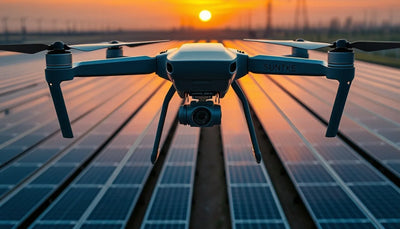
Anti-Drone Netting Emerges as Key Countermeasure in Military Logistics
The US Marines recently tested anti-drone netting during a logistics exercise, signaling a shift in ground-level counter-UAS tactics. For commercial drone buyers and fleet operators, this highlights growing airspace risk and the need for operational awareness beyond traditional no-fly zones.

Across the globe, military forces are adapting to the persistent threat posed by small unmanned aircraft. The latest example comes from a US Marine Corps logistics exercise, where units deployed anti-drone mesh netting to protect critical supply operations. As reported by The War Zone, the exercise tested the feasibility of large-scale netting systems to shield ground assets from drone surveillance, harassment, or attack. While the concept is not new, its emergence in a structured military logistics scenario points to a broader recognition: small drones are no longer a niche battlefield concern but a routine hazard for any exposed operation.
For commercial UAV operators, fleet managers, and buyers in the second-hand market, this development carries practical signals. Military adoption of passive countermeasures like netting suggests that drone threats are becoming more frequent, more credible, and harder to ignore with electronic jammers or shoot-down tactics alone. It also implies that airspace risk assessments — especially near sensitive infrastructure, logistics hubs, or public gatherings — may need to account for physical barriers as well as electronic detection. This analysis examines the source details, what they mean for drone buyers and fleet operators, and how the pre-owned DJI market might respond.
What the Marines tested and why netting matters
The exercise, described by The War Zone as a logistics exercise, involved Marines using anti-drone netting to protect supply points and convoy operations. Netting is a fundamentally different countermeasure compared to RF jammers, GPS spoofers, or kinetic interceptors. It does not emit signals that could interfere with friendly communications, nor does it risk collateral damage from debris. Instead, it creates a physical barrier that small drones cannot penetrate — effectively turning the airspace above a position into a no-entry zone without the complexity of electronic warfare.
Industrial drone procurement
Source a brand-new industrial drone for this mission.
Discuss mission fit, aircraft model, quantities, configuration, pickup, and lifecycle support with Reboot Hub.

The War Zone noted that more militaries globally are turning to mesh netting as a cost-effective, scalable solution. For a logistics exercise, netting offers rapid deployment, low training overhead, and the ability to protect multiple assets with a single cover. This is particularly relevant when drones are used for reconnaissance — a small quadcopter can spot a supply convoy from a distance and relay coordinates to artillery or loitering munitions. Netting denies that visual intelligence without need for sophisticated sensors or cyber attacks.
The implication for commercial operators is twofold. First, the very existence of such countermeasures signals that drones are considered a real threat in contested environments. That perception trickles down into civilian airspace risk assessments. Second, military netting could inspire civilian infrastructure — airports, stadiums, power plants — to adopt similar physical barriers. Drone pilots may find that familiar flight zones near such sites become physically inaccessible, not just legally restricted. Fleet managers planning operations near critical infrastructure should monitor local security measures and adjust mission profiles accordingly.
What this means for drone buyers
For anyone shopping for a drone — whether new or pre-owned — the rise of physical countermeasures like netting should influence decision-making. If netting becomes common around sensitive sites, the risk of losing a drone to a physical barrier increases. Expensive flagship models with sophisticated obstacle avoidance may still fail against thin, transparent mesh at speed. Buyers might prioritize smaller, lighter airframes that are easier to land quickly if a netting zone is encountered unexpectedly. Alternatively, operators may choose to invest in lower-cost pre-owned DJI drones for missions near potentially netted areas, accepting the reduced payload in exchange for lower capital exposure.
Reboot Hub analysis: Additionally, the growing counter-UAS ecosystem — including netting, jammers, and detection radars — creates a secondary market for retired military and enterprise drones. Many organizations replace fleets when they upgrade countermeasure systems or when operational requirements change. These used units often find their way into the second-hand market, where inspected pre-owned DJI drones available through reputable services like Reboot Hub offer reliable alternatives at reduced prices. Buyers who understand the countermeasure landscape can make smarter procurement decisions: selecting drones that are less likely to be intercepted, and sourcing durable models from trade-in programs that guarantee OEM-pulled parts and genuine components.
Another consideration is repair frequency. Physical countermeasures cause drone damage that is distinct from electrical failure or crash impact. A drone entangled in netting may suffer bent arms, stripped motors, or broken propellers, but often retains intact electronics and sensors. That makes professional DJI repair services especially valuable for restoring a netted drone to airworthy condition using genuine OEM spare parts. Fleet operators should establish relationships with repair centers that understand these failure modes and stock appropriate components.
Commercial fleet planning and the pre-owned DJI market
The Marines’ use of netting reinforces a broader industry trend: the lines between military and commercial drone operations are blurring. Countermeasures developed for defense are quickly adapted for civilian security. Fleet managers who operate drones near ports, border areas, energy facilities, or event venues should expect that netting and other passive defenses will become more common. This influences not only flight planning but also fleet composition. A fleet comprising high-value Matrice or Inspire series drones may be expensive to replace if lost to a physical barrier. Supplementing with pre-owned DJI drones — which can be sourced from trade-in programs — provides cost-effective backup units that can absorb higher mission risk.
The second-hand market itself may shift. As military and enterprise users upgrade to newer models or divest fleets after adopting new countermeasure strategies, the availability of pre-owned airframes increases. This is good news for buyers who need reliable equipment at lower price points. However, it also means that sellers must ensure their pre-owned inventory is accurately inspected and certified. At Reboot Hub, every pre-owned DJI drone undergoes a thorough inspection and is backed by genuine OEM-pulled parts and professional DJI repair standards. This approach minimizes the risk associated with buying used drones in a market where countermeasure damage is an emerging concern.
For repair shops, the demand for netting-related repairs may grow. Drones pulled from netting often require full disassembly, motor replacement, and recalibration. Having access to OEM spare parts is critical for maintaining flight performance and safety. Operators should choose repair providers that use genuine parts, as aftermarket components may not withstand the same tolerances — especially when flying near netting where precise control is essential to avoid re-entanglement.
Operational takeaways for drone pilots and fleet managers
The Marines’ logistics exercise offers a concrete example of how countermeasures evolve. Drone operators should not assume that the only risks are regulatory or electronic. Physical barriers like netting are silent, passive, and increasingly affordable. They can be deployed rapidly and hidden from visual detection — a thin mesh over a truck bed or a cargo container is almost invisible from a drone camera at altitude. Pilots should reconnoiter landing zones and flight paths visually before launching, and maintain low altitude awareness.
Fleet managers should review their insurance policies. Standard drone insurance may not cover damage from anti-drone netting if it is considered a security measure rather than an accident. Clarify with your provider whether netting entanglement is covered. If not, consider adding a rider or accepting the risk on lower-cost airframes. The trade-in guide at Reboot Hub can help operators evaluate whether to trade a current fleet for more resilient models or to add pre-owned backups to the roster.
Lastly, the growing defense interest in netting suggests that drone technology itself will adapt. Future drones may include net-cutting blades, net-detection sensors, or emergency jettison mechanisms. For now, the best defense is awareness and planning. The Marines show that netting works; commercial operators must decide whether their flights can coexist with that reality.
Frequently asked questions
Can anti-drone netting damage DJI drones beyond repair?
Damage from netting varies. A drone tangled at low speed often suffers bent frame arms, broken propellers, and scratched housing, but the core electronics and motors typically survive. Professional DJI repair services can restore such drones using genuine OEM spare parts, making repair cost-effective compared to replacement, especially for pre-owned units with lower acquisition cost.
Should I buy a pre-owned DJI drone for missions near netted areas?
Yes, for missions with higher physical risk, using an inspected pre-owned DJI drone reduces capital exposure. If the drone is entangled and damaged, the financial loss is smaller than with a new flagship model. Ensure the pre-owned unit comes from a reputable source that provides genuine parts and a thorough inspection, like those available through professional DJI repair services.
How can I avoid netting while flying commercially?
Pre-flight site surveys are essential. Look for overhead lines, cables, tarp covers, or mesh structures at load areas and staging points. Maintain altitude below known barrier heights and keep visual line of sight. If operating near infrastructure that uses countermeasures, consider using a smaller, lower-value drone until the area is confirmed clear. Flying in coordinated teams with a spotter can also help detect netting that is not apparent on maps.
Sources consulted
- Around The Globe | Page 14 of 115 | The War Zone - primary source
- News & Features | Page 23 of 147 | The War Zone - primary reporting source
- The War Zone - primary reporting source
Reboot Hub Editorial adds buyer, repair, resale, and operational analysis for drone owners. If you spot an error, contact us for correction review through our editorial policy.