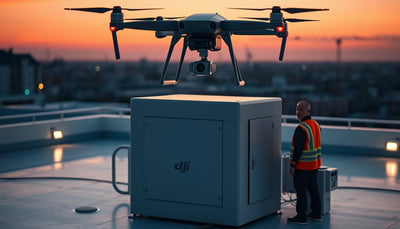
DJI Matrice 400 Parachute: What Operators Should Know
DJI now offers an emergency parachute for the Matrice 400, a move that shifts safety standards for heavy-lift drones. Commercial operators, fleet managers, and pre-owned buyers need to understand how this accessory affects value, compliance, and planning.

DJI has added an emergency parachute system for its Matrice 400 drone, according to a report from The Verge. While parachute systems are not new in the professional drone space, their direct availability from DJI for a high-end enterprise model signals a meaningful shift in how manufacturers approach safety and risk management. For fleet operators, repair customers, and buyers active in the second-hand DJI market, this development carries several practical implications worth examining closely.
The Matrice 400 is DJI’s flagship heavy-lift platform, commonly used for industrial inspections, surveying, public safety missions, and cargo delivery. Adding an OEM-backed parachute system directly addresses one of the primary concerns with large drones: what happens when something goes wrong mid-flight. While aftermarket parachute solutions have existed for years, having an official DJI option removes compatibility uncertainty and may simplify insurance and regulatory discussions. This article breaks down what the launch means for commercial buyers, pre-owned pricing, repair strategies, and broader market trends.
What the parachute system offers operators
According to The Verge, the parachute is designed specifically for the Matrice 400 and is now available as an optional accessory. The source does not include technical specifications such as deployment altitude, weight limits, or activation mechanisms, so those details remain unconfirmed. What is clear is that DJI has chosen to invest in safety hardware for its largest commercial drone, a decision that aligns with growing operator demand for redundancy in critical flights.
Industrial drone procurement
Source a brand-new industrial drone for this mission.
Discuss mission fit, aircraft model, quantities, configuration, pickup, and lifecycle support with Reboot Hub.

For fleet managers, the practical benefit is straightforward: an emergency parachute can reduce the risk of catastrophic damage to the drone and, more importantly, to people and property on the ground. In many regions, operators of drones over a certain weight are already required to carry third-party liability insurance, and some authorities are beginning to mandate recovery systems for specific applications. While no specific regulation is mentioned in the source, the availability of an official parachute may ease compliance with local airworthiness or operational-risk rules.
From a repair perspective, a parachute deployment is not a routine event, but it does introduce a new component that will require periodic inspection and possibly replacement after use. Owners who rely on professional DJI repair services may need to factor parachute maintenance into their service schedules. The parachute module could also affect the drone’s center of gravity and payload capacity, so any aftermarket or pre-owned purchase should include a careful check of whether the system is installed and functional.
What this means for drone buyers
For anyone considering a new or pre-owned Matrice 400, the parachute system changes the value equation. Buyers should ask whether an existing unit includes the parachute, and if not, whether it can be retrofitted. Drones equipped with the official DJI parachute may command a premium in the second-hand market, because they offer a layer of safety that buyers cannot easily add themselves without significant cost and installation risk. Conversely, units without the parachute may see slightly softer demand if operators view the accessory as a must-have for certain missions.
If you are shopping for a pre-owned DJI drone, especially a Matrice 400, the parachute availability should be part of your inspection checklist. Confirm whether the parachute is present, if it has been deployed previously, and whether the drone’s firmware supports the system. Even if you do not plan to use the parachute actively, having it installed may improve resale value down the line if the accessory becomes standard for enterprise buyers.
For fleet operators evaluating upgrades, the parachute may justify holding onto a Matrice 400 longer rather than trading in for a newer platform. The added safety could open up contracts that previously required redundant propulsion or separate recovery systems. If you are considering a trade-in, check your current unit’s compatibility and whether adding the parachute before resale might yield a better offer. The drone trade-in guide can help you estimate value based on accessory completeness and condition.
Implications for the pre-owned DJI market
Reboot Hub analysis: News like this often ripples through the pre-owned market in two ways. First, it can stimulate demand for used Matrice 400 units that already have the parachute installed, because buyers gain a safety feature at a lower total cost than buying new. Second, it may create a price split between “parachute-ready” and “non-equipped” drones. If the system requires a specific hardware revision or software license, older Matrice 400 units may be less attractive to safety-conscious operators.
From a supply chain viewpoint, the parachute system is an OEM accessory, meaning genuine parts and certified installation will be important for maintaining value. Operators who purchase pre-owned drones from non-certified sources run the risk of encountering counterfeit or improperly mounted parachute modules, which could fail in an emergency or void warranty coverage. This reinforces the value of buying inspected, pre-owned units from reputable sources that can verify authenticity and condition.
For repair shops and parts distributors, the parachute represents a new serviceable line item. Professional DJI repair services will need to stock replacement canisters, deployment mechanisms, and mounting brackets. Operators should factor this into their long-term maintenance budgets, especially if they fly in environments where parachute deployment risk is higher, such as urban areas or over water.
Broader market trends and operator guidance
The decision by DJI to offer an official parachute for the Matrice 400 signals that safety redundancy is becoming a competitive differentiator in the commercial drone space. As regulators push for higher safety standards and insurance carriers demand better risk mitigation, OEM-backed parachute systems may soon be expected rather than optional. Other manufacturers may follow DJI’s lead, especially for drones above a certain weight class.
For operators, the immediate takeaway is to assess whether the parachute system aligns with your typical flight profiles. If you routinely fly over populated areas, critical infrastructure, or sensitive sites, investing in the parachute now could reduce liability and potentially lower insurance premiums. If you primarily operate in open, unpopulated zones, the parachute may be less critical but still adds a safety buffer that can protect your asset investment.
What should a buyer, pilot, repair customer, or fleet manager do differently after reading this? Begin by checking your current Matrice 400’s hardware revision and firmware version for parachute compatibility. If you are in the market for a pre-owned unit, prioritize models with the official DJI parachute installed, or budget for retrofitting the system yourself. For repair customers, ask your service provider whether they are certified to inspect and replace parachute components. Fleet managers should update their pre-flight checklists to include parachute arming status and battery condition for the deployment module. Finally, stay informed about local regulations that may soon require recovery systems on drones of the Matrice 400’s size, as the availability of an OEM solution may influence enforcement timelines.
Can I retrofit the DJI Matrice 400 parachute to an older unit?
The source does not specify retrofit compatibility, but the parachute is described as being “for” the Matrice 400, implying it is designed to fit that model. You should verify mounting points, firmware requirements, and payload limitations with DJI or a certified service provider before purchasing a used unit without the system.
Does the parachute system affect the drone’s payload capacity?
No specific weight or payload figures are provided in the source. Any add-on accessory will reduce maximum payload to some degree. For commercial operators, calculating net payload after parachute installation is essential to determine whether the drone can still carry your sensor or delivery load.
How often does the parachute need maintenance?
The source does not detail maintenance intervals. As with any pyrotechnic or spring-loaded deployment system, regular inspection is recommended, especially after exposure to moisture, dust, or extreme temperatures. Consult the official DJI documentation or a professional repair center for specific service schedules.
Sources consulted
- Drone Archive for July 2026 - Page 1 - The Verge - primary source
Additional official documentation was not available at publication time.
Reboot Hub Editorial adds buyer, repair, resale, and operational analysis for drone owners. If you spot an error, contact us for correction review through our editorial policy.