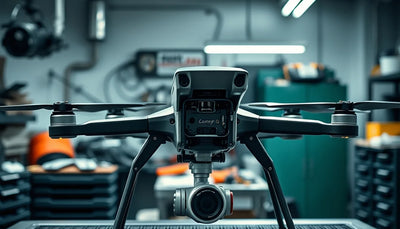
FCC Fines Companies for Selling Rebranded Banned DJI Drones
The FCC has fined several front companies for illegally rebranding and selling banned DJI cameras and drones. This enforcement action signals stricter oversight for drone procurement and could impact the pre-owned DJI market, fleet planning, and repair decisions.

The Federal Communications Commission (FCC) has taken direct enforcement action against front companies that were rebranding and selling DJI cameras and drones that had been previously banned under U.S. regulations. This news, reported by Android Headlines, confirms that at least several entities attempted to circumvent the ban by relabeling DJI products and offering them to American customers. For anyone involved in commercial drone operations, fleet procurement, or the pre-owned DJI market, this development carries immediate and practical consequences.
The FCC ban on DJI equipment stems from national security concerns, specifically allegations that DJI drones could transmit sensitive data to Chinese state entities. The ban prohibits the use of certain DJI models by government agencies and restricts their sale through official channels. However, the new enforcement action shows that the FCC is now actively pursuing third-party resellers who try to bypass the ban by masking the original manufacturer identity. This represents a significant escalation in regulatory oversight, moving from policy creation to hands-on market policing.
Understanding the enforcement action
According to the source, the FCC imposed fines on front companies that were found to be selling rebranded DJI cameras and drones. While the specific company names and fine amounts were not detailed in the summary, the action itself sends a clear message: the FCC is watching the secondary market for banned DJI products, and circumvention tactics such as rebranding will not go unnoticed. This is not a minor administrative slap; the agency is using its enforcement authority to target structured attempts to evade the ban.
Operator checklist
Turn policy news into a safer fleet decision.
Before changing aircraft, compare repair paths, available DJI inventory, and trade-in timing against the rule change.

For drone buyers who may have unknowingly purchased a rebranded DJI product, the risk is twofold. First, the product may be subject to seizure or decommissioning if it violates FCC rules. Second, the buyer could be left without manufacturer support, firmware updates, or warranty coverage—since the product's true identity was concealed. The enforcement action also highlights the importance of traceability in drone supply chains. Any drone that enters the U.S. market without clear origin documentation and FCC certification may now face regulatory scrutiny.
Operators should note that the FCC's action implies that selling a DJI product under a different brand name does not make it compliant. The underlying hardware remains banned, regardless of the label on the box. This is a crucial distinction for fleet managers who might have considered sourcing DJI-equivalent cameras from alternative vendors thinking they had found a legal loophole.
What this means for drone buyers
If you are a commercial drone operator, a fleet manager, or a procurement officer, this enforcement action should prompt a review of your current inventory and purchasing practices. The most immediate implication is that any DJI camera or drone acquired after the ban took effect—especially if purchased from a non-DJI-authorized reseller—may carry legal risk. Even if the product appears to be from a different brand, if it is physically identical to a banned DJI model, it could be subject to FCC action.
For buyers in the pre-owned DJI drones market, the news reinforces the importance of buying from reputable sources that provide clear product history and compliance documentation. A used DJI drone that was originally sold through legitimate channels before the ban may still be legal to operate and trade, but a drone that was imported or rebranded after the ban might not be. The safest approach is to purchase pre-owned DJI drones from vendors who verify the origin of each unit and can attest that it was not part of any circumvention scheme.
Furthermore, if you already own DJI equipment, this enforcement action does not automatically put you at risk—but it does make due diligence more valuable. Fleet operators should document the purchase chain for each drone and camera in their inventory. If a unit was acquired from a seller that later appears on an FCC enforcement list, the operator may need to demonstrate good faith in not knowingly circumventing regulations. Keeping invoices, serial number records, and certification letters becomes a practical risk management step.
For larger fleets, the enforcement action may also be a reason to accelerate replacement cycles. If your organization relies on DJI equipment that is now under increased regulatory scrutiny, shifting to compliant alternatives—or to verified pre-owned units that are fully documented—could reduce exposure. Companies with government contracts or clients in regulated industries will need to be especially careful, as any hint of banned hardware could jeopardize future bids.
Impact on the pre-owned DJI market and repair services
The secondary market for DJI drones is directly affected by this news. When the FCC bans a product and then fines companies that try to circumvent the ban, the market's trust in unbranded or generic drone listings weakens. Buyers become more cautious, which typically reduces demand for unverified units and increases the premium for well-documented, traceable pre-owned sales.
This is an opportunity for sellers who offer pre-owned DJI drones with verified histories. The enforcement action makes it more difficult for grey-market resellers to operate openly, which can benefit legitimate second-hand dealers who source from official channels and maintain clear records. If you are selling or trading in your used DJI equipment, the ability to prove that it was originally purchased through an authorized distributor and that its serial number is not on any FCC warning list can increase its resale value.
Repair customers also need to be aware. If your DJI drone requires service, using a repair shop that sources only genuine OEM spare parts becomes more critical than ever. A drone that has been repaired with non-genuine or salvaged parts from a banned unit could itself become non-compliant. Professional DJI repair services that use verified parts help preserve the drone's legal status and operational safety. If you are unsure about the history of a drone you own, having it inspected by a qualified service provider can reveal whether it contains any components that might have originated from a banned batch.
Fleet operators considering retiring older DJI drones might want to act sooner rather than later. As enforcement activity increases, the market for second-hand DJI units that are not fully documented could shrink. Selling or trading in now, while buyer confidence is still relatively high, may yield better returns than waiting until FCC actions further fragment the market.
Practical steps for drone operators and buyers
Given this enforcement action, the most pragmatic response is to tighten your procurement process. If you are buying a new or pre-owned DJI drone, request documentation that shows the unit's original sale date, the seller's authorization status, and a statement that the product is not subject to any FCC ban. Reputable pre-owned dealers should be able to provide such paperwork. If a seller hesitates or offers only generic assurances, that is a red flag.
For fleet managers, consider implementing a compliance checklist for every drone that enters your inventory. Include a verification step where the drone's FCC certification markings are checked against the FCC's database. Although the FCC does not publish a public list of every banned serial number, general markers—such as the absence of a proper FCC ID label or a label that has been altered—can indicate a non-compliant unit.
If you currently own DJI cameras or drones and are uncertain about their legal status, you have several options. You can contact the seller for clarification, consult with a drone law expert, or use a professional DJI repair service to inspect the unit and verify its components. In many cases, a simple serial number lookup against DJI's own database can confirm whether the unit was originally sold through an authorized channel.
Finally, if you are planning to upgrade your drone fleet and want to retire your existing DJI equipment, consider using a drone trade-in guide to understand current market values and the documentation you will need to maximize your trade-in offer. As regulatory scrutiny increases, having clean, well-documented pre-owned units will command a premium.
Frequently asked questions
Will the FCC fines affect my ability to fly a DJI drone that I already own?
If your drone was purchased before the ban or through an authorized dealer and is not part of any rebranding scheme, the enforcement action does not directly affect your right to operate it. However, if your drone was acquired from a seller that is now being fined, you may want to verify its legal status to avoid potential liability. The FCC action targets sellers and resellers, not necessarily end users, but users should practice due diligence.
How can I tell if my DJI drone is a rebranded banned model?
Check the product label and packaging for any indication that the manufacturer name is different from the actual hardware. Compare the physical design and specifications with known DJI models. If the drone's FCC ID is missing, altered, or does not match any official DJI product, it may be a rebranded unit. Reputable pre-owned sellers should provide a clear history and documentation confirming the original manufacturer.
Should I stop buying pre-owned DJI drones because of the FCC enforcement?
No, but the bar for due diligence is higher. The pre-owned DJI market remains viable as long as you buy from sellers who verify product origin, provide purchase history, and offer transparency. Purchasing pre-owned DJI drones from established dealers who inspect and document each unit is a safer path than buying from unknown third-party marketplaces where rebranded units may be more common.
Sources consulted
- DroneXL FCC legacy import ban report - primary source
- FCC covered equipment import and marketing order - official FCC document
- FCC Covered List - official regulator source
- FCC DA-26-635 public notice PDF - official FCC public notice
Reboot Hub Editorial adds buyer, repair, resale, and operational analysis for drone owners. If you spot an error, contact us for correction review through our editorial policy.