Chula Vista’s Drone Program: The Blueprint for Police Air Support or a Privacy Flashpoint?
Chula Vista’s Drone as First Responder (DFR) program, highlighted by the San Diego Union-Tribune, has crossed 20,000 dispatches, proving that BVLOS tactical air support slashes emergency response times by minutes. But this rapid integration of DJI Matrice-based fleets under FAA Part 107 waivers comes with intense commercial disruption: it is defining the legal and operational template for municipal UAS fleets nationwide. For operators and second-hand market assessors, the implications are immediate—fleet turnover cycles are accelerating, and strict maintenance logs are becoming mandatory for asset resale value.

Editorial notes
- This article combines named outside reporting with Reboot Hub's own analysis for drone buyers, fleet operators, repair customers, and pre-owned DJI market watchers.
- Source facts are separated from interpretation. When a report provides limited data, the article states that limitation and frames Reboot Hub's view as analysis.
- Reboot Hub has commercial links to drone products and repair services; those links are reader resources and do not determine the article's conclusion.
The San Diego Union-Tribune's deep dive into the Chula Vista Police Department's Drone as First Responder (DFR) program has landed like a thunderclap in the public safety UAS sector. As of June 7, 2026, the program has surpassed 20,000 emergency dispatches, cementing its status as the longest-running and most data-rich municipal drone response initiative in the United States. This is not merely a local interest story; it is a live-fire case study on the operational, regulatory, and financial realities of integrating unmanned aircraft into the critical fabric of 911 response.

For commercial UAV analysts and second-hand market assessors at Reboot Hub, the Chula Vista model is an essential signal. It demonstrates that police drone programs are evolving from experimental trials to permanent infrastructure. The implications for fleet acquisition cycles, maintenance standards, and the eventual resale of decommissioned public safety aircraft are profound. This analysis breaks down the technology, the regulatory scaffolding, and the hard market data surrounding this program.
The Technical Arsenal: DJI Matrice in the Field
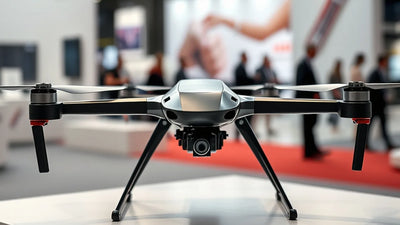
The Chula Vista program, which launched in 2018, relies on a fleet of DJI Matrice drones equipped with high-zoom cameras, thermal imaging, and proprietary docking stations. The core operational logic is simple: when a 911 call comes in, a drone is launched from a rooftop station before patrol cars roll out. The aircraft arrives first, providing real-time situational video directly to responding officers and the dispatch center. According to department data cited in the report, the drone arrives on scene an average of two minutes faster than ground units.
Fleet readiness
Keep DJI hardware available without overbuying new units.
Use this news as a planning signal for inspected DJI aircraft, repair support, and trade-in timing.
This "first responder" capability is enabled by extensive FAA waivers under Part 107, specifically for beyond visual line of sight (BVLOS) operations. The drones fly programmed corridors at altitudes that keep them clear of manned aircraft, with human safety observers stationed on the ground as a failsafe. The fleet is maintained by a dedicated team of licensed pilots and technicians, operating under strict battery management and airframe inspection protocols.
Ready to Upgrade Your Fleet?
Browse our collection of inspected pre-owned DJI drones - inspected, flight-tested, and backed by a 6-month warranty. Save up to 40% versus retail.
What the Chula Vista Model Means for Commercial Drone Operators
For the tens of thousands of commercial operators across the United States, the Chula Vista validation carries immediate and tangible consequences. The program's success is accelerating the adoption of police drone programs nationwide. As of mid-2026, over 1,200 law enforcement agencies now operate UAS fleets, and the number is growing by roughly 15% annually. This surge in municipal procurement drives up demand for new equipment, particularly the DJI Matrice 300 RTK and newer Matrice 350 platforms, which in turn tightens supply and stabilizes prices in the new equipment market.
However, a countervailing force is at work. Police departments operate their drones on aggressive replacement cycles-typically 18 to 24 months-to ensure reliability and access to the latest payloads. As these fleets cycle in, they cycle out. This creates a steady stream of ex-police drones entering the secondary market. For commercial pilots and small-to-medium enterprises (SMEs), this represents a significant opportunity. An airframe that has been flown under rigorous maintenance protocols (with complete telemetry logs and FAA-compliant repairs) can be a high-value asset at a fraction of retail cost. This is precisely where pre-owned DJI drones from a trusted source like Reboot Hub become the strategic move-acquiring near-new performance with a documented service history.
The Regulatory and Privacy Calculus
Every police drone dispatch carries the potential for Fourth Amendment friction. Chula Vista's program has been carefully structured to avoid constitutional violations. The drones do not patrol indiscriminately; they are launched only in response to a specific 911 call. The video feed is streamed to a command center and is not recorded unless it is flagged as evidentiary. The department has published transparency reports and engaged with civil liberties groups to establish clear use policies.
On the regulatory front, the FAA's continued renewal of BVLOS waivers for Chula Vista is a bellwether. The agency is using this program to gather data on safe BVLOS integration into urban airspace. The outcomes here will directly influence the forthcoming Part 108 rulemaking, which will formalize BVLOS operations for public safety and eventually for commercial operators in sectors like pipeline inspection, precision agriculture, and logistics. The commercial drone industry is watching this with very high stakes: the FAA's decision to either expand or restrict BVLOS waivers based on Chula Vista's incident rate will determine the pace of market expansion for autonomous drone-as-a-service companies.
Market Trends: The Second-Hand and Repair Ecosystem
For the used drone market, the Chula Vista program is a powerful validation of asset durability. The Matrice platform has proven capable of sustaining high-cycle operations-multiple launches daily, year-round-without catastrophic failures. This evidence directly supports the valuation models of inspected pre-owned aircraft. When a police department like Chula Vista replaces its fleet, the retiring units are known quantities. They have been flown by licensed pilots, maintained by dedicated technicians, and logged with precise flight hours. This is the gold standard for a second-hand drone purchase.
Moreover, this creates sustained demand for professional DJI repair services. As ex-municipal drones trickle into the commercial market, they may require firmware updates, gimbal recalibration, or battery replacement to optimize them for private-sector tasks like roof inspection or thermographic surveying. The repair ecosystem is the backbone of the circular economy in drones, and Reboot Hub is positioned to serve this intersection of institutional-grade equipment and commercial application.
Conclusion: The Blueprint Is Written
Chula Vista's drone program, as unmasked by the San Diego Union-Tribune, is not an outlier. It is the prototype. The 20,000-dispatch milestone confirms that drone-first emergency response is operationally feasible, legally defensible, and-critically for this audience-commercially productive. The aircraft cycled out of these programs will form the backbone of an increasingly professionalized second-hand drone market. For buyers, it is a chance to access institutional hardware at SME prices. For sellers, it is a liquidity event that validates asset lifecycle planning.
The sky over Chula Vista is full of data. The market below is full of opportunity.
FAQ
Is the Chula Vista drone program using DJI drones?
Yes, based on extensive reporting and public records, the Chula Vista Police Department operates a fleet of DJI Matrice series drones, including the Matrice 300 RTK and Matrice 350. The program is a key case study for public safety UAS deployment under FAA waivers.
What does the Chula Vista program mean for the resale value of used police drones?
The program proves that high-cycle operations with rigorous maintenance logs produce durable airframes. This strengthens the value of ex-police drones on the secondary market, as buyers can trust that the aircraft have been professionally maintained with verifiable flight histories.
How can commercial drone pilots benefit from the growth of police drone programs?
Police drone fleet turnover creates a supply of well-maintained aircraft entering the used market. Simultaneously, the regulatory frameworks tested in Chula Vista are shaping future BVLOS and Part 107 rules, which will open new commercial flight corridors for inspection, mapping, and logistics operations.
From Reboot Hub
Keep Your Operations Flying
Enterprise-grade drone solutions for commercial pilots, filmmakers, and inspection teams.
Pre-owned Fleet
Fully inspected DJI drones with 6-month warranty. Save up to 40%.
Browse Inventory ->