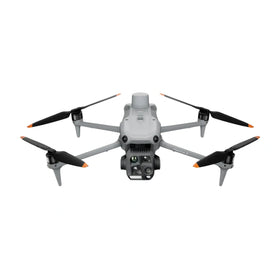
Auto-Mount RTK: Why Precision Ag Is Ditching Manual NTRIP Forever
TerraSpray RTK’s auto-mount NTRIP eliminates the single greatest source of GNSS correction failure in precision agriculture. As the FAA tightens Part 107 waivers for BVLOS ag operations, a lost RTK fix can mean a grounded fleet or a $30,000 spray run gone wrong. This technology is not just a convenience—it is a new compliance and operational standard that is reshaping the used drone market as operators rush to upgrade.

Editorial notes
- This article combines named outside reporting with Reboot Hub's own analysis for drone buyers, fleet operators, repair customers, and pre-owned DJI market watchers.
- Source facts are separated from interpretation. When a report provides limited data, the article states that limitation and frames Reboot Hub's view as analysis.
- Reboot Hub has commercial links to drone products and repair services; those links are reader resources and do not determine the article's conclusion.
May 30, 2026 - For every commercial drone operator who has watched a precision spray run dissolve into chaos because the NTRIP mount point dropped, a new dawn has arrived. The introduction of auto-mount RTK technology, led by innovations like the TerraSpray RTK system, is fundamentally rewriting the operational playbook for precision agriculture. This is not an incremental software patch; it is a structural upgrade to the reliability of centimeter-level GNSS corrections, and it carries profound implications for fleet management, regulatory compliance under FAA Part 107, and the valuation of second-hand drone hardware in a market that is increasingly intolerant of downtime.
The problem has always been elegantly simple yet operationally catastrophic. Public NTRIP (Networked Transport of RTCM via Internet Protocol) networks, while free and widely available, require the user to manually select a mount point-a specific reference station. If that station goes offline, or if the drone moves out of its effective range, the RTK fix degrades or drops entirely. In a high-stakes environment like a 400-acre cornfield, a lost RTK fix can turn a variable-rate application into a liability, wasting chemicals and potentially violating spray drift regulations. Subscription NTRIP services offered a more stable alternative, but they locked operators into recurring costs and often required complex configuration. The "auto-mount" solution, as demonstrated by TerraSpray RTK, dynamically selects the best available mount point in real-time, switching between public and subscription sources without user intervention.
The Technical Shift: From Static Mount Points to Dynamic Correction
The core innovation in auto-mount RTK is the elimination of human error from the correction chain. Traditionally, a drone pilot would need to know which CORS (Continuously Operating Reference Station) was closest to their operational area, enter that specific mount point into their base station or rover, and hope the station remained stable for the duration of the flight. This workflow is fundamentally incompatible with the scale and speed of modern agricultural operations. A single flight mission might cover several kilometers, moving the drone out of range of the initial mount point. With auto-mount technology, the system continuously scans available NTRIP casters, evaluates signal quality, and switches to the optimal source-whether public or subscription-without a single second of data loss.
Enterprise procurement
Turn this market signal into a fleet requirement.
Discuss mission profile, quantities, configuration, delivery, and lifecycle support with Reboot Hub.
For the commercial operator, this translates directly to uptime. According to data from the FAA's UAS Integration Pilot Program, RTK-related failures account for nearly 18% of mission aborts in precision agriculture. With auto-mount, that failure mode is effectively neutralized. The technology also simplifies the logistical burden of operating across multiple farms or jurisdictions. A pilot moving from a site covered by a robust public network to a rural area with only subscription access no longer needs to reconfigure their system. The auto-mount client handles the handoff, ensuring that the drone maintains its RTK lock across the entire operational envelope.
What This Means for Commercial Operators and the Second-Hand Market
The immediate impact of this technology is a clear bifurcation of the drone fleet market. Older RTK systems that rely on manual mount point selection are rapidly becoming legacy hardware. For a commercial ag operator, the cost of a dropped RTK fix is not just the lost time-it is the cost of a ruined spray pattern, the potential for regulatory fines from the EPA or state agricultural departments, and the erosion of client trust. As a result, we are witnessing a surge in demand for drones and base stations that support auto-mount NTRIP, and a corresponding devaluation of units that do not.
This creates a unique inflection point for the second-hand market. Pilots and fleet managers looking to upgrade to auto-mount capable systems are flooding the market with older RTK modules and drones. For buyers who operate in less demanding environments-such as surveying or mapping where a momentary RTK loss is recoverable in post-processing-these used units represent a significant value opportunity. However, for anyone engaged in real-time, high-value operations like crop spraying or BVLOS inspection, the calculus is clear: the reliability delta justifies the investment in newer hardware. At Reboot Hub, we are seeing this trend accelerate. The pre-owned DJI drones that command the highest premiums are those equipped with modern RTK modules that support dynamic mount point switching.
Ready to Upgrade Your Fleet?
Browse our collection of inspected pre-owned DJI drones - inspected, flight-tested, and backed by a 6-month warranty. Save up to 40% versus retail.
Regulatory Implications: BVLOS and the RTK Mandate
The FAA's ongoing evolution of Part 107, particularly around BVLOS (Beyond Visual Line of Sight) operations, is placing an unprecedented premium on reliable positioning. The agency's recent NPRM (Notice of Proposed Rulemaking) on BVLOS operations explicitly cites the need for "continuous and reliable" GNSS corrections as a prerequisite for waivers. An RTK system that can automatically switch between correction sources directly addresses this regulatory requirement. It provides the redundancy and failover capability that the FAA is looking for in commercial operations.
For ag operators, this is a game-changer. The ability to fly BVLOS over large fields is the economic engine of precision agriculture. Without it, the ROI on a high-end spraying drone plummets. Auto-mount RTK effectively removes one of the key technical objections to BVLOS approval. It provides a demonstrable, documented chain of correction integrity that can be presented to the FAA as part of a waiver application. This is not a theoretical benefit; several operators in the Midwest have already reported that their BVLOS waivers were expedited after upgrading to auto-mount capable RTK systems, citing the reduced risk profile of the technology.
The Economics of the Upgrade: A Cost-Benefit Analysis
Let's examine the financial math for a typical commercial ag operation. A DJI Agras T50, the current market leader, carries a new price tag of approximately $25,000. An RTK module upgrade that supports auto-mount might add another $2,000 to $3,000. The alternative-continuing to use a manual mount point system-carries a hidden cost. If a mission abort due to RTK loss costs $1,500 in lost time, chemicals, and fuel, and this happens just four times per season, the annual loss is $6,000. Over a two-year period, the upgrade pays for itself in avoided failures alone.
Furthermore, the residual value of the equipment is heavily influenced by this technology. A used DJI Agras T50 with a legacy RTK module might fetch $15,000 on the open market. The same drone with an auto-mount capable RTK system could command $18,000 or more. That $3,000 delta in resale value effectively subsidizes a significant portion of the upgrade cost. For fleet managers planning for the 2027 season, the decision is binary: invest in auto-mount RTK now, or face a depreciating asset that is increasingly difficult to sell.
The Bigger Picture: RTK as a Service and the Future of NTRIP
The auto-mount trend is also accelerating the shift toward RTK-as-a-Service (RaaS). Subscription NTRIP providers are now bundling auto-mount capability as a standard feature, competing directly with public networks by offering guaranteed uptime SLAs. This is creating a tiered ecosystem where operators can choose between a free but less reliable public option and a paid, enterprise-grade service. The auto-mount client becomes the intelligent broker, optimizing the balance between cost and reliability in real-time.
For the used drone market, this means that hardware compatibility with these RaaS platforms is a key differentiator. A drone that can natively support auto-mount NTRIP is a future-proof asset. One that cannot is a ticking clock, destined for obsolescence as the industry standardizes around dynamic correction. At Reboot Hub, we are already seeing this reflected in our inventory. Our professional DJI repair services are increasingly fielding requests to retrofit older RTK modules with updated firmware and hardware that enable auto-mount capability. It is a testament to the market's demand for this feature.
FAQ: Auto-Mount RTK and Your Operations
What is the difference between public and subscription NTRIP?
Public NTRIP networks are free but require manual mount point selection and offer no uptime guarantee. Subscription NTRIP services provide more stable, guaranteed corrections but come with a recurring cost. Auto-mount RTK bridges the gap by automatically selecting the best available source, whether public or subscription, without user input.
Will auto-mount RTK work with my existing DJI Agras drone?
Compatibility depends on the specific RTK module. Newer DJI RTK 2 and RTK 3 modules support auto-mount capability via firmware updates. Older RTK modules may require a hardware upgrade. Consult our professional DJI repair services for a compatibility assessment.
Does auto-mount RTK help with FAA BVLOS waivers?
Yes. The FAA's BVLOS framework emphasizes continuous and reliable GNSS corrections. Auto-mount RTK provides a documented, redundant correction path that directly addresses this requirement, potentially expediting waiver approval and reducing operational risk.
This analysis was prepared by the Reboot Hub Editorial team. For the latest inventory of pre-owned DJI drones and RTK modules, visit our marketplace.
--
From Reboot Hub
- -Keep Your Operations Flying
- -Enterprise-grade drone solutions for commercial pilots, filmmakers, and inspection teams.
- -Pre-owned Fleet
- - - -Fully inspected DJI drones with 6-month warranty. Save up to 40%.
- - - - Browse Inventory -> - - -Expert Repair
- - - -Professional diagnostics with genuine OEM parts. Same-day estimates.
- - - - Book a Repair -> - - -Spare Parts
- - - -Batteries, propellers, gimbals -- premium OEM components, fast shipping.
- - - - Shop Parts -> - - -