AURA Foresight’s XPRIZE Finalist Spot Signals Shift Toward Autonomous Wildfire Drones
AURA Foresight is one of four finalists from 130+ teams in the XPRIZE Wildfire competition. Their autonomous wildfire early-detection technology signals new capabilities that could reshape commercial drone fleet purchases and used drone market dynamics.

Editorial notes
- This article combines named outside reporting with Reboot Hub's own analysis for drone buyers, fleet operators, repair customers, and pre-owned DJI market watchers.
- Source facts are separated from interpretation. When a report provides limited data, the article states that limitation and frames Reboot Hub's view as analysis.
- Reboot Hub has commercial links to drone products and repair services; those links are reader resources and do not determine the article's conclusion.
AURA Foresight has been selected as one of only four finalists remaining from more than 130 competitors worldwide in the XPRIZE Wildfire Autonomous Wildfire Response competition. The team is developing autonomous technology designed to stop wildfires before they grow out of control, and its advancement to the finals in Alaska signals a broader shift in how commercial drones may be deployed for early fire detection and response. For drone buyers, fleet operators, and the second-hand market, this competition outcome offers a concrete look at where the industry is heading - and what hardware and software capabilities will soon be in demand.

What the XPRIZE Wildfire finals reveal about commercial drone trends
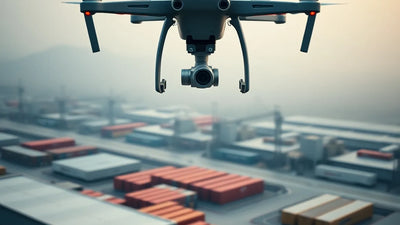
The XPRIZE Wildfire competition is one of the most rigorous challenges for autonomous aerial systems. With more than 130 teams initially competing, only four remain. AURA Foresight's position as a finalist highlights the growing importance of fully autonomous, sensor-rich drones that can operate in challenging environments like Alaska's remote forests. The competition specifically tests the ability to detect, verify, and respond to wildfires without human-in-the-loop control. This is a clear departure from the remotely piloted drones most operators use today.
The practical implication for commercial operators is that autonomous detection and response workflows are moving from research labs toward operational readiness. Fleet managers should expect that within the next few years, enterprise drones will incorporate more advanced onboard processing, thermal imaging, and edge AI for real-time decision-making. This will affect purchasing decisions, as older models without these capabilities may lose resale value faster. Repair customers will also see growing demand for thermal sensor calibration and high-bandwidth communication module service.
How autonomous wildfire detection changes fleet planning
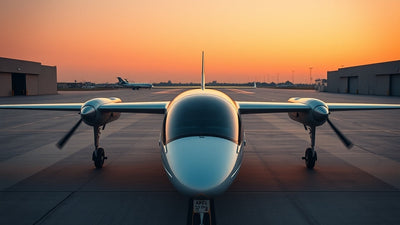
AURA Foresight's technology targets the critical window before a wildfire becomes uncontrollable. That means drones must be able to loiter for extended periods, process visual and thermal data in-flight, and communicate findings to ground teams or other autonomous assets. While the source does not provide specific endurance or payload specs, the application itself sets high performance requirements.
Commercial drone planning
Build the next fleet step around inspected hardware and serviceable parts.
Use Reboot Hub to compare certified DJI drones, repair options, and OEM components before the market moves again.
For fleet operators, this implies that future drone purchases should prioritize models that offer modular payload bays, robust data links, and software development kits (SDKs) for custom autonomy scripts. Repair services will need to integrate thermal camera alignment and sensor cleaning into routine maintenance schedules. The second-hand market may see a premium for drones that can be retrofitted with advanced sensors, while older, non-modular platforms could see declining demand. One concrete action for operators is to begin evaluating their current fleet's ability to accept third-party payloads and autonomous flight controllers, as these features will determine upgradeability.
What this means for drone buyers
For buyers in the commercial UAV market, AURA Foresight's XPRIZE performance is a signal that autonomous wildfire response is maturing. Even if you do not work in firefighting, the technologies being refined - edge AI, long-endurance autonomy, multispectral sensing - will trickle down into other sectors such as agriculture, power line inspection, and search and rescue.
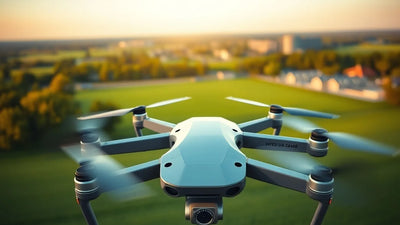
When purchasing a new drone today, consider how well it supports autonomous mission profiles. Look for open communication protocols, reliable thermal camera options, and robust SDK support. These features will protect your investment because they extend the useful life of the airframe as software capabilities improve. For buyers on a budget, the second-hand market may offer earlier-generation platforms that can be upgraded with aftermarket sensors. However, you should verify that the used drone's flight controller and payload interface are compatible with modern autonomy software. A timely option for cost-conscious operators is to explore pre-owned DJI drones, which often come with updated firmware and tested hardware - bridging the gap between new and used while retaining upgrade potential.
Implications for the second-hand drone market
A competition that reduces 130+ teams to four finalists in Alaska does not directly create a flood of used drones. But it does shape buyer psychology and fleet turnover rates. As autonomous detection becomes a priority for public safety and utility operators, many organizations will upgrade their fleets to meet new capability requirements. That will release older, piloted-only drones onto the used market. We are likely to see increased supply of mid-range enterprise drones as fleets rotate toward models with higher autonomy.
For second-hand buyers, this creates an opportunity to acquire capable airframes at lower prices, provided they are willing to invest in software upgrades and sensor add-ons. Repair shops will see more work from these used units, especially for battery replacements, motor rebuilds, and camera sensor cleaning. The key implication is that the second-hand market will reward platforms with transparent maintenance histories and modular designs. Fleets that trade in drones through professional DJI repair services may achieve higher resale values because of documented part replacement. Buyers should prioritize units with clear service logs and avoid drones from sellers who cannot confirm payload interface integrity. The XPRIZE finals remind us that the industry is moving toward autonomy - and the used market will follow.
What is the XPRIZE Wildfire competition?
The XPRIZE Wildfire competition challenges teams to develop autonomous systems that can detect and respond to wildfires quickly, before they grow out of control. AURA Foresight is one of four finalists out of more than 130 original competitors, and the finals take place in Alaska.
Why does AURA Foresight's finalist status matter for drone operators?
It validates that autonomous wildfire detection is commercially viable and likely to become a standard application for enterprise drones. Operators should anticipate that future drones will need to support edge computing and long-endurance autonomy, influencing purchase decisions and fleet planning today.
How can buyers prepare for the shift toward autonomous drones?
Buyers should focus on modular airframes with open payload interfaces and strong SDK support. The second-hand market offers cost savings but requires careful inspection of flight controllers and sensor compatibility. refurbishment-labeled drones can provide a balanced option for those seeking upgradability without new-unit pricing.
From Reboot Hub
Build the next fleet step around inspected hardware and serviceable parts.
Use Reboot Hub to compare certified DJI drones, repair options, and OEM components before the market moves again.
Pre-owned DJI drones
Inspected pre-owned aircraft with warranty coverage and clear condition grading.
Browse inventory ->Genuine-part repair
Diagnostics, repair planning, and component replacement for working DJI fleets.
Book a repair ->OEM spare parts
Batteries, propellers, gimbals, and essential DJI components for faster recovery.
Shop parts ->