Archer vs Joby Patent Fight: eVTOL Supply Chain Risks for Buyers
The escalating patent dispute between Archer Aviation and Joby Aviation could restrict imports of key eVTOL components, potentially delaying air taxi services and reminding drone operators how IP battles affect hardware availability and fleet planning.

Archer Aviation’s decision to escalate a patent infringement case against Joby Aviation at the U.S. International Trade Commission marks a significant turning point in the eVTOL sector. The complaint, reported by Yahoo Finance, seeks an exclusion order that could prevent Joby from importing certain aircraft or components into the United States. Delta Airlines has publicly expressed concern that the dispute may harm the broader U.S. eVTOL ecosystem. For commercial drone operators, fleet managers, and participants in the second-hand UAV market, this case is a reminder that intellectual property battles can rapidly reshape hardware availability, pricing, and procurement strategies.
The ITC Case in Context
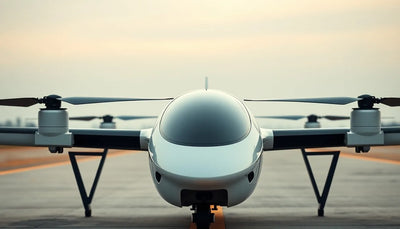
Archer Aviation (NYSE: ACHR) has alleged that Joby Aviation infringes on patents related to electric air taxi technology. By filing with the ITC, Archer is pursuing a remedy that could include a limited exclusion order—effectively barring Joby from importing infringing aircraft or components. The ITC has authority to block imports of products that violate U.S. intellectual property rights, making it a powerful venue for patent disputes. Delta Airlines, which has invested in Joby and plans to integrate air taxi services, warned that the litigation could slow down the entire industry’s path to commercial operations.
This is not a simple disagreement between two startups. Both companies have deep ties to major aerospace suppliers, and any disruption to Joby’s supply chain could ripple through the eVTOL component market. For commercial UAV buyers, the key takeaway is that patent disputes are not limited to software or design patents—they can target physical hardware, from propulsion systems to flight controllers. When components become embroiled in import restrictions, lead times extend, prices rise, and fleet planning becomes more complex.
Purchase timing
Use market shifts to buy, sell, repair, or wait with more context.
Compare trade-in timing, pre-owned DJI pricing, and repair economics before committing new capital.

How Patent Battles Affect Hardware Availability
The ITC complaint focuses on preventing Joby from importing certain aircraft or subsystems. Even if the case ultimately settles, the threat of an exclusion order creates uncertainty for suppliers and customers. Manufacturers may stockpile components or shift sourcing, driving up costs. For drone operators who rely on OEM spare parts and professional repair services, similar risks exist. A patent dispute involving a major drone component manufacturer could suddenly make a specific gimbal, motor, or flight battery harder to find.
Fleet managers already navigate volatile supply chains for battery modules and camera payloads. The Archer-Joby case demonstrates that regulatory and legal barriers can be as disruptive as tariff changes or export controls. Drone buyers should monitor patent disputes in adjacent aviation technology, because the same component—such as a high-efficiency motor controller—could be used in both eVTOLs and large enterprise UAVs. A ruling that restricts import of that component would affect both markets.
What this means for drone buyers
For drone fleet operators and repair customers, the immediate lesson is to diversify component sources and pay attention to legal developments in emerging aviation markets. If a patent dispute can threaten Joby’s ability to import eVTOL parts, it can similarly threaten the availability of OEM components for popular drone platforms. This is especially relevant for owners of pre-owned DJI drones, who rely on a steady supply of genuine OEM spare parts to keep their aircraft airworthy.
When supply of new components tightens, the pre-owned market often sees price appreciation for well-maintained airframes and spare modules. Buyers looking for cost-effective alternatives should consider inspected pre-owned drones that have been professionally serviced with OEM-pulled parts. A proactive approach is to assess your fleet’s spare parts inventory and identify any components that come from suppliers involved in patent litigation. In the event of an import ban, having a stock of genuine parts can keep your fleet operational while others scramble.
If you are considering adding used aircraft to your fleet, now is a prudent time to review your trade-in options. A drone trade-in guide can help you evaluate the residual value of your current drones and plan for upgrades before market disruptions affect pricing.
Broader Implications for the Second-Hand Market
Patent disputes do not only affect new aircraft sales. They also influence the second-hand market, because restrictions on imports can reduce the total pool of available aircraft and components. If Joby is forced to limit production or delay deliveries, its aircraft may trade at a premium on the secondary market. Conversely, Archer’s aircraft might benefit from reduced competition. For UAV operators, similar dynamics apply: a patent-based import ban on a DJI component would drive up prices for that component in the used market, making professional DJI repair services more valuable as a way to extend the life of existing equipment.
The eVTOL sector is still young, but its hardware shares supply chains with high-end commercial drones. Motors, battery management systems, composite materials, and flight controllers are sourced from common suppliers. A patent block on one eVTOL company could cause those suppliers to reassign capacity, affecting drone component availability. Buyers of pre-owned DJI drones should be aware that the same supply chain risks exist for UAV-specific parts—especially for legacy platforms that are no longer in mass production.
How can drone operators protect their fleets from patent-related supply disruptions?
Start by identifying which components in your fleet are sourced from single suppliers. Maintain a safety stock of frequently replaced parts—especially flight batteries, ESCs, and motors. Consider using professional DJI repair services that use genuine OEM-pulled parts, which can help you avoid counterfeit or obsolete components during supply crunches.
Will the Archer-Joby dispute directly affect prices of pre-owned DJI drones?
Indirectly, yes. Any major disruption in the broader advanced air mobility supply chain can cause investors to reassess valuations across the aerospace electronics space, which may affect the resale value of high-end UAVs. However, the most immediate impact will be on components shared with eVTOL systems, such as high-energy-density batteries and precision motor controllers.
What should a fleet manager do if a key component becomes subject to an import ban?
First, check whether you have an alternate supplier. Second, evaluate the condition of your current inventory. If you operate a large fleet, consider consolidating airframes to reduce the number of spare part variants you need to stock. Finally, monitor ITC proceedings for any rulings that list specific HTSUS codes, because those codes may also cover drone parts. A trade-in or upgrade plan using pre-owned DJI drones can help you pivot to platforms with more stable supply chains.
Sources consulted
- Yahoo Finance market report - primary source
- Joby Aviation investor relations - company investor information
- Archer Aviation investor relations - company investor information
Reboot Hub Editorial adds buyer, repair, resale, and operational analysis for drone owners. If you spot an error, contact us for correction review through our editorial policy.
This article is market commentary for drone operators and buyers, not investment advice. Reboot Hub does not provide financial advice or recommend securities transactions.