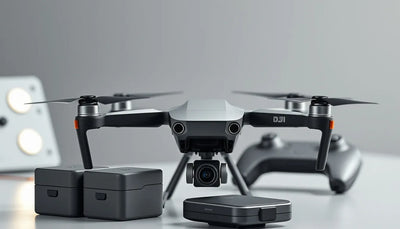
Virtual Investor Conference Signals Growing Interest in Vertical Economy
RedChip Companies announced a July 16 virtual investor conference focused on public companies shaping the vertical economy. This signals growing investor attention to drones, eVTOL, and related technologies, which may affect equipment pricing, pre-owned demand, and service needs for commercial operators.

On July 10, 2026, RedChip Companies announced its upcoming virtual investor conference, Vertical Economy: The..., scheduled for July 16, 2026. While the full agenda and participant list remain under wraps, the event itself is a clear signal: institutional and retail investors are focusing on companies that operate in the vertical dimension — drones, advanced air mobility, eVTOL aircraft, and supporting infrastructure. For commercial drone operators, fleet managers, and second-hand market participants, this kind of conference matters beyond the headlines. It indicates where capital may flow next, which in turn influences equipment availability, pricing stability, and the pace of technological obsolescence.
Understanding these financial currents is not just for Wall Street. When investors increase their exposure to vertical-economy stocks, the companies they back gain more resources to develop new models, expand manufacturing, and compete on features. That cycle directly affects the pre-owned market, repair services, and the long-term value of existing fleets. The following analysis draws on the conference announcement to explore what commercial buyers and operators should watch for.
What the RedChip Conference Reveals About Investor Sentiment
RedChip Companies is known for connecting microcap and small-cap public companies with investors. Their choice to host a conference specifically titled Vertical Economy: The... suggests that the sector has moved beyond niche interest and into a phase where dedicated capital events are warranted. The source summary states the conference will showcase "public companies shaping the vertical economy," implying that drone and eVTOL manufacturers, as well as firms providing navigation, battery, and logistics solutions, are being presented as investable, growth-oriented businesses.
Market context
Turn market news into a buy, repair, or trade-in decision.
Compare pre-owned availability, resale timing, and repair economics before the market moves again.

For drone buyers and fleet operators, this is a confirmation that the technology they rely on daily is gaining institutional recognition. When investors perceive a sector as mature enough for dedicated conferences, they often increase allocation. This can lead to a virtuous cycle: more funding for R&D, better products, and eventually more competitive pricing on new units. However, it also means that the pace of new model releases may accelerate, which can depress prices on older, pre-owned DJI drones as upgrades enter the market.
A practical takeaway: fleet managers should monitor which specific companies present at the conference (details are expected closer to July 16). If a major drone manufacturer announces new funding or a product roadmap, it could signal a shift in optimal purchase timing. For now, the event itself is a leading indicator rather than a detailed road map.
Potential impact on the pre-owned DJI market and repair ecosystem
When investors push capital into vertical-economy companies, the effect on the pre-owned market can be significant. New models tend to arrive faster, driving down residual values of earlier generations. For example, if a conference participant reveals a next-generation platform with enhanced payload capacity or battery life, owners of current models may consider selling their equipment early to capture higher trade-in value. This could increase supply on the pre-owned market, creating opportunities for budget-conscious buyers to acquire pre-owned DJI drones at attractive price points.
Conversely, operators who plan to keep their fleets for several years should factor in the potential for longer support cycles. Companies flush with investor cash may offer extended firmware updates and spare parts availability, which supports professional DJI repair services that rely on genuine OEM components. The repair ecosystem benefits when manufacturers maintain consistent parts supply, even as they launch newer models.
For repair customers, the key variable is how quickly manufacturers discontinue support for older platforms. Investor conferences often feature announcements about product roadmaps; if a company signals a shift in focus away from legacy hardware, repair shops may face challenges sourcing OEM-pulled parts. Keeping an eye on such events helps operators plan proactive maintenance or consider upgrading before support wanes.
What this means for drone buyers
The RedChip conference, and others like it, offer a strategic signal for anyone making a purchasing decision in the next six to twelve months. If capital flows into the vertical economy increase, the price gap between new and pre-owned equipment may widen. Buyers who can wait may benefit from lower costs on recently retired fleet units. However, those who need immediate operational capability should not delay purchases unnecessarily, as current models remain highly capable.
A second implication is the importance of timing trade-ins. If you are considering upgrading your fleet, now may be a good time to evaluate your older equipment's resale value before a wave of new announcements potentially depresses it. The drone trade-in guide offers a structured approach to assessing what your current gear is worth and when to sell.
Finally, operators should diversify their knowledge of emerging players. While DJI dominates the market, the investors attending this conference may back competitors that eventually bring alternative products to market. Keeping an open mind to new platforms, especially those that offer open standards or easier repair pathways, could provide long-term flexibility. For now, the dominant recommendation remains: stay informed about capital trends, and let them inform, not dictate, your procurement timeline.
Preparing for the next wave of vertical economy growth
Reboot Hub analysis: The July 16 conference is a single event, but it fits into a broader pattern. Similar gatherings have historically preceded increased patent filings, partnership announcements, and even M&A activity in the drone and eVTOL space. For commercial operators, the most practical preparation is to audit your current fleet's condition, service history, and expected useful life. Knowing exactly how many flight hours remain on each airframe, and which spare parts are likely to need replacement soon, positions you to make informed decisions as market conditions shift.
Repair customers should also verify that the professional DJI repair services they rely on are using genuine components. When investor enthusiasm drives rapid product turnover, knock-off parts may flood the market, tempting some repair shops to cut corners. Sticking with verified repair partners ensures your equipment maintains its original performance and resale value.
Ultimately, the RedChip conference underscores that the vertical economy is no longer a speculative sideshow. It is attracting real capital, real attention, and real growth. Drone operators who treat financial news as operational intelligence will be better positioned to manage their assets, time their purchases, and keep their fleets flying profitably.
How does a virtual investor conference affect drone pricing?
Investor conferences can influence drone pricing indirectly. When capital flows into vertical-economy companies, they often accelerate product development, leading to more frequent new model releases. This can lower prices on previous-generation equipment, both new and pre-owned. Operators should monitor such events for product announcements that might signal a good time to buy or sell.
Should I sell my current DJI drone before the conference?
Not necessarily. The conference itself does not directly change the market. However, if a participating company announces a compelling new platform afterward, used values of older models may drop. Consider evaluating your drone's current resale value using a trade-in guide and decide based on your upgrade plans and tolerance for depreciation.
What should I look for in the conference recap?
Pay attention to which companies present and any financial raises or product roadmaps they disclose. Also note commentary on supply chains, battery technology, and regulatory progress. These details can help you gauge whether the market will see increased competition, longer product support, or shifts in preferred drone form factors.
Sources consulted
- Yahoo Finance market report - primary source
Additional official documentation was not available at publication time.
Reboot Hub Editorial adds buyer, repair, resale, and operational analysis for drone owners. If you spot an error, contact us for correction review through our editorial policy.