Amazon Pool Drop Shows Why Zipline Is Winning Drone Delivery
Amazon's MK30 dropped a package into a Texas pool, reigniting questions about delivery drone design. Zipline's tethered droid and parachute approach shows why the 83-pound drone keeps missing, with real implications for commercial operators and fleet buyers.

Quick answer
Amazon's MK30 delivery drone dropped a package into a Texas swimming pool, highlighting reliability gaps in its release system compared to Zipline's tethered droid and parachute designs.
- Amazon MK30 dropped a package into a Texas pool during a delivery
- Zipline uses tethered droid and parachute release designs instead of free-fall drops
- The MK30 weighs approximately 83 pounds, raising operational risk questions
- The incident points to design trade-offs between payload weight and delivery precision
Evidence: DroneXL.co
Market context
Turn market news into a buy, repair, or trade-in decision.
Compare pre-owned availability, resale timing, and repair economics before the market moves again.

Verified facts
What the available evidence confirms
| Design factor | Amazon MK30 | Zipline approach |
|---|---|---|
| Package release | Free-fall drop from drone | Tethered droid lowering or parachute descent |
| Aircraft weight | Approximately 83 pounds | Not specified in source |
| Reported failure | Package landed in Texas swimming pool | No equivalent failure reported in source |
| Delivery precision | Shown to miss target landing zone | Design intended to reduce drop errors |
DroneXL.co reported on August 22, 2026, that an Amazon MK30 delivery drone dropped a package into a swimming pool in Texas, the latest visible failure in a delivery program that continues to face scrutiny over release accuracy and operational reliability. The incident, while isolated, is not just a public relations problem for Amazon. It exposes a deeper design question that commercial drone operators, fleet buyers, and repair customers should be watching closely: how a delivery drone releases its payload matters as much as how it flies.
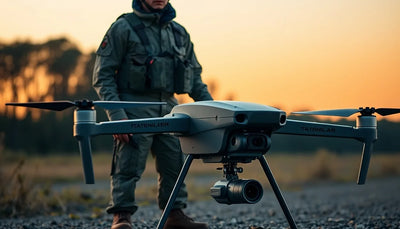
The report frames the Texas pool drop against Zipline's alternative approach, which uses a tethered droid or parachute system to lower packages rather than releasing them in free fall from altitude. Zipline has built its delivery model around controlled descent, while Amazon's MK30, a drone reported to weigh roughly 83 pounds, appears to rely on a release mechanism that leaves more room for targeting error. For anyone evaluating drone delivery platforms, the contrast is instructive.
The reported failure and what it reveals
According to DroneXL.co, the MK30 package ended up in a residential swimming pool in Texas, a clear miss from the intended landing point. The source does not specify whether the release mechanism malfunctioned, whether wind or environmental factors played a role, or whether the package was recoverable. What the report does establish is that the drop happened and that it has become part of a pattern of Amazon delivery drone missteps that industry observers are tracking.
The practical implication here is straightforward. A drone that cannot reliably place a package on a dry, safe surface creates liability exposure, customer dissatisfaction, and potential damage claims. For commercial operators evaluating delivery platforms, release precision is not a secondary feature. It is a core operational requirement. A missed drop into a pool could mean a destroyed package, a damaged drone reputation, and a costly customer service response.
Zipline's tethered and parachute design advantage
DroneXL.co highlights Zipline's use of a tethered droid and parachute-based delivery mechanism as a key differentiator. Instead of dropping a package from the aircraft itself, Zipline lowers a small droid on a tether that descends to the ground, releases the package, and is then reeled back up. In other configurations, Zipline uses a parachute to slow the package descent. Both methods reduce the chance of a package drifting off target or hitting an unintended surface.
This design philosophy has operational consequences. A tethered release keeps the drone at a safer altitude while the package travels the final distance under controlled conditions. A parachute slows descent and narrows the landing footprint. Neither approach is immune to wind or mechanical failure, but both reduce the number of variables that can cause a pool landing. For fleet managers comparing delivery platforms, the release mechanism should be evaluated with the same rigor as range, payload capacity, and battery life.
What this means for drone owners and the market
The Amazon pool drop matters beyond the company itself. It signals that drone delivery is still working through fundamental reliability questions, and those questions affect how buyers, operators, and repair providers think about the market. When a high-profile operator like Amazon misses a delivery target, it reinforces caution among commercial buyers who are deciding whether to invest in delivery drones or stick with ground-based logistics. It also raises the value of platforms that demonstrate repeatable, precise release behavior under real-world conditions.
For owners of pre-owned DJI drones and other commercial UAVs, the incident is a reminder that delivery-specific hardware carries different risk profiles than camera or inspection platforms. A drone that flies well is not automatically a drone that delivers well. Buyers evaluating used or pre-owned commercial aircraft should ask hard questions about release mechanisms, sensor redundancy, and failure history. For those researching the broader drone ecosystem, the Drone Wiki provides context on platform categories, maintenance considerations, and market dynamics that shape purchase and repair decisions. For owners evaluating service and lifecycle risk, Drone Wiki explains the relevant repair, parts, resale, or operational path.
Repair providers should also take note. Delivery drones with moving release mechanisms, tethers, winches, and parachute systems introduce new failure points that require specialized service knowledge. A repair shop that understands only flight controllers and gimbals may not be prepared for the mechanical complexity of delivery hardware. As delivery programs scale, the demand for technicians who can service release systems, tether winches, and descent control components will grow.
The commercial outlook for delivery drone platforms
DroneXL.co's framing suggests that Zipline's design choices are resonating with the market, while Amazon's heavier, free-drop approach continues to generate visible failures. The report does not provide revenue figures or market share data, but it does point to a growing perception that controlled descent systems are more viable for residential delivery. That perception matters because commercial adoption often follows demonstrated reliability rather than raw capability.
For fleet operators, the lesson is to prioritize delivery precision over payload weight or flight endurance when selecting a platform. A drone that can carry more weight but cannot place it accurately is a liability. A lighter drone with a tethered or parachute release may deliver fewer pounds per trip but complete more successful deliveries per day. In a commercial operation, successful deliveries are the only metric that ultimately matters.
The Texas pool drop also underscores the importance of testing under realistic conditions. Suburban delivery environments are full of obstacles: pools, trees, power lines, parked cars, and unpredictable wind patterns. A release system that works in a controlled test environment may fail when confronted with the variability of real neighborhoods. Buyers and operators should demand evidence of field performance, not just laboratory validation.
As the drone delivery market matures, the platforms that win will be those that minimize failure modes and build trust with residential customers. Zipline's tethered and parachute designs represent one path toward that trust. Amazon's MK30, at least based on the Texas pool incident, still has work to do.
What happened with the Amazon MK30 in Texas?
DroneXL.co reported that an Amazon MK30 delivery drone dropped a package into a swimming pool in Texas, missing its intended landing point and highlighting concerns about the drone's release accuracy.
FAQ
Frequently asked questions
Why is Zipline's delivery design considered better?
Zipline uses a tethered droid or parachute system to lower packages in a controlled descent, reducing the chance of a package drifting off target compared to a free-fall drop from the aircraft.
What should commercial drone buyers consider after this incident?
Buyers should evaluate delivery platforms on release precision, failure history, and real-world field performance rather than focusing only on payload capacity, range, or flight endurance.
Does this affect the pre-owned DJI drone market?
The incident reinforces that delivery-specific drones carry different risk profiles than camera or inspection platforms, so buyers of pre-owned commercial aircraft should ask detailed questions about release mechanisms and maintenance history.
Which sources support this update?
The visible evidence links identify DroneXL.co; each source is used only for the claim it directly supports.
What remains subject to change?
Retail pricing, availability, product bundles and regulatory timelines can change. Readers should verify the latest terms with the named retailer, manufacturer or regulator before acting.
How should buyers or operators use this analysis?
Use the verified facts as a starting point, then compare mission fit, lifecycle support, maintenance needs and current procurement terms before making a purchase or fleet decision.
Sources consulted
- DroneXL.co - primary source
Additional official documentation was not available at publication time.
Reboot Hub Editorial adds buyer, repair, resale, and operational analysis for drone owners. If you spot an error, contact us for correction review through our editorial policy.