Pocheon’s Drone Combat Prelims Kick-Start South Korea’s Defense Hub Ambitions
Pocheon, South Korea, is positioning itself as a global defense drone hub after hosting the “Drone Combat” preliminaries on June 12, 2026. This military-adjacent event signals a major push for tactical UAS development, testing swarming, counter-drone ECM, and RTK-denied operations. For commercial operators reliant on GPS-based BVLOS, the hardening of military drone protocols hints at future airspace segmentation and frequency restrictions that could reshape second-hand drone markets and insurance liabilities. Immediate read: defense spending is redirecting to compact, expendable combat drones.

ملاحظات تحريرية
- تجمع هذه المقالة بين التقارير الخارجية المذكورة مع تحليل Reboot Hub's الخاص لمشتري الطائرات بدون طيار ومشغلي الأساطيل وعملاء الإصلاح ومراقبي السوق مستعمل DJI.
- يتم فصل حقائق المصدر عن التفسير. عندما يوفر تقرير بيانات محدودة، تنص المقالة على عرض القيود والإطارات Reboot Hub's كتحليل.
- لدى Reboot Hub روابط تجارية لمنتجات الطائرات بدون طيار وخدمات الإصلاح؛ هذه الروابط هي موارد للقراء ولا تحدد نتيجة المقال.
The city of Pocheon, a strategic gateway near the Korean Demilitarized Zone, fired the starting pistol on its ambitious bid to become a global defense drone hub by hosting the “Drone Combat” preliminaries on June 12, 2026. Organized in partnership with the Republic of Korea Army and local UAS startups, the event showcased tactical drone swarms, kinetic interception systems, and electronic warfare payloads — all tested in real-world EW-denied environments. The move signals a clear shift: South Korea’s defense establishment is accelerating its pivot toward expendable, low-cost combat drones, directly threatening the dominance of legacy manned platforms and pushing second-hand drone markets into a new era of militarized hardware turnover.

The preliminaries, held at the Pocheon Civil-Military Complex, drew 17 competing teams from domestic defense contractors, university labs, and special forces units. The event focused on three core missions: GPS-spoofing resilience, autonomous target acquisition in urban canyons, and coordinated swarm attacks against simulated enemy radar vans. This was no airshow demo — it was a validation gate for the Korean Ministry of National Defense’s future “Dronebot” program, which aims to field 10,000 combat drones by 2028. For the global UAS community, the implications extend far beyond the Korean peninsula: every hardened military protocol developed here will eventually shape civilian airspace policy, certification standards, and the very definition of “airworthy” for commercial drone operators.
Why Pocheon? Geographic Proximity and Strategic Necessity
Pocheon lies just 40 kilometers north of Seoul and 25 kilometers south of the DMZ, making it a frontline city with direct exposure to North Korean artillery and electronic warfare threats. This geography is not incidental — it is the central argument of the city’s defense hub pitch. The mayor’s office published a white paper alongside the preliminaries, arguing that military drone development must occur under realistic threat conditions, including GPS jamming, battlefield EMI, and contested radio spectrum. By hosting the Drone Combat prelims, Pocheon is effectively offering its terrain as a live-fire testbed for the Korean defense industry.
Enterprise procurement
Turn this market signal into a fleet requirement.
Discuss mission profile, quantities, configuration, delivery, and lifecycle support with Reboot Hub.
The timing is crucial. With the US pivot to great-power competition and the ROK’s own Defense Reform 3.0 pushing for unmanned force multipliers, defense budgets for drone procurement are swelling. Korea Aerospace Industries (KAI) and LIG Nex1 are both investing heavily in small UAS production lines. The second-hand drone market is already feeling the ripple: as militaries refresh their inventories with these new-generation combat drones, older models like the ScanEagle or even early DJI M300 platforms are entering civilian secondary channels. The used drone market is seeing a surge in ex-military airframes that offer robust airframes but carry complex regulatory baggage.
Technical Highlights from the Drone Combat Preliminaries
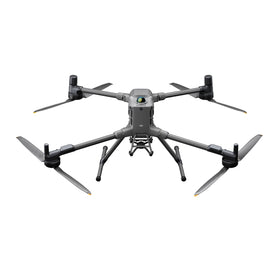
The event featured several technological demonstrations that hit at the bleeding edge of UAS warfare. Most notably, the swarm mission saw 12 quadcopters flying in a coordinated 3D formation under total GNSS denial, relying solely on VIO (Visual Inertial Odometry) and UWB range-finding. This capability is directly transferable to commercial high-risk BVLOS operations, such as underground mining inspection or disaster response in RF-shielded buildings. For commercial operators, the rise of military-grade VIO systems means that platforms like the DJI Matrice 350 RTK — which already offers RTK-level positioning — may soon see firmware upgrades enabling GNSS-free autonomy, prolonging the useful life of second-hand units.
Another headline was the deployment of a directed-energy counter-drone system developed by ADD (Agency for Defense Development). Using a 5kW laser, the system neutralized a small target drone at 500 meters. This creates a direct market implication: as directed-energy C-UAS becomes cheaper and more portable, the risk of accidental drone destruction in civilian airspace grows — which in turn drives demand for hardened, repairable airframes. The professional DJI repair services sector is already adapting to handle laser-damaged composite structures and fried flight controllers.
Ready to Upgrade Your Fleet?
Browse our collection of inspected pre-owned DJI drones — inspected, flight-tested, and backed by a 6-month warranty. Save up to 40% versus retail.
What Does This Mean for Commercial Drone Operators in the Asia-Pacific?
The answer is multidimensional. First, the militarization of Pocheon will attract heavy investment in UAS testing infrastructure — including certified BVLOS corridors that could later be dual-use for commercial operations. South Korea’s Ministry of Land, Infrastructure and Transport has already signaled interest in adopting military-grade C2 data links (STANAG 4586) for civilian UTM integration. This could eventually lead to a “military-grade” certification tier for commercial drones, driving up the value of refurbished hardware that meets these standards.
Second, the proliferation of low-cost, swarming-capable combat drones will depress prices on the second-hand market for older, less-capable platforms. As the ROK military offloads its early-phase drones (such as the Shadow 200 and various hand-launched tactical models), commercial operators in surveying, agriculture, and inspection can acquire rugged airframes at a fraction of their original cost. However, these units often come with modified flight controllers or restricted firmware. The pre-owned DJI drones available at Reboot Hub offer a cleaner path, with full civilian compliance and warranty support.
Third, the event’s focus on electronic warfare resilience highlights a growing pain point: GNSS-denied operations are no longer a niche military requirement but a baseline expectation for drones operating in contested environments. For commercial operators flying near military zones, mining pits, or urban canyons, retrofitting VIO modules or installing multi-frequency RTK receivers becomes a pressing operational need. The second-hand market is already seeing prices spike for DJI Matrice 300/350 units equipped with RTK modules, while non-RTK units lose value.
Broader Impact on Global Drone Regulations and Airspace
The Defense Hub initiative in Pocheon is not occurring in a vacuum. Similar defense drone accelerators are springing up in Estonia, Israel, and Australia, all leveraging military skunkworks to push commercial UAS capability. The FAA, EASA, and Korea’s KOCA are all watching these developments closely. Expect a wave of new regulations targeting “military-grade” UAS operating in civilian airspace, potentially requiring ADS-B out and geofencing that aligns with national defense perimeters.
For commercial pilots flying under Part 107-equivalent rules in South Korea (K-107), the most immediate risk is airspace segmentation. The Pocheon training area may be designated a permanent Restricted Zone (R-1234), blocking access for civilian drone operators within a 10-km radius. This creates operational headaches but also market opportunities: aerial surveying firms will need to reroute or seek exemptions, driving demand for high-endurance, long-range drones that can bypass these zones from the edges.
The event also raised the specter of export controls. As South Korea ramps up combat drone production, it will likely impose stricter end-use monitoring on exported units, similar to the Wassenaar Arrangement. This could limit the flow of used Korean military drones into civilian markets, tightening supply for refurbished platforms. As a counterbalance, the civilian and second-hand markets may shift toward Chinese-origin platforms like the DJI Agras series, which remain less restricted. This dynamic is already visible in the pricing trends of pre-owned DJI drones at Reboot Hub’s marketplace.
Frequently Asked Questions
Will the Pocheon Drone Combat event affect commercial drone prices?
Yes. The event accelerates the turnover of military inventory into the second-hand market, especially for older tactical drones. However, these ex-military units often lack civilian certification and require refurbishment. For a hassle-free commercial upgrade path, B2B buyers are increasingly turning to platforms like Reboot Hub, where every unit is flight-tested and backed by a warranty.
How can drone operators prepare for future airspace restrictions?
Stay informed on KOCA NOTAMs and consider investing in drones capable of GNSS-free flight and long-range telemetry. Upgrading to a RTK-capable system and enrolling in a professional repair service program ensures your fleet remains airworthy even as defense zones expand. Reboot Hub’s professional DJI repair services can retrofit legacy units with modern communications modules.
Is the second-hand drone market a good investment right now?
Given the influx of military-grade hardware and the rising demand for affordable commercial platforms, the used drone market offers compelling value. However, careful vetting is essential. Reboot Hub’s curated inventory of pre-owned DJI drones provides a low-risk entry point for operators seeking to expand their fleets without overpaying for new units.
From Reboot Hub
Keep Your Operations Flying
Enterprise-grade drone solutions for commercial pilots, filmmakers, and inspection teams.
Pre-owned Fleet
Fully inspected DJI drones with 6-month warranty. Save up to 40%.
Browse Inventory ->