How US Army Artillery Lessons from the Philippines Are Reshaping the Drone War
A single line from Maj. Gen. Bartholomees about HIMARS “transforming division artillery” signals a seismic shift for drone operators. The 25th Infantry’s war-games in the Philippines prove that UAVs are now indispensable for precision strike targeting, BDA, and counter-battery fire. Commercial drone pilots must adapt: RTK surveying, BVLOS routes, and part 107 waivers are suddenly military-grade assets. Reboot Hub maps the disruption.

ملاحظات تحريرية
- تجمع هذه المقالة بين التقارير الخارجية المذكورة مع تحليل Reboot Hub's الخاص لمشتري الطائرات بدون طيار ومشغلي الأساطيل وعملاء الإصلاح ومراقبي السوق مستعمل DJI.
- يتم فصل حقائق المصدر عن التفسير. عندما يوفر تقرير بيانات محدودة، تنص المقالة على عرض القيود والإطارات Reboot Hub's كتحليل.
- لدى Reboot Hub روابط تجارية لمنتجات الطائرات بدون طيار وخدمات الإصلاح؛ هذه الروابط هي موارد للقراء ولا تحدد نتيجة المقال.
On June 17, 2026, a quiet but seismic tremor rippled through the defense and drone industries. Speaking from the jungles of the Philippines, Maj. Gen. Joseph Bartholomees, commander of the U.S. Army’s 25th Infantry Division—dubbed “Tropic Lightning”—revealed that the division’s most radical transformation from recent war games came not from infantry tactics or armored vehicles, but from artillery. “Because of HIMARS,” he explained, “division artillery is really what transformed the most.” The High Mobility Artillery Rocket System (HIMARS) is a precision-strike platform, but its true power in the Philippine exercises—codenamed Salaknib—depended entirely on real-time intelligence, surveillance, and reconnaissance (ISR) feeds. And those feeds are increasingly provided by unmanned aerial systems (UAS), from small quadcopters to medium-altitude long-endurance drones.

For commercial drone operators, military resellers, and the used drone market, this is not a distant war story. It is a blueprint for the next generation of drone operations—one that merges commercial off-the-shelf (COTS) technology with military-grade targeting, and forces every pilot with a Part 107 certificate to reassess their equipment and training. The 25th Infantry’s transformation lessons from the Philippines carry direct implications for airspace integration, sensor payloads, and the lifecycle economics of drone fleets.
From HIMARS to Skyborne Sensors: The Drone Revolution in Artillery
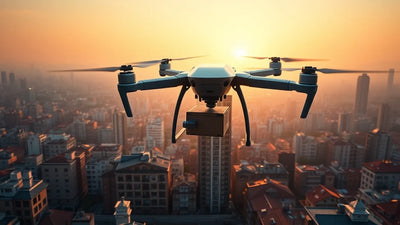
The M142 HIMARS is a lightweight, wheeled launcher capable of firing Guided Multiple Launch Rocket System (GMLRS) munitions with pinpoint accuracy. But accuracy requires targeting data, and in the dense, triple-canopy jungle of Luzon, traditional ground-based observers are often blind. Enter the drone. During Salaknib 2026, the 25th Infantry Division Artillery (DIVARTY) employed a layered UAS architecture: small quadcopters for close-range reconnaissance, tactical fixed-wing drones for beyond-line-of-sight targeting, and tethered aerostats for persistent surveillance. The data fusion pipeline fed directly into the Advanced Field Artillery Tactical Data System (AFATDS), slashing sensor-to-shooter timelines from minutes to seconds.
Enterprise procurement
Turn this market signal into a fleet requirement.
Discuss mission profile, quantities, configuration, delivery, and lifecycle support with Reboot Hub.
What does this mean for the commercial sector? The same sensor technologies—high-resolution EO/IR cameras, laser rangefinders, RTK GPS modules—are now standard on platforms like the DJI Matrice 350 RTK, the Autel EVO Max 4T, and the Skydio X10. The difference is that the military is now proving the operational doctrine for using these sensors in contested, high-tempo environments. For a surveyor mapping a construction site or a farmer scouting irrigation lines, the lessons are identical: a drone is not just a camera in the sky; it is a precision sensor node in a larger data network. The Army’s adoption of COTS drone components validates the commercial roadmap and accelerates the demand for ruggedized, hot-swappable payloads.
Commercial Ripple Effects: What the Army’s Shift Means for Drone Operators
Every drone pilot, from the Part 107 weekend flyer to the enterprise fleet manager, should pay close attention. The 25th Infantry’s transformation underlines a fundamental shift: drones are no longer novelty survey tools but essential instruments of precision. This drives two immediate commercial consequences.
First, the second-hand market for pre-owned DJI drones is about to see a surge in demand for high-end models equipped with RTK modules, thermal cameras, and LIDAR. Military units rotating out of exercises often offload lightly used tactical drones, but commercial operators are also upgrading their fleets to match the new standard—meaning trade-ins and pre-owned units flood the market. Second, repair and maintenance services become mission-critical. A ground loop that bends a gimbal arm on a Matrice 350 is no longer a minor inconvenience; it can delay a deadline-sensitive mapping job or, in the military context, jeopardize a fire mission. The lesson is clear: invest in professional DJI repair services before you need them.
Ready to Upgrade Your Fleet?
Browse our collection of inspected pre-owned DJI drones — inspected, flight-tested, and backed by a 6-month warranty. Save up to 40% versus retail.
The Philippines War Games: A Testing Ground for Joint UAS Operations
The Salaknib exercises, held from May to June 2026 across northern Luzon, involved over 3,000 U.S. and Philippine troops. The U.S. Army’s 25th Infantry Division brought its full complement of organic UAS: RQ-7 Shadow tactical drones, Puma AE hand-launched systems, and a fleet of commercial quadcopters including the Parrot Anafi USA and Skydio X2D. But the real innovation, according to Maj. Gen. Bartholomees, was the integration of these disparate systems into a single fire-support network. Drone operators on the ground could directly designate targets for HIMARS batteries positioned 70 kilometers away, using encrypted datalinks that bypassed traditional radio chatter.
This integration required overcoming three major challenges: interoperability between different drone brands, resilience against electronic warfare (EW) jamming, and real-time data fusion across echelons. The solutions—open-architecture ground control stations, frequency-hopping spread spectrum radios, and AI-assisted target recognition—are exactly the same technical hurdles that commercial operators face when building enterprise drone programs. The Philippines test bed proved that these technologies are not just theoretical; they are deployable today. For a drone services company bidding on a power line inspection contract, that means clients will increasingly expect the same level of precision and integration that the Army just demonstrated.
Furthermore, the war games highlighted the growing importance of counter-UAS (cUAS) capabilities. The 25th Infantry also fielded the Dronebuster and Smart Shooter systems, illustrating that the drone threat is now as serious as the drone opportunity. For commercial operators, this translates into tighter airspace restrictions and the need for geofencing compliance. The FAA’s Part 107 Remote ID rule, fully enforced since 2024, is already a reality; the military’s experience in the Philippines suggests that future regulations will mandate even more robust authentication and tracking, especially near critical infrastructure.
What This Means for the Second-Hand Drone Market and Repair Services
The intersection of military transformation and commercial drone economics creates a unique moment for the used drone market. As Army units rotate out of exercises and upgrade to next-generation UAS, lightly used tactical drones—often with fewer than 100 flight hours—enter a secondary channel. These platforms, whether military-spec Skydio X2Ds or commercial DJI Matrice 300s used for training, carry premium sensor payloads at a fraction of retail cost. Reboot Hub’s inventory of inspected pre-owned units directly benefits from this pipeline, offering enterprise buyers access to near-mint hardware with full warranty coverage.
At the same time, the operational tempo of exercises like Salaknib accelerates wear and tear on drone components: gimbal bearings, propeller motors, battery connectors. The repair ecosystem must keep pace. A drone fleet manager whose aircraft fails mid-mission loses not just the asset but the contract. That is why Reboot Hub’s professional repair services—using genuine parts and FAA-compliant procedures—are becoming a strategic necessity. Whether it is a Matrice 350 RTK with a cracked arm or an Autel EVO Max with a damaged RTK module, fast turnaround repair is the difference between operational continuity and downtime.
For the individual Part 107 pilot, the message is equally urgent. The military’s embrace of COTS drones validates the commercial equipment you already use. But it also raises the bar: clients now expect military-grade accuracy and reliability. Investing in a refurbishment-labeled DJI drone from a trusted source—rather than buying untested second-hand gear on online marketplaces—ensures that your sensor alignment, firmware updates, and battery health meet the new standard. The 25th Infantry’s “Tropic Lightning” transformation is not just a Pentagon talking point; it is a market signal that the drone industry is irrevocably fused with precision warfare.
FAQ
How does the US Army’s use of HIMARS affect commercial drone operators?
The integration of drones with HIMARS demonstrates that real-time ISR is now a core requirement for precision operations. Commercial operators should invest in drones with RTK GPS, thermal sensors, and secure datalinks to meet rising client expectations for accuracy and reliability. The military’s validation of COTS technology also confirms the long-term value of platforms like the DJI Matrice 350 RTK and Autel EVO Max 4T.
What opportunities does the Philippines war games create for the second-hand drone market?
Military units often refresh their UAS inventories after large exercises, releasing lightly used tactical drones into the secondary market. This provides commercial buyers with access to ruggedized, sensor-rich platforms at 30–40% below retail. Reboot Hub’s certification process ensures these units are flight-tested and warrantied, making them a smart investment for budget-conscious fleet managers.
Why is professional drone repair more important after this news?
The operational tempo of exercises like Salaknib accelerates drone wear. For commercial operators, a grounded drone can mean lost revenue and broken contracts. Professional repair services that use genuine parts and follow strict quality controls—like those offered at Reboot Hub—minimize downtime and extend aircraft lifespan. The military’s experience underscores that reliability is non-negotiable.
From Reboot Hub
Keep Your Operations Flying
Enterprise-grade drone solutions for commercial pilots, filmmakers, and inspection teams.
Pre-owned Fleet
Fully inspected DJI drones with 6-month warranty. Save up to 40%.
Browse Inventory ->