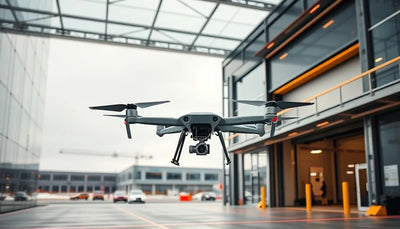
Wingtra Used 180 Simulations in Six Months to Design the RAY Drone
Wingtra reportedly ran 180 aerodynamic simulations over six months to shape the RAY drone, achieving a 56 percent payload gain and 12 percent efficiency improvement over the WingtraOne. The approach signals a shift in how commercial drone makers compress design cycles and validate airframes before production.

Quick answer
Wingtra ran 180 aerodynamic simulations in six months to design the RAY drone, gaining 56 percent payload and 12 percent efficiency over the WingtraOne, according to DroneXL.co reporting on AirShaper data.
- 180 WingtraRAY candidates were simulated over a six-month design window
- Reported gains: 56 percent payload capacity and 12 percent efficiency versus WingtraOne
- The design process relied on computational aerodynamics rather than physical prototype iteration alone
- Faster simulation-led development may compress time-to-market for commercial fixed-wing platforms
Evidence: DroneXL.co
Market context
Turn market news into a buy, repair, or trade-in decision.
Compare pre-owned availability, resale timing, and repair economics before the market moves again.

Verified facts
What the available evidence confirms
| Metric | WingtraOne baseline | WingtraRAY reported change |
|---|---|---|
| Payload capacity | Baseline reference | +56 percent |
| Efficiency | Baseline reference | +12 percent |
| Simulation candidates | Not specified | 180 in six months |
Commercial drone development has traditionally leaned on physical prototypes, wind tunnel sessions, and iterative field testing. A new report from DroneXL.co suggests Wingtra took a different route with the RAY drone, running 180 aerodynamic simulations in roughly six months to refine the airframe before committing to production tooling. The reported outcome is a 56 percent payload increase and a 12 percent efficiency gain over the WingtraOne, the company's prior fixed-wing mapping platform.
The figures come from AirShaper, the aerodynamic simulation firm that reportedly worked with Wingtra on the RAY program. While the report does not include independent verification from Wingtra itself, the numbers point to a meaningful shift in how commercial drone manufacturers approach airframe development. For operators who depend on fixed-wing drones for mapping, surveying, and inspection work, the design process behind a platform matters as much as the final specification sheet.
Why 180 simulations in six months matters
Running 180 candidate simulations over a six-month window is not a trivial engineering exercise. Each simulation represents a distinct airframe configuration, wing geometry adjustment, or payload integration scenario that had to be modeled, solved, and compared against performance targets. According to DroneXL.co, the WingtraRAY candidates were evaluated through AirShaper's computational aerodynamics workflow, allowing the design team to explore a much wider solution space than physical prototyping would permit.
The practical implication for commercial operators is that simulation-led development can compress the timeline between concept and production-ready hardware. A manufacturer that can test 180 configurations digitally avoids the cost and delay of building dozens of physical prototypes. That efficiency can translate into faster availability of improved platforms and, potentially, more predictable product roadmaps for fleet buyers who plan multi-year procurement cycles.
Payload and efficiency gains in context
A reported 56 percent payload increase is substantial for a fixed-wing mapping drone. Payload capacity directly affects sensor options, flight endurance trade-offs, and mission flexibility. Operators who previously had to choose between a lighter camera and longer flight time may find that a platform with higher payload headroom supports more capable sensors without sacrificing range. The 12 percent efficiency improvement, while smaller in absolute terms, compounds across large-area survey missions where every percentage point of aerodynamic drag reduction translates into extended coverage per battery cycle.
Reboot Hub analysis suggests these gains matter most for enterprise operators running frequent, repeatable mapping missions. A platform that carries more sensor weight while flying more efficiently per unit of energy can reduce the number of flights required to cover a given area. That has downstream effects on labor costs, battery wear, and the total cost per hectare or linear mile surveyed. It also influences the pre-owned market, where older fixed-wing platforms may depreciate faster when a successor model delivers measurable productivity gains.
What this means for drone owners and the market
The WingtraRAY development process signals that commercial drone manufacturers are adopting the same simulation-first engineering approach already common in automotive and aerospace design. For drone buyers and fleet managers, the takeaway is that product cycles may accelerate as computational tools lower the barrier to exploring aggressive design changes. A platform refresh that once took years could arrive in shorter intervals, which has implications for procurement timing and resale planning. Operators holding WingtraOne units should watch how the RAY's reported gains affect trade-in values and demand for the older airframe. Readers tracking broader commercial drone market shifts can follow the Drone Wiki for context on how design changes ripple through repair, parts availability, and pre-owned pricing. For owners evaluating service and lifecycle risk, Drone Wiki explains the relevant repair, parts, resale, or operational path.
Reboot Hub analysis: For repair and support operations, a simulation-driven design cycle also raises questions about spare parts continuity. If manufacturers iterate airframes more quickly, the window for OEM-pulled parts and service support on older models may narrow. Fleet operators who standardize on a single platform should consider how rapidly the manufacturer is likely to introduce successors and whether parts inventories will remain accessible over a typical three-to-five-year service life.
What operators should watch next
The DroneXL.co report does not include confirmed pricing, availability, or full specification details for the WingtraRAY. Operators should treat the 56 percent payload and 12 percent efficiency figures as reported design targets rather than independently verified production specifications. The absence of official confirmation from Wingtra means procurement decisions should wait for manufacturer documentation, real-world flight test data, and third-party validation before committing budgets.
Still, the broader signal is clear. Computational aerodynamics is becoming a standard tool in commercial drone development, and manufacturers that use it effectively can deliver measurable performance jumps without the traditional multi-year development slog. Buyers evaluating fixed-wing platforms in 2026 and 2027 should ask manufacturers about their design validation process, not just the final specification sheet. A company that can demonstrate rigorous simulation-led development may be better positioned to deliver consistent product improvements over time.
FAQ
Frequently asked questions
Did Wingtra confirm the RAY drone simulation results?
According to the DroneXL.co report, the simulation data came from AirShaper, the aerodynamic simulation firm involved in the RAY program. The report does not include independent confirmation from Wingtra, so the figures should be treated as reported design outcomes rather than officially verified production specifications.
How does the WingtraRAY compare to the WingtraOne?
The reported comparison shows a 56 percent payload increase and a 12 percent efficiency gain for the WingtraRAY over the WingtraOne. These figures come from the AirShaper simulation data cited by DroneXL.co and have not been independently verified through production flight testing.
Should fleet operators wait for the WingtraRAY before buying fixed-wing drones?
Fleet operators with immediate mission requirements should base decisions on currently available, verified platforms. Those with flexible procurement timelines may benefit from waiting for official WingtraRAY specifications, production availability, and third-party validation before making large capital commitments.
Which sources support this update?
The visible evidence links identify DroneXL.co; each source is used only for the claim it directly supports.
What remains subject to change?
Retail pricing, availability, product bundles and regulatory timelines can change. Readers should verify the latest terms with the named retailer, manufacturer or regulator before acting.
How should buyers or operators use this analysis?
Use the verified facts as a starting point, then compare mission fit, lifecycle support, maintenance needs and current procurement terms before making a purchase or fleet decision.
參考來源
- DroneXL.co - primary source
發佈時尚未取得其他官方文件。
Reboot Hub 編輯部為無人機所有者提供購買、維修、轉售及營運分析。若發現錯誤,請根據我們的編輯政策聯絡我們進行更正審查。