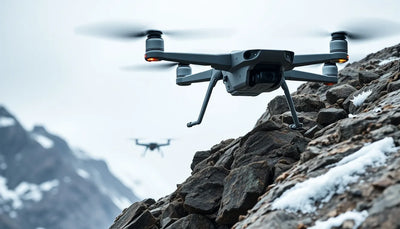
Ukraine Uses Signal Repeater Drones to Extend Mission Drone Range
Ukraine is deploying signal repeater drones to let operators fly mission drones farther than standard control links allow. The approach, reported by Business Insider, points to a shift in how battlefield drone networks are being built and sustained.

Quick answer
Ukraine is using signal repeater drones to relay control signals so operators can fly mission drones beyond normal range limits.
- Business Insider reported the development based on available battlefield information.
- Repeater drones act as airborne relay nodes between operators and mission drones.
- The approach extends operational reach without redesigning the mission drone itself.
- This signals growing demand for modular drone network equipment and spare parts.
Evidence: Defense.gov official source
Fleet readiness
Keep DJI hardware available without overbuying new units.
Use defense and fleet news as a planning signal for repair support, inspected pre-owned aircraft, and replacement timing.

Ukraine is using signal repeater drones to let operators fly mission drones farther than a standard control link would normally allow, according to a report from Business Insider. The development reflects a practical response to the need for greater operational reach in contested environments, where direct line-of-sight control is often limited by terrain, electronic interference, and the physical positioning of operators.
The report, drawn from available battlefield information, describes a layered approach in which a repeater drone acts as an airborne relay between the operator and the mission drone. Rather than redesigning every mission drone with longer-range communications hardware, operators can position a repeater platform in the air to carry the signal forward. This is a network-level solution rather than a hardware overhaul of the mission aircraft itself.
How the repeater drone approach works
According to the Business Insider report, the repeater drone carries equipment that receives the operator's control signal and retransmits it to the mission drone operating farther away. This effectively extends the usable range of the control link without requiring the mission drone to carry additional communications hardware or larger antennas. The repeater platform becomes a mobile, airborne extension of the ground control station.
For commercial and defense fleet operators, the logic is familiar: instead of pushing every aircraft to carry the most expensive communications package, the network can rely on a smaller number of relay platforms to expand coverage. This has implications for how drone fleets are budgeted, maintained, and repaired. A repeater drone that fails or is damaged may be cheaper to replace or repair than a fully equipped mission drone, but it also becomes a critical node that cannot be ignored in maintenance planning.
Reboot Hub analysis suggests that the repeater concept reinforces a broader trend in drone operations: the value is shifting from individual aircraft performance toward the resilience and flexibility of the overall network. Operators who plan missions around relay coverage may need to stock different spare parts, maintain additional aircraft types, and train personnel on relay positioning rather than only on mission aircraft handling.
What this means for drone owners and the market
For commercial operators, the Ukrainian repeater drone report is a signal that modular, network-based range extension is becoming a serious operational practice rather than a niche experiment. Buyers who currently evaluate drones primarily on single-aircraft range specifications may need to think differently about fleet composition. A lower-cost relay platform paired with multiple mission drones could, in some scenarios, deliver more operational flexibility than purchasing a smaller number of high-end aircraft with longer built-in range.
The pre-owned DJI market could also feel the effect over time. As military and public-safety operators adopt relay-based approaches, demand may shift toward aircraft that can serve as stable, reliable relay platforms, even if they are not the newest or most advanced mission models. This could support demand for inspected pre-owned DJI drones that are mechanically sound and available at a lower acquisition cost than brand-new flagship units. For repair customers, the key takeaway is that older or simpler airframes may remain operationally valuable longer when they are used in supporting roles such as signal relay, observation, or logistics rather than as primary mission aircraft.
Fleet managers should consider whether their current maintenance and spare parts strategy accounts for a mixed fleet that includes relay platforms. A relay drone may fly longer, more predictable orbits than a mission drone, which changes wear patterns on motors, propellers, and batteries. Repair demand may become more evenly distributed across the fleet rather than concentrated on the most active mission aircraft. Operators who plan for this can reduce downtime and avoid over-relying on a single aircraft type.
For those evaluating drone purchases or repairs, the practical question is whether the fleet can support a relay role without major new investment. In many cases, existing or pre-owned aircraft can be repurposed for relay duties if they are structurally sound and have reliable power systems. This is where professional DJI repair and genuine OEM spare parts become relevant: a used airframe that has been properly inspected and maintained can serve as a cost-effective relay node, extending the useful life of equipment that might otherwise be retired.
Repair, spare parts, and fleet planning implications
The repeater drone model places new emphasis on component reliability across the fleet. A relay platform that loses power or suffers a motor failure can interrupt multiple mission drones at once, not just itself. This means that preventive maintenance for relay aircraft may need to be more rigorous than for standard mission drones. Operators should track flight hours, battery cycles, and motor condition on relay platforms with the same discipline applied to primary aircraft.
Spare parts planning also changes. If a fleet includes dedicated or repurposed relay drones, the parts inventory must cover those airframes as well. This may include additional antennas, mounting hardware, power modules, and cooling components depending on the relay equipment used. The Business Insider report does not specify the exact hardware involved, so operators should avoid assuming that any particular commercial drone model is ready for relay duty without further verification.
For repair customers, the message is straightforward: do not overlook the supporting aircraft in a fleet. A relay drone that is grounded for maintenance can reduce the effective range of every mission drone that depends on it. Scheduling repairs and keeping OEM-pulled parts available for relay platforms can be just as important as maintaining the primary mission aircraft. The commercial drone repair market may see increased demand for services that keep older, simpler airframes operational in supporting roles. For owners evaluating service and lifecycle risk, Drone Wiki explains the relevant repair, parts, resale, or operational path.
Broader market and procurement signals
The Ukrainian approach, as reported by Business Insider, is part of a wider pattern of rapid adaptation in drone warfare. Militaries and security agencies are learning that range, endurance, and electronic resilience can be improved through network design rather than only through expensive new aircraft. This has implications for defense procurement, where modular relay systems may become a standard category alongside reconnaissance, strike, and logistics drones.
For the commercial market, the signal is that drone operators should watch how military relay concepts influence civilian applications. Long-range inspection, agricultural surveying, search and rescue, and infrastructure monitoring all face similar challenges with control link limits. If relay drones prove reliable in demanding environments, commercial operators may adopt similar approaches using lower-cost aircraft as airborne signal extenders. This could expand the addressable market for pre-owned DJI drones that are no longer the newest models but remain capable of stable, predictable flight.
The development also underscores the importance of repairability. When aircraft are used in supporting roles such as relay, logistics, or observation, their operational value depends less on having the latest camera or obstacle-sensing features and more on basic airworthiness, power reliability, and control link stability. That favors a repair-friendly approach to fleet management, where genuine OEM spare parts and professional DJI repair keep older platforms flying safely and economically. For more detail on drone maintenance and platform knowledge, see the Drone Wiki.
FAQ
Frequently asked questions
What did Business Insider report about Ukraine and drones?
Business Insider reported that Ukraine is using signal repeater drones to let operators fly mission drones farther than standard control links would normally allow. The repeater drones act as airborne relay nodes between the operator and the mission drone.
Why would a drone operator use a repeater drone instead of a longer-range drone?
A repeater drone can extend the control range of existing mission drones without requiring expensive communications upgrades on every aircraft. This can be more flexible and cost-effective than purchasing a smaller number of high-end drones with longer built-in range.
How could this affect the pre-owned drone market?
As relay-based operations become more common, older or simpler airframes may remain valuable in supporting roles such as signal relay. This could support demand for inspected pre-owned DJI drones that are mechanically sound and available at a lower acquisition cost than new flagship models.
Which sources support this update?
The visible evidence links identify Defense.gov official source; each source is used only for the claim it directly supports.
What remains subject to change?
Retail pricing, availability, product bundles and regulatory timelines can change. Readers should verify the latest terms with the named retailer, manufacturer or regulator before acting.
How should buyers or operators use this analysis?
Use the verified facts as a starting point, then compare mission fit, lifecycle support, maintenance needs and current procurement terms before making a purchase or fleet decision.
參考來源
- Business Insider via Google News - primary source
- Defense.gov official source - official government source
Reboot Hub 編輯部為無人機所有者提供購買、維修、轉售及營運分析。若發現錯誤,請根據我們的編輯政策聯絡我們進行更正審查。