Smarter robots demand smarter testing: what drone operators need to know
As autonomous systems advance, Figure AI’s lead test engineer argues that testing methods must scale too. For drone fleet operators and buyers, this insight intersects with reliability, pre-owned market confidence, and long-term maintenance strategy.

The robotics industry has spent years perfecting how to build machines that perceive, decide, and act with increasing independence. But according to Atharv Kolhar, a staff test automation engineer at Figure AI, the next frontier is not hardware or even artificial intelligence—it is how we verify that these systems work reliably at scale. His argument, published recently in The Robot Report, carries weight far beyond the humanoid robots his company builds. Every drone fleet operator, commercial buyer, and repair specialist should pay close attention, because the testing philosophy Kolhar describes applies directly to the unmanned aerial vehicle space.
Drone autonomy has moved from fixed waypoint navigation to dynamic obstacle avoidance, real-time sensor fusion, and even fully autonomous BVLOS missions. Yet the testing methods many operators rely on have not kept pace. Kolhar’s central point—that we need a testing philosophy that scales alongside autonomy—is as relevant to a DJI Matrice 300 RTK performing an infrastructure inspection as it is to a bipedal robot navigating a factory floor. In this article, we unpack what that means for drone buyers, fleet managers, and the growing pre-owned DJI market.
The testing bottleneck in autonomous systems
Kolhar’s article identifies a fundamental mismatch: engineering teams invest heavily in building capable autonomous systems but underinvest in the testing infrastructure required to validate them. This is not merely a development-stage problem. As drones enter service with increasingly complex behaviors—such as adaptive path planning, emergency landing zones, and multiple sensor inputs—the old approach of running a few flight logs and a checklist no longer suffices. The source does not discuss commercial drone firms directly, but the pattern is visible. Many commercial drone operators still rely on visual line-of-sight checks and manual pilot override as their primary safety net, even when the aircraft itself is capable of far more sophisticated decisions.
Market context
Turn market news into a buy, repair, or trade-in decision.
Compare pre-owned availability, resale timing, and repair economics before the market moves again.

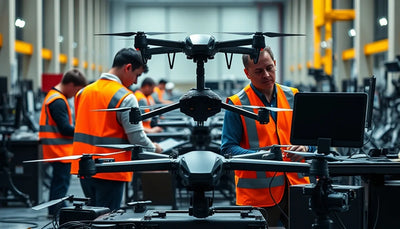
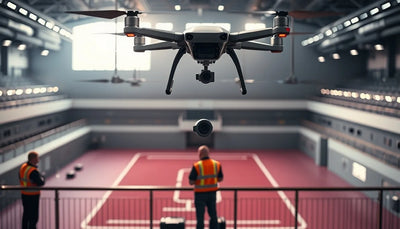
The practical implication is clear: if you are operating a semi-autonomous drone, you should be running structured tests that challenge the system’s decision-making, not just its mechanical functions. Testing should include edge cases like GPS denial, sudden wind shifts, or obstacle detection in low-contrast environments. Kolhar’s industry—humanoid robotics—faces the same challenge of validating safe behavior in unpredictable human environments. For drone operators, this translates into a need for scenario-based test protocols, not just flight time accumulation.
Another key takeaway from the source is that testing automation engineers are often undervalued in the robotics supply chain. Kolhar, as a staff test automation engineer at Figure AI, argues that testing roles should be elevated to match the complexity of the systems they verify. For a drone fleet, this means that having a dedicated safety officer or a technical lead responsible for test design is not a luxury—it is a necessity when relying on autonomous features for commercial revenue.
What this means for drone buyers
When you are evaluating a drone purchase—whether new or pre-owned—the conversation about testing philosophy should influence your decision criteria. The source article implies that autonomous capability alone is not a proxy for reliability. A drone advertised with advanced obstacle avoidance or automated return-to-home may not have undergone the rigorous validation needed to ensure those features work consistently across all operational contexts.
For buyers in the pre-owned DJI market, this becomes especially relevant. Pre-owned DJI drones often come with documented flight logs but rarely with systematic test reports from the original operator. Without evidence that the drone’s autonomy features were regularly validated, you are essentially trusting that the previous owner maintained a thorough testing culture. When you purchase from Reboot Hub, your drone has undergone a structured inspection process that includes functional checks of key autonomous systems. We recommend that any buyer inquire about test history, not just flight hours. A drone trade-in guide can help you understand what documentation to request from sellers.
The broader lesson from Kolhar’s piece is that buyers should view autonomous features as software-defined capabilities that degrade or drift over time unless purposefully tested. A drone that performed flawlessly a year ago may develop subtle sensor biases or firmware regressions. Commercial fleet operators should budget not only for routine maintenance but for periodic re-validation of autonomy functions using structured test scenarios. This aligns with the growing emphasis on data-driven fleet management and distinguishes operators who take reliability seriously from those who simply clock flight hours.
Building a testing culture for fleet reliability
Kolhar’s argument for a scalable testing philosophy has direct application to how commercial drone fleets operate day to day. Rather than viewing testing as a one-time factory acceptance procedure, fleet managers should embed continuous validation into their workflow. This can be as simple as running a standardized pre-flight autonomy test module each morning—something many ground control stations now support—or as comprehensive as a monthly deep-testing session that includes sensor calibration, GPS interference simulation, and battery performance under load.
Drone repair customers also benefit from this mindset. When you send a drone in for professional DJI repair services, you should request not just the repair itself but a post-repair validation that the autonomy features work as intended. Replacing a vision sensor or a flight controller without confirming the system still maintains reliable obstacle detection is a risk that smart operators avoid. Professional repair services, like those offered at Reboot Hub using genuine OEM spare parts, include such validation steps so that your drone returns to service with documented test results. This is part of building a testing culture—treating each maintenance event as an opportunity to recalibrate trust in the system.
For fleet managers responsible for multiple aircraft, the source encourages a shift from ad-hoc testing to a structured test plan that scales with fleet size. As Kolhar notes, the robotics industry needs to learn smarter ways to test. In practice, that means using data logs, automated test scripts, and periodic third-party audits. It also means that insurers and regulators may eventually require documented evidence of such testing before approving autonomous BVLOS operations. Early adopters of this philosophy will have a competitive advantage when compliance becomes mandatory.
Implications for the second-hand market and repair ecosystem
The second-hand drone market has matured considerably, but trust remains a barrier. Buyers of pre-owned equipment often rely on visual inspections and low-flight-hour claims. Kolhar’s perspective suggests that testing history should become a standard part of a drone’s provenance. A drone that has been consistently tested under a documented autonomy validation protocol retains more value than one with only flight time records. For sellers, investing in a testing culture before listing a drone can justify higher asking prices. For buyers, it provides the confidence needed to invest in inspected pre-owned drones rather than new-unit purchases.
OEM-pulled parts and genuine spare parts also benefit from this trend. When a fleet operator removes a sensor or flight module because it failed a test, that part can be recovered, tested, and resold as a known-good component—provided the testing data is preserved. This creates a virtuous cycle: better testing leads to better part traceability, which raises the reliability of the entire pre-owned supply chain. Professional DJI repair services that use OEM-pulled parts can offer the same level of assurance as new parts, as long as the testing regime is transparent.
The source article does not address the drone market directly, but the logic transfers cleanly. As autonomous aerial systems become more common, the gap between a well-tested pre-owned drone and an unknown one will widen. Fleet managers who integrate testing into their procurement and maintenance workflows will lower their cost of ownership over time. The drone trade-in guide from Reboot Hub can help operators understand how to document and transfer test history when selling or trading equipment.
How can I verify the testing quality of a pre-owned drone?
Request flight logs, maintenance records, and any documented autonomy test results. Look for evidence that obstacle avoidance, return-to-home, and sensor accuracy were tested within a reasonable timeframe—ideally within the last 90 days of operation. Sellers who cannot provide this may not have maintained a rigorous testing culture.
What tests should I run on my fleet regularly?
Start with a pre-flight autonomy self-check if your ground control software offers one. Then schedule weekly structured tests that include GPS-denied scenarios, obstacle detection at low speed, and battery-level response. Monthly full calibration of all sensors and a comparison of flight log anomalies will catch drift early. Use the same test sequence across all aircraft for comparability.
Does professional repair affect reliability more than user repairs?
Professional repair using genuine OEM spare parts typically includes post-repair validation that user repairs often skip. A repair performed to factory standards with documented test results restores the drone’s autonomy baseline. Without that testing, a repair can introduce subtle errors that degrade performance in edge cases. Professional DJI repair services provide this assurance as part of their process.