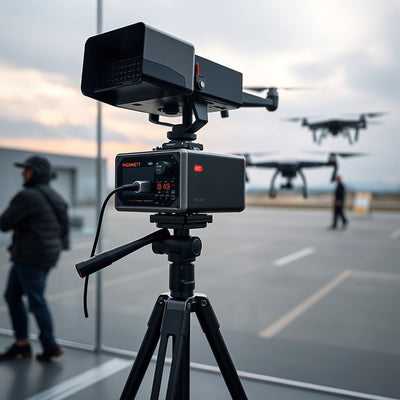
ParaZero and ThirdEye Systems Sign Counter-UAS Development MOU
ParaZero and ThirdEye Systems announced a non-binding MOU to build a unified 360-degree detect-to-defeat counter-UAS architecture for armored vehicles and critical assets. The cooperation combines detection, threat analysis, and physical interception, signaling growing commercial interest in integrated drone defense.

Quick answer
ParaZero Technologies and ThirdEye Systems signed a non-binding Memorandum of Understanding to develop a 360-degree detect-to-defeat counter-UAS solution for armored vehicles and critical assets.
- The MOU was announced on September 15, 2026, by ParaZero Technologies Ltd. (Nasdaq: PRZO).
- The planned architecture combines detection, threat analysis, and physical interception capabilities.
- The solution targets armored vehicles and critical assets rather than consumer drone operations.
- The agreement is non-binding, meaning commercial terms and final product scope remain unconfirmed.
Evidence: Source material · AeroVironment unmanned systems solutions · Defense.gov official source
Fleet readiness
Keep DJI hardware available without overbuying new units.
Use defense and fleet news as a planning signal for repair support, inspected pre-owned aircraft, and replacement timing.

Verified facts
What the available evidence confirms
| Company | Announced Role | Target Application |
|---|---|---|
| ParaZero Technologies Ltd. | Aerospace defense company pioneering smart autonomous UAS solutions | Armored vehicles and critical assets |
| ThirdEye Systems | Detection, threat analysis, and physical interception capabilities | Unified counter-UAS architecture |
ParaZero Technologies Ltd. (Nasdaq: PRZO) and ThirdEye Systems have signed a non-binding Memorandum of Understanding to develop a 360-degree detect-to-defeat counter-UAS solution for armored vehicles and critical assets, according to a September 15, 2026 announcement reported by Yahoo Finance. The cooperation is intended to bring together detection, threat analysis, and physical interception capabilities into a unified counter-drone architecture.
The announcement, sourced from a GlobeNewswire release carried by Yahoo Finance, frames the agreement as an early-stage development partnership rather than a finished product launch. For commercial drone operators, fleet managers, and defense-adjacent service providers, the news matters less for immediate hardware availability and more for what it signals about where counter-UAS investment is heading in late 2026.
The announced cooperation and what is actually confirmed
According to the source report, ParaZero Technologies describes itself as an aerospace defense company focused on smart, autonomous solutions for manned and unmanned aerial systems. ThirdEye Systems is identified as bringing detection, threat analysis, and physical interception capabilities to the proposed architecture. The MOU is explicitly non-binding, which means the parties have agreed to explore joint development but have not committed to a final commercial product, timeline, or revenue arrangement.
The target use case is specific: armored vehicles and critical assets. That points toward military, security, and high-value infrastructure protection rather than consumer or general commercial drone operations. The proposed 360-degree detect-to-defeat concept suggests a system designed to identify an approaching drone from any direction, assess the threat, and then physically neutralize it. Reboot Hub analysis: the phrase “detect-to-defeat” implies a closed loop from sensor input to physical response, which is a meaningful step beyond passive detection or jamming-only approaches.
Why counter-UAS partnerships are intensifying
The MOU lands at a time when small drone threats have become a persistent concern for military logistics, border security, energy infrastructure, and high-profile public events. Armored vehicles are increasingly viewed as vulnerable to low-cost reconnaissance or loitering munitions, and defense buyers are looking for integrated systems that can protect moving assets without requiring a separate stationary sensor network.
For fleet operators and enterprise security planners, the ParaZero-ThirdEye announcement is a reminder that counter-UAS capability is shifting from specialized military programs toward more modular, commercially sourced architectures. A unified system that combines detection, analysis, and interception could reduce integration burden compared with stitching together separate vendors for each layer. However, because the MOU is non-binding and no technical specifications, pricing, or delivery dates were disclosed in the source material, procurement teams should treat this as a development signal rather than a near-term buying option.
What this means for drone owners and the market
The immediate impact on civilian drone owners, repair customers, and pre-owned DJI buyers is indirect but real. As counter-UAS systems become more common around military vehicles, ports, and critical infrastructure, operators may encounter more restricted airspace, more visible detection equipment, and more aggressive enforcement near sensitive sites. That does not change the legality of routine commercial or recreational flights in approved areas, but it does raise the operational stakes for flying near defense facilities, energy installations, or government convoys. For owners evaluating service and lifecycle risk, Drone Wiki explains the relevant repair, parts, resale, or operational path.
For the broader drone market, defense-adjacent partnerships like this one can influence component demand, sensor supply chains, and investor attention across the UAS sector. Companies that build autonomous flight safety systems, such as ParaZero, sit at an interesting intersection: their technology can support both safe civilian flight termination and military counter-drone interception. Fleet managers evaluating long-term equipment budgets should watch whether defense-oriented counter-UAS spending pulls engineering resources and component supply away from civilian drone production. For buyers tracking the pre-owned market, any sustained shift toward defense contracts could affect new-inventory availability and pricing for enterprise airframes. Operators researching platform safety, repair economics, and market conditions can monitor these developments through resources like the Drone Wiki.
One practical takeaway for pilots and fleet managers is to review flight planning procedures around military installations, critical infrastructure, and armored vehicle movements. Even if a counter-UAS system is not yet deployed in your operating area, the procurement trend suggests that detection and interception capability will become more common around high-value assets. Checking NOTAMs, respecting temporary flight restrictions, and maintaining visible compliance documentation will matter more as these systems enter service.
What to watch next
The non-binding nature of the MOU means the next meaningful milestones are a definitive agreement, a technology demonstration, or a disclosed pilot program. None of those were confirmed in the source material. Investors and industry observers will likely watch ParaZero’s Nasdaq disclosures for any follow-up announcement that converts the MOU into a binding development contract or a funded prototype phase.
For defense procurement analysts, the key question is whether the combined architecture can move from concept to fieldable hardware quickly enough to meet current demand. For commercial drone operators, the more practical question is how the spread of detect-to-defeat systems will affect airspace access and operational planning near sensitive sites. Both questions remain open as of this announcement.
FAQ
Frequently asked questions
Is the ParaZero and ThirdEye Systems agreement a final contract?
No. The announcement describes a non-binding Memorandum of Understanding. The companies have agreed to explore joint development of a counter-UAS architecture, but no final commercial terms, product specifications, or delivery commitments were disclosed.
What does “detect-to-defeat” mean in this context?
Detect-to-defeat refers to a counter-UAS approach that combines detection, threat analysis, and physical interception into one system. The goal is to identify an approaching drone, assess the threat, and neutralize it without relying on separate, disconnected tools.
Will this announcement affect civilian drone operators?
Indirectly, yes. As counter-UAS systems become more common around armored vehicles and critical assets, civilian operators may face more restricted airspace and stricter enforcement near sensitive sites. Routine flights in approved areas should remain unaffected, but situational awareness and compliance documentation will become more important.
Which sources support this update?
The visible evidence links identify Source material and AeroVironment unmanned systems solutions and Defense.gov official source; each source is used only for the claim it directly supports.
What remains subject to change?
Retail pricing, availability, product bundles and regulatory timelines can change. Readers should verify the latest terms with the named retailer, manufacturer or regulator before acting.
How should buyers or operators use this analysis?
Use the verified facts as a starting point, then compare mission fit, lifecycle support, maintenance needs and current procurement terms before making a purchase or fleet decision.
參考來源
- Source material - primary source
- AeroVironment unmanned systems solutions - official company source
- Defense.gov official source - official government source
Reboot Hub 編輯部為無人機所有者提供購買、維修、轉售及營運分析。若發現錯誤,請根據我們的編輯政策聯絡我們進行更正審查。