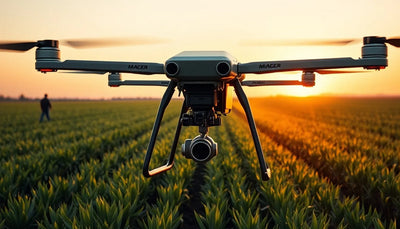
New Zealand Aviation Group Petitions Against Agricultural Drone Deregulation
The Aviation Industry Association of New Zealand has filed a petition urging regulators to halt agricultural drone deregulation. The move signals a potential policy shift that could affect how commercial operators, fleet buyers, and repair customers plan for the coming season.

Quick answer
The Aviation Industry Association of New Zealand has petitioned regulators to stop agricultural drone deregulation, signaling industry concern about reduced oversight.
- A formal petition has been filed by the Aviation Industry Association of New Zealand
- The petition targets agricultural drone deregulation
- The development signals potential regulatory uncertainty for commercial operators
- Drone buyers and fleet managers should monitor compliance requirements closely
The Aviation Industry Association of New Zealand has filed a formal petition urging regulators to stop agricultural drone deregulation, according to a report published by suasnews.com. The petition represents a direct challenge to the direction of unmanned aerial vehicle policy in New Zealand and has immediate relevance for commercial drone operators, fleet planners, and agricultural service providers who depend on stable compliance frameworks.
Operator checklist
Turn policy news into a safer fleet decision.
Before changing aircraft, compare repair paths, available DJI inventory, and trade-in timing against the rule change.

The filing arrives at a moment when agricultural drone adoption is expanding across multiple markets, with spraying, seeding, and crop monitoring operations becoming more common. For operators who have built business models around existing certification and operational rules, any move toward deregulation raises questions about training standards, airspace integration, and long-term liability. Reboot Hub analysis suggests that regulatory uncertainty of this kind tends to slow procurement decisions and push fleet managers toward more conservative planning cycles.
The petition and the regulatory context
The Aviation Industry Association of New Zealand is the named petitioner in the filing covered by suasnews.com. The organization's stated position is that agricultural drone deregulation should be halted, though the source summary does not detail the specific regulatory proposal under review. What is clear is that an established aviation industry body has chosen to formally oppose a deregulatory direction, which suggests that the stakes involve more than routine administrative adjustments.
For commercial operators, the practical implication is straightforward: compliance requirements that exist today may not remain stable, and the industry body representing aviation interests is actively working to preserve current oversight levels. Operators who are evaluating agricultural drone platforms or planning seasonal service expansions should treat the New Zealand policy environment as fluid rather than settled. The petition itself is a signal that established aviation stakeholders see deregulation as a risk to operational standards and market integrity.
What this means for drone owners and the market
The petition matters beyond New Zealand because agricultural drone regulation often influences policy conversations in other markets. When a national aviation association pushes back against deregulation, regulators elsewhere may slow their own reform timelines or introduce additional consultation rounds. For drone buyers and fleet operators, that translates into longer procurement lead times and a greater need to verify that equipment and pilot certifications will remain valid under evolving rules.
Pre-owned DJI agricultural platforms and enterprise spraying drones could see shifting demand depending on how the regulatory picture resolves. If oversight remains strict, buyers may favor inspected pre-owned units with documented maintenance histories and OEM-pulled parts, since compliance-heavy operations tend to prioritize reliability and serviceability. If deregulation proceeds, some operators may delay upgrades while they reassess whether existing equipment remains adequate. In either scenario, the petition introduces a planning variable that fleet managers should incorporate into their 2026 and 2027 equipment strategies. For operators navigating this uncertainty, the Drone Wiki provides reference material that can help clarify platform and compliance considerations.
Repair and service providers should also note the petition. Agricultural drones operate in demanding environments, and any regulatory shift that changes inspection, maintenance, or airworthiness expectations will flow through to service demand. Operators who anticipate stricter oversight may invest more in preventive maintenance and genuine OEM spare parts, while those expecting lighter rules could stretch service intervals. The petition does not resolve that question, but it does make clear that the industry is not moving toward consensus on deregulation. For owners evaluating service and lifecycle risk, Drone Wiki explains the relevant repair, parts, resale, or operational path.
Commercial implications for operators and fleet planners
The New Zealand filing highlights a broader tension in the commercial drone sector: agricultural users want operational flexibility, while aviation industry bodies want to preserve structured oversight. For a fleet manager, the immediate takeaway is to avoid making large capital commitments based on assumptions about deregulation that may not materialize. Instead, operators should maintain current certification levels, document maintenance thoroughly, and keep equipment configurations aligned with existing rules.
Buyers evaluating agricultural drone platforms should also consider how resale value may be affected by regulatory outcomes. Equipment that is compliant under current rules but difficult to adapt to future requirements could lose value if oversight tightens. Conversely, platforms with strong service records and available OEM-pulled parts tend to hold value better during periods of regulatory uncertainty. The petition itself does not change any rule today, but it does indicate that the regulatory path forward is contested, and contested policy environments tend to reward operators who keep their fleets flexible and well-documented.
What operators should watch next
The next practical step for drone owners and fleet managers is to monitor whether New Zealand regulators respond to the petition with a formal consultation, a pause, or a continuation of the deregulatory agenda. Any of those outcomes will provide a clearer signal about compliance costs, training requirements, and equipment standards for agricultural operations. Operators outside New Zealand should also track whether similar industry bodies in their own markets adopt comparable positions.
For repair customers and pre-owned drone buyers, the petition is a reminder that regulatory risk is a real cost factor. A drone that is fully operational today may face different compliance expectations in twelve months, and that uncertainty should be priced into procurement and maintenance decisions. The most defensible approach is to keep equipment in documented, serviceable condition and to avoid overcommitting to platforms that lack clear paths for parts, service, and regulatory adaptation.
FAQ
Frequently asked questions
What exactly did the Aviation Industry Association of New Zealand do?
The association filed a formal petition asking regulators to stop agricultural drone deregulation, as reported by suasnews.com. The petition signals organized industry opposition to reduced oversight of agricultural drone operations.
Does this petition change drone rules in New Zealand right now?
No immediate rule change is confirmed in the source. The petition is a formal request that regulators may accept, reject, or use as the basis for further consultation. Operators should continue following current requirements while monitoring the regulatory response.
How should commercial drone operators respond to this news?
Operators should avoid making large equipment or certification decisions based on assumptions about deregulation. Maintaining current compliance, documenting maintenance, and keeping fleet configurations adaptable are the most prudent steps while the policy direction remains uncertain.
Which sources support this update?
The article distinguishes reported information from analysis and does not present an unverified source as official confirmation.
What remains subject to change?
Retail pricing, availability, product bundles and regulatory timelines can change. Readers should verify the latest terms with the named retailer, manufacturer or regulator before acting.
How should buyers or operators use this analysis?
Use the verified facts as a starting point, then compare mission fit, lifecycle support, maintenance needs and current procurement terms before making a purchase or fleet decision.
參考來源
- suasnews.com via Google News - primary source
發佈時尚未取得其他官方文件。
Reboot Hub 編輯部為無人機所有者提供購買、維修、轉售及營運分析。若發現錯誤,請根據我們的編輯政策聯絡我們進行更正審查。