National Simulated Drone Competition Opens in Shenzhen's Nanshan District
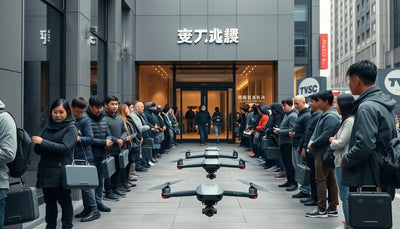
Shenzhen's Nanshan District hosted the opening round of a national-level simulated drone competition, according to 21st Century Business Herald. The event signals growing institutional investment in simulation-based pilot training and competitive drone skills development across China's commercial UAV ecosystem.

Quick answer
The first stop of a national-level simulated drone competition took place in Shenzhen's Nanshan District, as reported by 21st Century Business Herald.
- The event was held in Nanshan District, Shenzhen
- It is described as the national first stop for this simulated drone competition
- The reporting comes from 21st Century Business Herald
- Simulation-based competition points to growing formalization of drone pilot training
The first stop of a national-level simulated drone competition has landed in Shenzhen's Nanshan District, according to reporting by 21st Century Business Herald. The event, framed as the national opening round for this competition format, brings competitive simulated drone flying into one of China's most concentrated UAV technology and manufacturing corridors.
Market context
Turn market news into a buy, repair, or trade-in decision.
Compare pre-owned availability, resale timing, and repair economics before the market moves again.

For commercial operators and drone buyers, the development is less about a single event and more about what it represents: simulation is becoming a recognized pathway for pilot development, competitive benchmarking, and skills standardization. That has practical consequences for fleet training budgets, hiring pipelines, and how repair and maintenance demand evolves as more pilots enter the ecosystem.
What the Shenzhen event signals about pilot training
The competition's placement in Nanshan District is notable in itself. Nanshan sits at the center of Shenzhen's technology economy, home to a dense cluster of hardware companies, robotics firms, and UAV supply chain players. Hosting a national first stop there suggests that simulated drone competition is being treated as a serious technical discipline rather than a casual gaming offshoot.
21st Century Business Herald's coverage frames the event as a national-level simulated drone competition, which implies formal organizational backing and a structured competitive circuit. For fleet managers, that matters because simulation-based assessment is increasingly used to screen pilot candidates, reduce training accident rates, and lower the cost of bringing new operators up to proficiency before they touch physical aircraft.
Reboot Hub's analysis is that simulation-first training could shift how commercial operators think about equipment wear. Pilots who train extensively in simulated environments tend to log fewer destructive mistakes on real hardware, which may extend the service life of entry-level fleet aircraft and reduce demand for crash-related repairs in the first months of a new pilot's tenure.
Why simulated competition matters for the commercial UAV market
A national simulated drone competition creates a structured talent signal. Employers in inspection, mapping, logistics, and agricultural spraying can look at competitive simulation performance as a proxy for spatial awareness, control precision, and calm under time pressure. That is a meaningful shift from the informal, word-of-mouth pilot networks that have historically dominated hiring in parts of the commercial drone sector.
The event also points to growing investment in drone skills infrastructure. When a region like Nanshan hosts a national first stop, it typically brings together simulator hardware vendors, training academies, and educational institutions. Those same stakeholders influence what software and control interfaces become standard in commercial training programs, which in turn shapes what skills new pilots bring to their first real-world jobs.
For drone buyers, the practical takeaway is that the next generation of certified or competition-tested pilots may arrive with more standardized control habits. That could reduce the variance in how fleet aircraft are flown, which has direct implications for maintenance intervals, prop replacement frequency, and the predictability of repair costs across a multi-aircraft operation.
What this means for drone owners and the market
The Shenzhen competition is a market signal that simulation-based skills development is becoming institutionalized in China's UAV sector. For individual owners and small operators, that means the baseline of pilot competence may rise, but it also means that buyers who skip structured training could find themselves at a competitive disadvantage when bidding for commercial work that requires demonstrable flight proficiency. For owners evaluating service and lifecycle risk, Drone Wiki explains the relevant repair, parts, resale, or operational path.
There is also a second-order effect on the pre-owned DJI market. As more pilots enter through simulation-heavy training pathways, the demand for affordable first physical aircraft tends to increase. Operators who want to practice on real hardware after simulator work often look for inspected pre-owned DJI drones rather than committing to a new flagship model immediately. For buyers evaluating the second-hand market, resources like the Drone Wiki can help clarify what to look for when selecting a used aircraft that matches their training stage and operational goals.
Repair demand patterns may also shift. Simulation-trained pilots often make fewer catastrophic beginner errors, but they may push aircraft harder once they transition to real hardware because their simulator experience builds confidence quickly. That can lead to different failure profiles, such as motor stress from aggressive maneuvering or gimbal wear from high-speed directional changes, rather than the classic beginner crash damage that repair shops typically see.
What operators should watch next
The Nanshan event is described as the first stop of a national circuit, which suggests additional rounds will follow in other cities. Operators and buyers should monitor whether the competition format expands into enterprise-relevant scenarios such as inspection flight patterns, thermal imaging workflows, or logistics route simulation. If it does, the competitive circuit could become a de facto skills benchmark for specific commercial applications.
21st Century Business Herald's reporting does not specify prize structures, participant counts, or the exact simulation platforms used. That leaves open questions about which software ecosystems may gain traction as the competition standard. For fleet managers evaluating training tools, the prudent approach is to avoid locking into a single simulator vendor until the competitive circuit's technical standards become clearer.
What should a buyer, pilot, or fleet manager do differently after this news? If you are hiring or training pilots, consider whether simulation performance data should become part of your screening process. If you are buying equipment, recognize that a growing pool of simulation-trained pilots may increase demand for entry-level and pre-owned aircraft as first physical platforms. And if you are budgeting for maintenance, anticipate that the damage profile of the next pilot cohort may differ from the beginner crash patterns of the past.
FAQ
Frequently asked questions
What happened in Shenzhen's Nanshan District?
According to 21st Century Business Herald, the first stop of a national-level simulated drone competition took place in Nanshan District, Shenzhen, marking the opening round of this competitive circuit.
Why does a simulated drone competition matter for commercial operators?
Simulation-based competition signals that pilot training is becoming more standardized, which could improve baseline pilot competence, reduce training-related equipment damage, and give employers a clearer signal when evaluating new operator candidates.
How could this affect the pre-owned drone market?
As simulation-trained pilots look for affordable first physical aircraft, demand for inspected pre-owned DJI drones may increase, particularly among operators who want real-world practice without committing to new flagship pricing.
Which sources support this update?
The article distinguishes reported information from analysis and does not present an unverified source as official confirmation.
What remains subject to change?
Retail pricing, availability, product bundles and regulatory timelines can change. Readers should verify the latest terms with the named retailer, manufacturer or regulator before acting.
How should buyers or operators use this analysis?
Use the verified facts as a starting point, then compare mission fit, lifecycle support, maintenance needs and current procurement terms before making a purchase or fleet decision.
參考來源
- Source material - primary source
發佈時尚未取得其他官方文件。
Reboot Hub 編輯部為無人機所有者提供購買、維修、轉售及營運分析。若發現錯誤,請根據我們的編輯政策聯絡我們進行更正審查。