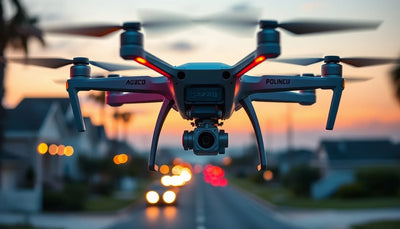
Manna Scaling Back Ireland: What It Means for Drone Delivery
Manna’s decision to cease operations in Ireland signals a strategic shift in drone delivery. We break down the commercial implications for fleet operators, buyers, and the pre-owned DJI market.

Recent commentary surrounding Manna’s announcement regarding ceasing operations in Ireland has stirred the drone industry. For operators and buyers tracking commercial drone logistics, this move by one of Europe’s most visible drone delivery companies is not a sign that the sector is retreating. Rather, it reflects a recalibration of operational priorities and market focus that carries real implications for fleet purchasing, repair services, and the second-hand drone market.
Manna, known for its robust last-mile delivery network using custom-built drones, has been a flagship name in Irish drone operations. The decision to pull back from Ireland in favour of other regions suggests a concentration of resources where regulatory environments, population density, or business models yield stronger returns. For readers of SUAS News, the original source of this commentary, the underlying signal is clear: drone delivery is not leaving Ireland permanently, but the commercial landscape is evolving faster than many anticipated.
What this announcement actually reveals about drone delivery economics
The Manna announcement underscores that drone delivery profitability remains tied to dense urban corridors and favourable airspace policies. Ireland’s relatively low population density outside Dublin and Cork, combined with weather constraints, may have limited the unit economics that Manna needs to scale. The company’s decision to redirect resources indicates a strategic pivot rather than a failure of the technology itself.
Industrial drone procurement
Source a brand-new industrial drone for this mission.
Discuss mission fit, aircraft model, quantities, configuration, pickup, and lifecycle support with Reboot Hub.

For fleet operators evaluating drone delivery investments, this development reinforces the importance of route density and predictable airspace access. Operators should not view Manna’s Ireland pullback as a broad market rejection of drone delivery. Instead, they should examine their own operational areas for similar cost-revenue imbalances. The practical takeaway is to run conservative financial models that account for weather-related downtime, regulatory delays, and real estate for landing infrastructure before committing to large drone fleets.
From a repair and maintenance perspective, the announcement may lead to an influx of pre-owned Manna drones entering secondary markets. While Manna uses proprietary airframes not directly compatible with DJI platforms, the broader second-hand market for delivery drones could see increased supply, potentially lowering prices for operators who can adapt or repurpose those systems.
What this means for drone buyers
For buyers considering drone fleets for logistics or aerial services, the Manna news offers a reality check on hardware lifecycle decisions. When large operators consolidate, they sometimes rebalance their inventories, releasing used equipment that can be an attractive entry point for smaller enterprises. However, buyers should verify that any such equipment comes with clear spares availability and service documentation.
This is also a reminder that purchasing a drone is an ecosystem decision, not just a hardware choice. Pre-owned DJI drones remain a practical alternative for operators who value proven reliability, wide parts distribution, and established repair networks. DJI’s market penetration means that even when companies like Manna shift focus, the core components and airframes used by most commercial operators retain stable resale and service value.
Fleet managers should also evaluate their trade-in options. A drone trade-in guide can help structure upgrades without committing to new equipment while the delivery market settles. The key is to avoid over-investing in proprietary systems that lack a robust second-hand market or independent repair infrastructure.
Implications for the pre-owned DJI market and spare parts
When a dedicated drone delivery operator like Manna restructures, the ripple effect is felt across the broader pre-owned market. While Manna uses custom drones, the ancillary equipment–such as batteries, ground control stations, and payload mounts–may enter the surplus channel. More importantly, the market psychology shifts: operators become more cautious about buying new fleets for speculative applications, which typically strengthens demand for inspected, lower-risk pre-owned DJI platforms.
Buyers who need professional DJI repair services with genuine OEM spare parts benefit from this stability. Even as delivery-specific operators adjust, the DJi ecosystem continues to offer reliable supply chains for components like motors, ESCs, GPS modules, and camera gimbals. For repair shops and fleet maintenance teams, this means that stocking OEM-pulled parts and offering rapid turnaround remains a sound business model regardless of corporate reshuffles among delivery startups.
Operators should also note that the used drone market often sees price softening when a high-profile operator downsizes. This could present a window for smaller logistics firms to acquire capable airframes at reduced cost, provided they have the technical expertise to integrate and maintain non-DJI platforms. However, for most commercial users, sticking with DJI hardware backed by genuine spare parts and qualified repair services minimises operational risk.
Where Irish drone operations go from here
Despite Manna’s shift, drone activity in Ireland is far from over. The commentary from SUAS News emphasises that the future of drones in Ireland remains promising, with other operators and technology demonstrations likely to fill the gap. Ireland’s proactive regulatory stance and its role as a testbed for European drone integration initiatives mean that the infrastructure and talent base will persist.
For commercial drone buyers and fleet operators, the lesson is to track regional regulatory developments and operator exits as signals for market maturity, not abandonment. When a major player withdraws, it often opens slots for smaller, nimble operators who can match local demand with flexible fleets. This can increase the pool of pre-owned equipment available through channels like trade-ins and auction sales.
Fleet managers should maintain a conservative equipment rotation strategy. Buying new drones for speculative delivery routes carries higher depreciation risk than acquiring pre-owned DJI drones through inspected channels. Using a structured trade-in process ensures that older airframes are systematically replaced rather than accumulating idle inventory.
The repair industry also stands to benefit. As delivery operators downsize, they often sell off maintenance tooling and spare part inventories. Shops that can source genuine OEM spare parts at discounted bulk rates gain a competitive edge in turnaround speed and pricing. This is especially relevant for drone repair customers who need fast, reliable service rather than waiting weeks for proprietary parts.
In summary, Manna’s Ireland pullback is a strategic move, not a sector collapse. Buyers should interpret it as a call to prioritise flexible, well-supported hardware and keep a close eye on secondary market opportunities. The core commercial drone market–from delivery to inspection to mapping–remains healthy, but the path to profitability is narrower than many early enthusiasts assumed.
Will Manna ever return to operating in Ireland?
There is no public statement from Manna suggesting a permanent exit from Ireland. The company’s announcement of ceasing Irish operations in favour of other regions suggests a resource reallocation, not a technology or regulatory rejection of the Irish market. Future return would depend on evolving business conditions, population density, and airspace policies in Ireland.
Should I delay my drone fleet purchase because of this news?
Not necessarily. This news affects a single operator’s geographic strategy, not the viability of drone hardware or the wider logistics market. Buyers should still base fleet decisions on their own operational data, route density, and available support services. For most use cases, proven platforms like pre-owned DJI drones remain a low-risk investment.
How does this affect the price of used delivery drones?
When a large operator like Manna exits a market, it can increase the supply of used equipment, including airframes, batteries, and ground stations. This may push down secondary market prices in the short term. However, for proprietary systems, the lack of independent repair support and spare parts availability may limit their appeal to all but specialised buyers. Standardised platforms like DJI are less affected because their parts and service networks remain robust.