Hoverfly Launches NDAA-Compliant Drone Components for Blue UAS Demand
Hoverfly Technologies has launched a new division, Hoverfly Elements, selling NDAA-compliant drone motors, ESCs, and GPS modules. The move targets Blue UAS demand and may shift procurement strategies for fleet operators and repair services.

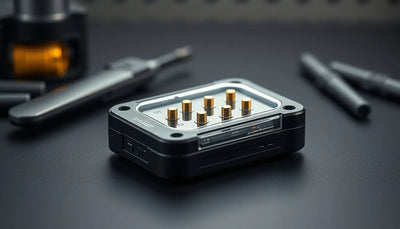
Hoverfly Technologies, a Sanford, Florida-based company known for tethered drone systems, has announced the launch of Hoverfly Elements, a new business division dedicated to selling NDAA-compliant drone components. The line was unveiled at Xponential 2026, and according to a report from DroneXL.co, initial products include drone motors and electronic speed controllers developed in partnership with Korea Robot Manufacturing, as well as GPS modules developed with Septentrio, a Hexagon company. The move signals a strategic bet on growing demand for Blue UAS-compliant hardware, particularly among defense contractors and commercial fleet operators navigating an increasingly regulated supply chain.
For buyers, fleet managers, and repair customers operating in the United States and allied markets, the emergence of component-level NDAA alternatives changes the procurement calculus. Rather than replacing whole aircraft to meet compliance requirements, operators may now be able to spec individual parts that satisfy federal restrictions. This development is especially relevant for those who maintain mixed fleets that include pre-owned DJI drones alongside newer, compliant platforms.
What Hoverfly Elements brings to the component market
Hoverfly Elements enters a landscape where NDAA compliance has become a baseline requirement for many government and defense contracts. The division’s first products focus on three critical subsystems: propulsion and control, and positioning. By partnering with Korea Robot Manufacturing for motors and ESCs, and Septentrio for GPS modules, Hoverfly is leveraging established industrial and GNSS expertise to produce components that can be integrated into both newly designed drones and existing platforms undergoing modification.
Market context
Turn market news into a buy, repair, or trade-in decision.
Compare pre-owned availability, resale timing, and repair economics before the market moves again.

Septentrio is a well-known name in high-precision GNSS, and its inclusion suggests that Hoverfly Elements is targeting applications where positioning accuracy matters—mapping, inspection, and defense reconnaissance. Korea Robot Manufacturing brings manufacturing scale and quality control for electric propulsion systems. While the source does not provide specific technical specifications such as motor sizes, thrust ratings, or GPS receiver types, the partnerships themselves indicate serious engineering intent.
The business division structure also implies that Hoverfly intends to sell these components to other manufacturers, not just use them internally. This could democratize access to NDAA-compliant parts for smaller UAS companies that lack in-house design capabilities, potentially accelerating the availability of compliant aircraft across the market.
The NDAA and Blue UAS landscape driving demand
The National Defense Authorization Act (NDAA) restricts the U.S. federal government from procuring drones manufactured by certain foreign entities, most notably DJI. In response, the Defense Innovation Unit’s Blue UAS list has become a de facto procurement standard. However, the list has so far consisted largely of complete airframes. Component-level compliance solutions have been slower to emerge, partly because many drone parts originate from the same restricted supply chains.
Hoverfly Elements directly addresses that gap. By offering motors, ESCs, and GPS modules that are designed to comply with NDAA restrictions, the company allows integrators to build Blue UAS-eligible systems without waiting for entire new aircraft to be listed. For fleet operators currently using pre-owned DJI drones for commercial work, the availability of such components may influence decisions about whether to retrofit existing airframes or purchase new compliant platforms. Retrofitting with NDAA-compliant modules could extend the usable life of a fleet, but it also raises questions about certification and total cost.
It is important to note that the source does not specify whether Hoverfly Elements components are themselves listed on the Blue UAS list, or if they are merely designed to meet the intent of the NDAA. Operators should verify compliance status directly with Hoverfly and their procurement officers before making integration decisions.
What this means for drone buyers
For drone buyers, particularly those involved in government contracting or enterprise fleets that serve public agencies, Hoverfly Elements offers a new pathway to compliance. Instead of purchasing an entire Blue UAS aircraft, a buyer may now source modular components and build or upgrade a platform that meets requirements. This could be particularly valuable for organizations that have invested in airframes and want to maintain fleet consistency while upgrading specific subsystems.
Commercial operators who rely on pre-owned DJI drones may find that the availability of NDAA-compliant motors and GPS modules allows them to selectively replace non-compliant parts on older airframes. However, this approach carries risk: the airframe itself may still fall under NDAA restrictions if it originates from a restricted entity. The safest route for federal work remains a fully compliant aircraft, but for state or local contracts with less stringent rules, a hybrid build might suffice.
Reboot Hub analysis: Repair customers should also take note. As NDAA-compliant components become more widely available, repair shops that serve mixed fleets may stock these parts as drop-in replacements. For example, a professional DJI repair service might offer customers the option to replace a damaged motor with an NDAA-compliant alternative if the airframe supports it. However, such modifications would likely void any remaining warranty and could affect flight performance if the electronic speed controllers and flight controller are not tuned accordingly. Operators considering this route should consult with experienced repair technicians.
Fleet managers should also watch for pricing. NDAA-compliant components often command a premium over standard parts, but they may reduce long-term compliance risk. As more suppliers like Hoverfly enter the market, competition could drive prices down, making compliant builds more cost-effective compared to pre-owned DJI alternatives.
Implications for the pre-owned DJI market and repair ecosystem
The launch of Hoverfly Elements has indirect but meaningful implications for the pre-owned DJI drone market. DJI platforms remain popular for commercial drone operations because of their performance, ecosystem, and availability on the second-hand market. However, growing pressure for NDAA compliance—especially at the state and local level—could gradually shift demand toward compliant alternatives.
If component-level solutions reduce the cost of building or upgrading non-DJI aircraft, some operators may choose to sell their pre-owned DJI drones earlier than planned. This could increase supply in the second-hand market, potentially lowering prices for cash-strapped buyers who do not require compliance. On the other hand, fleet operators who serve both commercial and government clients may hold onto their DJI assets for non-compliant jobs, while investing in compliant components for other platforms. The net effect depends on how quickly compliance requirements spread beyond federal contracts.
For repair shops that specialize in DJI equipment, the emergence of NDAA-compliant replacement parts offers an opportunity to expand service offerings. Shops that invest in understanding third-party component integration can cater to operators who want to keep their DJI airframes flying while swapping out non-compliant modules. However, repair technicians must be careful not to claim that a modified aircraft is fully NDAA-compliant unless the entire system—including flight controller and software—meets requirements.
For buyers considering a pre-owned DJI drone purchase today, the long-term value of that asset may be slightly less secure if compliance trends accelerate. It may be wise to consult a drone trade-in guide to assess future resale value. Alternatively, operators focused exclusively on compliant work might explore the pre-owned DJI drones market for short-term needs while planning for a gradual transition to Blue UAS systems.
One immediate action for readers: if you operate a fleet that touches government contracts, start auditing your component supply chain now. Identify which parts—especially motors, ESCs, and GPS receivers—come from restricted sources. Hoverfly Elements may provide a path forward, but proactive planning will prevent last-minute scrambles when a contract requires compliance certification.
Frequently asked questions
Are Hoverfly Elements components available for purchase right now?
According to the source, the line was unveiled at Xponential 2026 and the products are launching through the new Hoverfly Elements division. However, specific pricing, lead times, and ordering information were not provided in the report. Interested buyers should contact Hoverfly Technologies directly for current availability.
Can these components be used to upgrade a pre-owned DJI drone to NDAA compliance?
While it is technically possible to replace motors, ESCs, and GPS modules on many drone platforms, the DJI airframe itself may still be subject to NDAA restrictions if it is considered a "foreign entity" drone. Furthermore, compatibility with the DJI flight controller is not guaranteed. Always consult with the component manufacturer and a professional DJI repair service before attempting such modifications.
Does Hoverfly Elements plan to offer other types of components, such as flight controllers or cameras?
The source only mentions motors, ESCs, and GPS modules as initial products. No information was provided about future expansions. Given the industry's need for complete NDAA-compliant subsystems, it is plausible that Hoverfly may add more component categories over time, but no official announcement has been made.
參考來源
- DroneXL Hoverfly NDAA components report - primary reporting source
- Hoverfly Technologies Launches Hoverfly Elements - PR Newswire - official company announcement
- Hoverfly Technologies official site - official company source
- DIU Blue UAS - official government source
Reboot Hub 編輯部為無人機所有者提供購買、維修、轉售及營運分析。若發現錯誤,請根據我們的編輯政策聯絡我們進行更正審查。