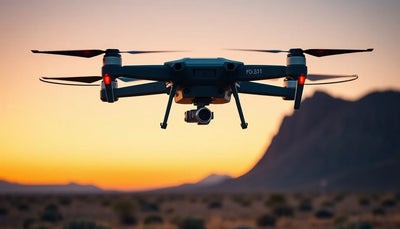
Germany Developing Airborne Laser to Shoot Down Drones and Missiles
Germany is advancing a directed-energy weapon program aimed at equipping Luftwaffe combat aircraft with a laser capable of engaging drones and missiles, according to The War Zone. The effort signals shifting defense priorities that could reshape counter-UAS technology and long-term procurement thinking for commercial operators.

Quick answer
Germany is developing an airborne laser weapon intended to eventually equip Luftwaffe combat aircraft with a directed-energy capability to shoot down drones and missiles, as reported by The War Zone.
- The initiative targets tactical aircraft integration for the German Air Force
- The laser is designed to engage drones and missiles
- The report comes from defense-focused outlet The War Zone
- No confirmed operational timeline or platform details were provided in the source
Evidence: The War Zone · AeroVironment unmanned systems solutions · FAA UAS official guidance · Defense.gov official source
Fleet readiness
Keep DJI hardware available without overbuying new units.
Use defense and fleet news as a planning signal for repair support, inspected pre-owned aircraft, and replacement timing.

Germany is moving forward with a directed-energy weapon initiative that could eventually put a laser on Luftwaffe combat aircraft capable of engaging drones and missiles. The development was reported by The War Zone, a defense-focused publication that tracks advanced military aviation programs, and it points to a growing European interest in counter-UAS capabilities that go beyond conventional kinetic interceptors.
For commercial drone operators, fleet managers, and buyers watching the defense sector, the significance is not the laser itself. It is what the program represents: a widening gap between military counter-drone systems and the civilian platforms that share the same airspace. When air forces invest in directed-energy weapons to defeat small unmanned systems, the technology conversation around drone detection, mitigation, and survivability shifts in ways that eventually reach commercial markets.
What the German program involves
According to the primary reporting from The War Zone, the new initiative aims to eventually equip Luftwaffe combat aircraft with a laser capable of shooting down drones and missiles. The report does not specify a platform, a power output, a range figure, or a timeline for operational deployment. Those details remain source-limited at this stage, and Reboot Hub has not independently verified the program through an official German government or industry announcement.
The absence of confirmed specifications matters. Directed-energy programs often spend years in laboratory and flight-test phases before they produce a deployable pod or integrated system. What the source does establish is the strategic intent: Germany wants an airborne laser option for tactical aircraft, and the stated target set includes drones and missiles. That is a meaningful shift in how a NATO air force is thinking about the lower end of the threat spectrum, where small commercial and military drones operate.
Why directed-energy counter-UAS matters for the broader market
Military investment in laser-based counter-drone systems has been accelerating across multiple NATO countries, and Germany's reported program fits that pattern. Lasers offer a different cost-per-engagement profile than missiles or gun systems, which is one reason air forces keep returning to the technology despite engineering challenges around beam control, thermal management, and atmospheric distortion.
For commercial drone operators, this defense activity has indirect but real consequences. Counter-UAS research funded by militaries often produces sensor packages, tracking algorithms, and detection frameworks that later appear in civilian airspace security products. Airports, stadiums, and critical infrastructure sites already deploy counter-drone systems that borrow heavily from defense research. A mature airborne laser program would accelerate that technology transfer, potentially changing how commercial drone incursions are handled in sensitive airspace.
What this means for drone owners and the market
The most immediate takeaway for drone buyers and fleet operators is that counter-UAS capability is becoming a permanent feature of European airspace planning. Germany's reported laser program is one signal among several that military and civil aviation authorities are treating small drones as a serious, persistent threat category. That does not mean a Luftwaffe jet will be targeting a Mavic over a German city. It does mean that the regulatory and security environment for commercial drone operations in Europe will continue to tighten as detection and mitigation technology improves.
For owners of pre-owned DJI drones and operators running inspected pre-owned fleets, the practical implication is about staying current with airspace rules and geofencing updates. As defense-grade counter-UAS systems mature, civil aviation authorities tend to expand restricted zones and require more robust remote identification compliance. A drone that is fully updated and properly registered holds its value better in that environment than one that cannot meet evolving compliance expectations. Reboot Hub's Drone Wiki offers operator-focused reference material for buyers and fleet managers who need to track these shifts without wading through defense procurement documents. For owners evaluating service and lifecycle risk, Drone Wiki explains the relevant repair, parts, resale, or operational path.
Fleet managers should also watch how European defense programs influence sensor and detection standards. If airborne laser targeting systems require precise drone classification at longer ranges, the underlying electro-optical and radar work could eventually trickle into commercial counter-drone products used at airports and logistics hubs. That would affect where and how commercial delivery and inspection drones can operate, especially in dense European airspace.
What to watch next
The War Zone report leaves several questions open. Which Luftwaffe platform would carry the laser? Is the system a podded design or an internal integration? What power class is being pursued? Those answers will determine whether the program moves quickly toward flight testing or remains a longer-term research effort. Reboot Hub analysis suggests that podded laser systems on existing tactical aircraft are the more likely near-term path, given the cost and complexity of internal directed-energy integration, but that remains an interpretation rather than a confirmed program detail.
For commercial operators, the signal to monitor is not the laser itself but the counter-drone doctrine that accompanies it. When a major European air force publicly pursues directed-energy weapons for drone defense, it reinforces the expectation that small unmanned aircraft will face increasingly sophisticated detection and mitigation across both military and civilian domains. Buyers and fleet managers who treat airspace compliance as a core operating cost, rather than an afterthought, will be better positioned as those systems mature.
FAQ
Frequently asked questions
Is Germany building a laser weapon for fighter jets?
According to reporting by The War Zone, Germany is developing an airborne laser weapon initiative intended to eventually equip Luftwaffe combat aircraft with a directed-energy capability against drones and missiles. Specific platform and timeline details were not confirmed in the source.
How does this affect commercial drone operators?
The program signals continued European investment in counter-UAS technology, which historically leads to tighter airspace restrictions and more advanced detection systems in civilian environments. Commercial operators should expect compliance requirements to keep evolving alongside defense-driven counter-drone research.
Should drone buyers or fleet managers change anything now?
No immediate operational change is required based on this single report. However, buyers and fleet managers should prioritize drones that can receive firmware and remote identification updates, since counter-UAS pressure tends to raise compliance standards over time.
Which sources support this update?
The visible evidence links identify The War Zone and AeroVironment unmanned systems solutions and FAA UAS official guidance and Defense.gov official source; each source is used only for the claim it directly supports.
What remains subject to change?
Retail pricing, availability, product bundles and regulatory timelines can change. Readers should verify the latest terms with the named retailer, manufacturer or regulator before acting.
How should buyers or operators use this analysis?
Use the verified facts as a starting point, then compare mission fit, lifecycle support, maintenance needs and current procurement terms before making a purchase or fleet decision.
參考來源
- The War Zone - primary source
- AeroVironment unmanned systems solutions - official company source
- FAA UAS official guidance - official regulator source
- Defense.gov official source - official government source
- DIU Blue UAS - official government source
Reboot Hub 編輯部為無人機所有者提供購買、維修、轉售及營運分析。若發現錯誤,請根據我們的編輯政策聯絡我們進行更正審查。