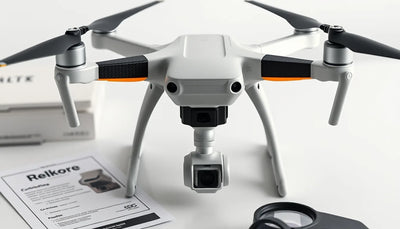
FCC Could Ban DJI Drones Already Sold and Approved in the US
The FCC is reportedly considering a ban on DJI drones that were already approved and sold in the US. Commercial operators and pre-owned buyers should understand the regulatory risk before their next purchase or fleet decision.

A new report from dronedj.com indicates that the Federal Communications Commission (FCC) could soon move to ban DJI drones that have already been approved and sold in the American market. The report, aggregated through Google News DJI, points to a regulatory shift that would go beyond blocking future sales and would reach into the installed base of DJI equipment already operating across the United States. For commercial operators, fleet managers, and buyers in the pre-owned market, this is a significant development that warrants close attention.
The source report does not provide a timeline, a specific rulemaking docket, or an official FCC statement. What it does describe is a regulatory posture that treats previously authorized DJI hardware as a potential compliance problem. If the FCC follows through, the practical effect would be that drones legally sold and flown today could lose their authorized status, creating uncertainty for every operator who relies on DJI equipment for survey work, inspections, agriculture, public safety, or media production.
The scope of a retroactive FCC ban
The central fact in the source report is that the FCC is considering action against DJI drones that have already received approval and have already been sold in America. This is materially different from a typical import ban or a restriction on new model certifications. A retroactive ban would mean that equipment already in the field, already integrated into workflows, and already paid for could become non-compliant under federal communications rules.
Operator checklist
Turn policy news into a safer fleet decision.
Before changing aircraft, compare repair paths, available DJI inventory, and trade-in timing against the rule change.

For commercial operators, the immediate concern is operational continuity. A drone that loses its FCC authorization is not necessarily grounded by that fact alone, but it creates legal exposure for businesses that fly under Part 107 or other commercial frameworks. Insurance carriers, client contracts, and local permitting authorities often reference federal compliance, and a change in authorized status could ripple through those agreements.
The source report does not specify whether the ban would apply to all DJI models, only newer ones, or only those used in certain sectors. It also does not clarify whether the FCC would require removal from service or simply revoke the equipment authorization. That ambiguity is itself a planning problem for fleet operators who need to make purchasing and maintenance decisions now.
What this means for drone owners and the market
For owners of DJI drones, the reported FCC consideration changes the risk calculation around both new purchases and existing inventory. If you are currently flying a DJI platform for commercial work, the prudent move is to monitor FCC announcements and review your own compliance documentation, including equipment authorizations and firmware update logs. For fleet managers, this is a good moment to document which of your aircraft are affected and what your contingency options are.
Reboot Hub analysis: The pre-owned DJI market is likely to feel this pressure quickly. If a ban is enacted, demand for used DJI aircraft could soften among commercial buyers who need guaranteed compliance, while hobbyists and non-commercial users may see prices shift differently. Sellers of pre-owned DJI drones should be transparent about the regulatory status of the equipment, and buyers should factor potential compliance risk into their offers. For those holding DJI inventory, the value of the hardware may depend on how the FCC defines the scope of the ban and whether any grandfathering provisions are included.
For repair customers and service providers, the reported ban introduces a question about parts availability and repair viability. If DJI equipment loses FCC authorization, the market for genuine OEM spare parts and professional DJI repair services could become more complex, even if the physical components remain legal to buy and sell. Operators who rely on extended service life for their aircraft should consider how a regulatory change might affect their repair strategy and whether alternative platforms need to be evaluated sooner rather than later. This is exactly the kind of regulatory uncertainty that makes it harder to plan a fleet refresh, which is why staying informed through resources like the Drone Wiki can help buyers and operators track the implications of policy changes on hardware decisions. For owners evaluating service and lifecycle risk, Drone Wiki explains the relevant repair, parts, resale, or operational path.
The source report does not indicate whether the FCC has consulted with DJI, whether there is a comment period planned, or whether the ban would face legal challenges. It also does not mention whether other federal agencies, such as the FAA or the Department of Commerce, are coordinating on this matter. Those details matter for forecasting the timeline, but their absence in the source means any timeline is speculative at this point.
Commercial planning under regulatory uncertainty
Commercial drone operators should treat this report as a trigger for scenario planning rather than panic. The most useful response is to identify which of your aircraft are DJI products, confirm their current FCC authorization status, and understand what your obligations would be if that authorization is revoked. For businesses that fly multiple platforms, this is also a moment to assess how dependent your operation is on a single manufacturer.
Fleet managers who are mid-cycle on a DJI purchase should weigh the reported regulatory risk against the operational benefits of the equipment. The source report does not suggest that DJI drones are unsafe or that they are being banned for performance reasons, so the decision is not about hardware quality. It is about regulatory exposure. If you are about to buy several DJI units for a long-term contract, the possibility of a retroactive ban should be part of your procurement analysis.
For those in the repair and parts ecosystem, the reported FCC consideration reinforces the value of maintaining good records. Knowing the serial numbers, purchase dates, and authorization details for each aircraft in your fleet will make it easier to respond if the FCC issues specific guidance. It also helps if you need to sell equipment quickly or transition to a different platform.
What buyers and pilots should do now
The practical takeaway for buyers, pilots, and repair customers is to avoid making large, irreversible commitments based on the assumption that the regulatory status quo will hold. If you are considering a used DJI drone, ask the seller for the equipment authorization documentation and check whether the specific model has been flagged in any FCC communications. If you are a repair customer, confirm that your service provider is tracking regulatory changes that could affect parts sourcing.
Operators should also review their own flying practices. A retroactive ban does not automatically make existing flights illegal, but it could affect renewals of licenses, insurance policies, or client contracts that reference FCC compliance. Keeping your documentation current and your firmware updated is a reasonable precaution, even if the source report does not specify any firmware-related requirements.
The source report from dronedj.com is a single media account, and it has not been independently confirmed by the FCC or by DJI. That means the most responsible approach is to treat this as a credible possibility rather than a settled outcome. Commercial operators who build flexibility into their fleet plans, who keep good records, and who stay informed through reliable industry sources will be better positioned regardless of how the FCC proceeds.
Will my existing DJI drone be grounded if the FCC issues a ban?
According to the source report, the FCC could ban DJI drones already approved and sold in America, but the report does not specify whether that would require grounding existing aircraft. Until the FCC publishes specific rules, the operational status of currently owned DJI drones remains uncertain.
Should I sell my DJI drone before a potential ban takes effect?
That decision depends on your risk tolerance and how you use the aircraft. The source report does not provide a timeline or details on grandfathering, so selling now could be premature. Buyers in the pre-owned market should factor regulatory uncertainty into their offers, and sellers should disclose the reported FCC consideration.
Does this reported ban affect DJI spare parts and repair services?
The source report does not address parts or repair services directly. However, if DJI equipment loses FCC authorization, the market for genuine OEM spare parts and professional DJI repair could become more complex. Operators should keep records and monitor FCC announcements for further guidance.
參考來源
- FAA UAS official guidance - official regulator source
- FCC Covered List - official regulator source
Reboot Hub 編輯部為無人機所有者提供購買、維修、轉售及營運分析。若發現錯誤,請根據我們的編輯政策聯絡我們進行更正審查。