DJI AP100 Parachute Launches for Matrice 400: What Fleet Operators Need to Know
DJI released the AP100 parachute for the Matrice 400 on July 8, 2026. The system deploys in under 600 milliseconds and descends at less than 5 m/s. European crews gain a critical safety layer without buying a new drone.
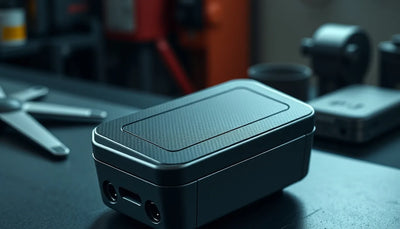
DJI’s July 8 launch of the AP100 parachute for the Matrice 400 arrives as a measured but meaningful safety upgrade for commercial operators. The rear-mounted recovery system deploys in under 600 milliseconds and brings the aircraft down at less than 5 meters per second (16.4 feet per second). For European Matrice 400 crews already flying in regulated airspace, this accessory may do more to extend fleet viability than a new drone model would. The AP100 is not a software update or a flight mode. It is a physical parachute system that attaches to the rear of the Matrice 400 airframe. DJI’s tagline for the reveal, “Priceless Below,” points directly at the value of protecting people, property, and equipment during an unplanned descent. For fleet operators, repair customers, and second-hand market participants, the implications reach beyond specification sheets into insurance, maintenance planning, and resale strategy.Operational safety implications for Matrice 400 crews
The core promise of the AP100 is straightforward: when the drone experiences a critical failure in flight, the parachute deploys automatically and reduces vertical speed to a survivable and less damaging rate. The 600-millisecond deployment window is aggressive enough to catch most sudden power losses, motor failures, or structural issues before the drone enters a catastrophic tumble. The descent rate of less than 5 m/s is roughly equivalent to a gentle jogging pace, which means the aircraft can touch down without the kind of high-energy impact that typically destroys airframes, cameras, and payloads. For European crews operating the Matrice 400—common in inspection, mapping, and public safety roles—this system offers a tangible risk-reduction tool. Many countries in Europe have tightened rules on drone operations over populated areas, critical infrastructure, and industrial sites. A parachute system does not guarantee regulatory exemption, but it does give operators a stronger safety case when applying for operational authorizations or seeking to fly over people and moving vehicles. It also reduces the likelihood of total hull loss in an incident, which directly affects fleet reliability and operational uptime. The AP100 mounts to the rear of the Matrice 400, meaning it adds some weight and changes the drone’s center of gravity slightly. Operators will need to account for this in payload planning and flight performance calculations. DJI’s launch suggests the system is designed for the Matrice 400 specifically, so compatibility with other Matrice models is unclear at this point.What this means for drone buyers
Drone buyers considering a Matrice 400 for their fleet should factor the AP100 into their total cost of ownership and operational planning. The parachute adds an initial hardware cost and a periodic maintenance requirement—parachutes need repacking and inspection after deployment or at set intervals. But the potential savings in avoided accident costs, insurance premium reductions, and reduced downtime can offset that expense quickly. For buyers in the pre-owned DJI market, the AP100 changes how a Matrice 400 is valued. A second-hand Matrice 400 that includes an AP100 system may command a higher price or sell faster because it offers built-in safety redundancy. Conversely, a unit without the parachute may be seen as less complete or less regulatory-ready, especially if the buyer intends to operate in European airspace where authorities increasingly expect such safeguards. Fleet managers looking to sell older Matrice 400 units to upgrade to newer platforms should consider whether retrofitting the AP100 before listing improves resale returns. Operators who already own a Matrice 400 should evaluate whether retrofitting the AP100 is cost-effective compared to purchasing a newer drone with integrated safety features. The source material suggests the AP100 does more for European Matrice 400 crews than a new drone would, implying that the existing platform remains competitive for several more years when equipped with the parachute. This is a clear signal from DJI that they intend to support the Matrice 400 through accessories rather than forcing a full replacement cycle.Impact on repair, spare parts, and fleet planning
A parachute system changes the economics of drone repair. Without the AP100, a Matrice 400 that suffers a motor failure at altitude often ends up as a total loss or requires extensive airframe and payload replacement. With the AP100, the same failure results in a controlled descent and likely minor damage. That means fewer write-offs, more repair jobs that involve professional DJI repair services using genuine OEM spare parts, and a longer useful life for each airframe. Repair customers should ask whether their repair provider stocks or can source the AP100 system components. The parachute itself, the deployment mechanism, and the mounting hardware are new consumable and replaceable parts that were not part of earlier Matrice 400 service catalogs. Fleet operators will need to add parachute inspection and repacking intervals to their preventive maintenance schedules. This is not a fit-and-forget accessory; it requires ongoing attention. The availability of pre-owned DJI drones with the AP100 already installed may increase over the coming months as early adopters trade up or change platforms. For buyers who prefer inspected pre-owned units with verified safety equipment, a Matrice 400 with a certified AP100 parachute becomes a compelling option. Sellers listing used drones should note whether the parachute is included and whether it has been repacked or deployed.Broader market trends in drone safety accessories
The AP100 launch fits a larger pattern in the commercial drone market: regulators and insurers are pushing for redundancy and fail-safe mechanisms beyond basic return-to-home functions. Parachutes, redundant flight controllers, and multi-battery power systems are becoming expected on enterprise-class platforms. DJI’s move to offer an OEM parachute for an existing model suggests that aftermarket safety add-ons are becoming a normalized part of fleet ownership. European operators have been early adopters of parachute systems because of the region’s strict operational regulations under EASA. The AP100’s explicit design for the Matrice 400 indicates that DJI sees Europe as a key market for safety accessories. Other regions may follow as local regulators adopt similar requirements. For global fleet operators, standardizing on a platform that can accept OEM safety upgrades simplifies cross-border compliance. The second-hand drone market will likely see a bifurcation: units with integrated or OEM-add-on safety features will retain value better than bare airframes. Buyers searching for drone trade-in guide information should keep an eye on whether trade-in valuations begin to factor in parachute presence. Sellers who can document proper parachute installation and maintenance history will have an advantage.What is the DJI AP100 parachute system?
The DJI AP100 is a rear-mounted recovery system for the Matrice 400 that deploys in under 600 milliseconds and descends at less than 5 meters per second. It was released on July 8, 2026, and is designed to reduce damage and risk during critical flight failures.
Does the AP100 affect the resale value of a Matrice 400?
Yes. A Matrice 400 equipped with the AP100 may appeal more to buyers, especially in European markets where safety equipment is increasingly valued. The parachute can make a pre-owned drone more attractive and potentially command a higher price.
Market context
Turn market news into a buy, repair, or trade-in decision.
Compare pre-owned availability, resale timing, and repair economics before the market moves again.
Should current Matrice 400 operators retrofit the AP100?
For European fleet operators, retrofitting the AP100 can extend the useful life of existing Matrice 400 aircraft by providing a critical safety layer. The decision depends on operational needs, regulatory requirements, and the cost of retrofitting compared to upgrading to a new platform.
Sources consulted
- DroneXL.co - primary source
Additional official documentation was not available at publication time.
Reboot Hub Editorial adds buyer, repair, resale, and operational analysis for drone owners. If you spot an error, contact us for correction review through our editorial policy.