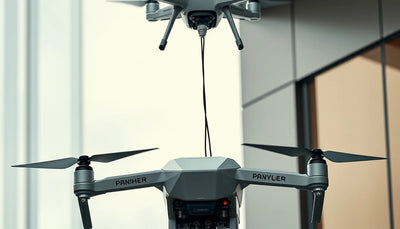
China Presses U.S. to Scrap Drone Tariffs as Trade Tensions Persist
China has reportedly asked the U.S. to remove new tariffs on drones and related parts. The request, reported by Stocktwits via Yahoo Finance, adds fresh uncertainty for commercial operators, buyers, and repair customers already navigating volatile drone hardware pricing and supply chains.

Quick answer
China has reportedly urged the United States to remove new tariffs on drones and related parts, according to a Stocktwits report citing Yahoo Finance coverage of ONDS, UMAC, RCAT, and KTOS stocks.
- The reported request comes amid ongoing U.S.-China trade tensions.
- Tariff changes could affect new drone hardware pricing and parts availability.
- Commercial operators and repair customers may face continued cost uncertainty.
- Pre-owned DJI inventory could become more attractive if new-unit prices stay elevated.
Evidence: Source material · AeroVironment unmanned systems solutions
Market context
Turn market news into a buy, repair, or trade-in decision.
Compare pre-owned availability, resale timing, and repair economics before the market moves again.

Verified facts
What the available evidence confirms
| Factor | Reported detail | Potential operator impact |
|---|---|---|
| Tariff status | China reportedly pressing U.S. to remove drone-related tariffs | New hardware and parts pricing could shift if tariffs change |
| Trade context | U.S.-China trade tensions persist | Supply chain and procurement planning remains uncertain |
| Market signal | Stocks including ONDS, UMAC, RCAT, KTOS in focus | Investor attention on drone sector policy exposure |
China has reportedly urged the United States to remove new tariffs on drones and related parts, according to a Stocktwits news report citing Yahoo Finance coverage. The report, published under the title "ONDS, UMAC, RCAT, KTOS Stocks In Focus: China Reportedly Presses US To Scrap Drone Tariffs As Trade Tensions Persist," frames the development as part of ongoing trade friction between the two countries. For commercial drone operators, fleet managers, and repair customers, the reported request introduces another variable into hardware pricing and parts availability at a time when procurement planning already requires careful attention.
The named stocks in the source headline reflect the breadth of the U.S. drone and defense technology sector. ONDS, UMAC, RCAT, and KTOS represent companies with exposure to unmanned systems, counter-drone technology, and defense robotics. While the source does not provide detailed commentary on each company's specific tariff exposure, the grouping suggests that market participants are watching how trade policy could affect domestic drone manufacturers, component suppliers, and service providers. Reboot Hub analysis of the source material suggests the reported request should be read as a policy signal rather than a confirmed regulatory change.
What the source actually says
The central reported development is straightforward: China has pressed the United States to scrap drone tariffs. The source, a Stocktwits news article attributed to Yahoo Finance coverage, does not include direct quotes from government officials, formal filings, or an official confirmation from either government. The report is built around stock market attention to the drone sector amid persistent trade tensions. This matters because tariff policy can directly influence the landed cost of imported drone hardware, batteries, cameras, gimbals, and OEM spare parts.
For operators who depend on imported components or complete aircraft, even the possibility of tariff changes creates planning complexity. A removal of tariffs could lower acquisition costs for new hardware and parts. A continuation or expansion of tariffs could keep prices elevated. The source does not specify which tariff categories are under discussion, which product lines are affected, or what timeline might apply. Reboot Hub analysis of the source material indicates that the report is best understood as a market-moving headline with limited operational detail.
What this means for drone owners and the market
Drone owners and buyers should treat this report as a reminder that hardware pricing is not purely a function of manufacturer list prices. Trade policy, import duties, and component supply chains all feed into the final cost of a new aircraft, a replacement battery, a gimbal repair, or an OEM-pulled part. When tariff uncertainty rises, procurement teams often respond by delaying large purchases, holding more inventory, or shifting toward platforms with more predictable parts availability. The reported Chinese request suggests that both governments remain engaged on drone trade policy, but it does not indicate that any change is imminent.
For repair customers, the tariff question is especially relevant. Repair work frequently requires genuine OEM spare parts, many of which are manufactured overseas. If tariffs on drone parts remain in place or expand, repair costs could stay elevated even when labor rates are stable. Fleet managers evaluating maintenance budgets may find that pre-owned DJI drones and inspected pre-owned aircraft offer a practical hedge against new-unit price volatility. Reboot Hub maintains a Drone Wiki where operators can review platform-specific maintenance and ownership considerations as they plan around shifting market conditions. For owners evaluating service and lifecycle risk, Drone Wiki explains the relevant repair, parts, resale, or operational path.
The pre-owned DJI market could see renewed interest if tariff uncertainty persists. When new-unit pricing becomes harder to forecast, buyers often look for inspected pre-owned aircraft with known condition histories and available OEM-pulled parts. That dynamic is not unique to drones; it appears across commercial equipment categories whenever trade policy introduces cost volatility. Operators who need to expand fleet capacity without locking in uncertain new-hardware pricing may find that pristine pre-owned units offer a more predictable near-term path.
Commercial and fleet planning considerations
Fleet managers should avoid overreacting to a single reported request. The source does not confirm that the U.S. will remove drone tariffs, nor does it provide a timeline for any decision. What it does provide is a signal that drone trade policy remains an active area of negotiation and market attention. For procurement planning, that means building flexibility into purchase timelines, maintaining awareness of parts lead times, and considering whether pre-owned inventory can fill near-term operational gaps without sacrificing reliability.
The stock tickers named in the source headline offer a useful lens for understanding how the market is processing drone trade policy. ONDS, UMAC, RCAT, and KTOS each operate in different segments of the unmanned systems economy, from counter-drone solutions to defense robotics. When trade policy news moves these names, it often reflects broader investor assumptions about domestic manufacturing capacity, import dependence, and government procurement. Commercial operators can read these market signals as a proxy for how seriously the broader economy is treating drone supply chain risk.
One practical step for operators is to review their parts inventory against likely repair needs. If tariffs on drone parts remain in place, lead times and costs for imported components could stay elevated. Holding a modest buffer of high-wear items such as propellers, landing gear, gimbal dampeners, and battery connectors can reduce downtime. For platforms with mature pre-owned markets, sourcing genuine OEM-pulled parts from inspected units can provide a cost-effective alternative to waiting on new-part shipments that may carry tariff-related price premiums.
What to watch next
The next meaningful developments would be an official U.S. government statement on drone tariffs, a formal trade filing, or a confirmed policy change. Until then, the reported Chinese request remains a source-limited development. Operators should watch for coverage from official trade channels, major financial news outlets, and company earnings calls where executives may discuss tariff exposure. The source article itself is a market news item, not a regulatory document, and it does not provide the kind of operational detail that would justify immediate procurement changes.
For buyers and repair customers, the most sensible posture is measured awareness. Tariff policy can shift hardware costs, but it does not change the fundamentals of safe operation, maintenance discipline, or platform selection. A well-maintained aircraft with available parts support remains a productive asset whether tariffs rise or fall. The reported request from China is a reminder that drone economics sit inside a larger trade policy environment, and that environment is still moving.
This article is market commentary for drone operators and buyers, not investment advice. Reboot Hub does not recommend securities transactions.
FAQ
Frequently asked questions
Did the U.S. agree to remove drone tariffs?
No. The source reports that China urged the United States to scrap drone tariffs, but it does not confirm that the U.S. agreed to any change or that a decision is pending.
Which companies were named in the source report?
The source headline names ONDS, UMAC, RCAT, and KTOS as stocks in focus amid the reported tariff development and ongoing trade tensions.
Should drone operators change their buying plans now?
Not based on this report alone. Operators should monitor official trade announcements and consider flexible procurement strategies, including pre-owned aircraft and genuine OEM-pulled parts, while tariff policy remains uncertain.
Which sources support this update?
The visible evidence links identify Source material and AeroVironment unmanned systems solutions; each source is used only for the claim it directly supports.
What remains subject to change?
Retail pricing, availability, product bundles and regulatory timelines can change. Readers should verify the latest terms with the named retailer, manufacturer or regulator before acting.
How should buyers or operators use this analysis?
Use the verified facts as a starting point, then compare mission fit, lifecycle support, maintenance needs and current procurement terms before making a purchase or fleet decision.
參考來源
- Stocktwits retail trader market report - primary source
- Ondas Holdings investor relations - company investor information
- AeroVironment investor relations - company investor information
Reboot Hub 編輯部為無人機所有者提供購買、維修、轉售及營運分析。若發現錯誤,請根據我們的編輯政策聯絡我們進行更正審查。