Airworthiness Race Intensifies as Low-Altitude Economy Leaders Push Commercialization
Leading Chinese drone firms are racing through airworthiness certification and expanding real-world scenarios. The push signals faster fleet turnover, stricter compliance checks, and rising demand for inspected pre-owned DJI drones.

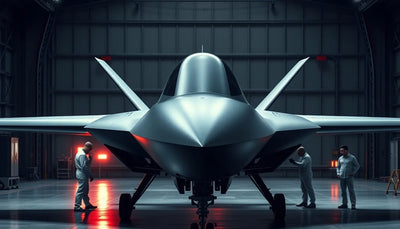
The low-altitude economy in China is shifting from regulatory groundwork to commercial execution, and the defining competition among leading drone enterprises is now centered on airworthiness certification and real-world scenario expansion. A recent report from cb.com.cn highlights how major players are racing to secure type certifications while simultaneously pushing drones into logistics, industrial inspection, and urban air mobility use cases. For commercial operators, fleet managers, and buyers in the pre-owned DJI market, this shift signals a period of accelerated hardware turnover and stricter compliance expectations.
The report frames the current phase as the "second half" of commercialization, where the ability to fly legally in controlled airspace matters as much as the hardware itself. Airworthiness certification is no longer a bureaucratic checkbox; it is becoming a competitive moat that separates serious commercial platforms from consumer-grade equipment. This has direct implications for how operators should evaluate their current fleets, plan upgrades, and approach the secondary market for used drones.
The airworthiness race is reshaping fleet eligibility
According to the cb.com.cn report, leading enterprises in China's low-altitude economy are actively competing on airworthiness certification timelines. The underlying message is that certified platforms will gain preferential access to commercial airspace, government procurement programs, and large-scale logistics contracts. Uncertified or legacy platforms may find themselves locked out of the most lucrative operating scenarios, even if their technical performance remains adequate.
Industrial drone procurement
Source a brand-new industrial drone for this mission.
Discuss mission fit, aircraft model, quantities, configuration, pickup, and lifecycle support with Reboot Hub.

For commercial operators, this creates a practical planning problem. A drone that flies well today may not be eligible for tomorrow's high-value contracts if it lacks the necessary certification. Fleet managers should begin auditing their current equipment against emerging airworthiness requirements, not just in China but in any market where regulatory harmonization is underway. The cost of certification delays is not just regulatory; it is the opportunity cost of missed revenue from scenario-based contracts.
This dynamic also affects the pre-owned DJI market. As certified platforms become the baseline for commercial work, older uncertified units will increasingly flow into the secondary market at discounted prices. Buyers looking for pre-owned DJI drones should verify the certification status of any unit they consider for commercial use, rather than assuming that a well-maintained airframe automatically meets current operational standards.
Scenario expansion is driving demand for specialized platforms
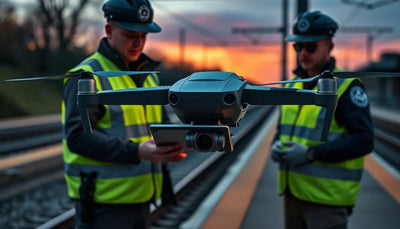
The report emphasizes that airworthiness is only half of the equation; the other half is scenario expansion. Leading companies are not waiting for regulation to mature before testing commercial applications. Instead, they are actively deploying drones in logistics delivery, emergency response, agricultural operations, and infrastructure inspection. Each scenario imposes different payload, endurance, and redundancy requirements, which in turn drives demand for specialized configurations.
For fleet operators, this means that a one-size-fits-all fleet strategy is increasingly risky. The commercial value of a drone is now tied to its ability to perform specific tasks within certified operational envelopes. Operators should map their current and projected revenue streams to specific drone capabilities, and identify gaps where a new platform or a configuration change is needed. This is particularly relevant for repair decisions: investing in a major repair for a legacy platform may not make sense if the platform cannot access the scenarios that generate the highest revenue.
The scenario expansion also has a notable effect on the resale market. As enterprises upgrade to certified, scenario-specific platforms, their outgoing equipment enters the secondary market. This increases the supply of used drones with documented operational histories, which is generally positive for buyers seeking professional DJI repair services to bring a pre-owned unit back to a reliable state. However, buyers should be cautious about units that were heavily used in industrial scenarios, as wear patterns differ significantly from consumer use.
What this means for drone buyers
For buyers in the pre-owned DJI market, the airworthiness race introduces a new layer of due diligence. Certification status, operational history, and scenario fit are now as important as flight hours and cosmetic condition. A pristine airframe that lacks certification for commercial operations may still be an excellent value for hobbyist or training use, but it should not be priced as a commercial workhorse.
Fleet managers should also reconsider their repair-versus-replace calculations. If a platform is approaching the edge of its useful commercial life and lacks the certification needed for upcoming contracts, spending on major repairs may be a poor allocation of capital. Instead, the trade-in route becomes more attractive. A structured drone trade-in guide can help operators extract maximum value from outgoing equipment while reducing the net cost of upgrading to a certified platform.
Buyers should also pay attention to the parts supply chain. As certified platforms become the commercial standard, OEM spare parts for these platforms will be in higher demand. Conversely, parts for legacy platforms may become scarcer over time, which affects the long-term maintainability of pre-owned units. Before purchasing a used drone, it is prudent to confirm that genuine OEM spare parts are still available and that repair services can support the platform for the expected operational lifetime.
Commercial planning in the certification era
The cb.com.cn report makes clear that the low-altitude economy is entering a phase where regulatory compliance and commercial viability are inseparable. Companies that secure airworthiness certification early gain a first-mover advantage in scenario-based contracts, while those that lag risk being relegated to lower-value applications. This competitive pressure will likely accelerate the pace of fleet renewal across the industry.
For operators, the practical takeaway is to build certification awareness into every fleet decision. When evaluating a new drone purchase, ask whether the platform has a clear path to airworthiness certification in the markets where you operate. When considering a pre-owned unit, verify not just its condition but its regulatory status. When planning repairs, weigh the remaining certified service life of the platform against the cost of the repair.
The secondary market will continue to be a valuable source of capable hardware, but the definition of "capable" is shifting. A drone that is mechanically sound but commercially obsolete is a different asset than one that is ready for certified operations. Buyers who understand this distinction will make better purchasing decisions, and sellers who price their equipment accordingly will move inventory faster.
Should I avoid buying a pre-owned drone that lacks airworthiness certification?
Not necessarily. If you plan to use the drone for training, hobby flying, or non-certified operations, a mechanically sound unit without certification can still be a good value. However, if your goal is commercial revenue generation, certification status should be a primary filter in your purchasing decision.
How does the airworthiness race affect repair decisions for older DJI models?
If an older model is approaching the end of its certified commercial life, major repairs may not be cost-effective. Instead, consider a trade-in toward a certified platform. For minor repairs or units used in non-commercial roles, professional repair with genuine OEM parts remains a sound investment.
Will the push for certification increase the supply of used drones on the market?
Yes. As leading enterprises upgrade to certified, scenario-specific platforms, their outgoing equipment will enter the secondary market. This increases supply and creates more options for buyers, but it also requires more careful screening of operational history and certification status.
參考來源
發佈時尚未取得其他官方文件。
Reboot Hub 編輯部為無人機所有者提供購買、維修、轉售及營運分析。若發現錯誤,請根據我們的編輯政策聯絡我們進行更正審查。