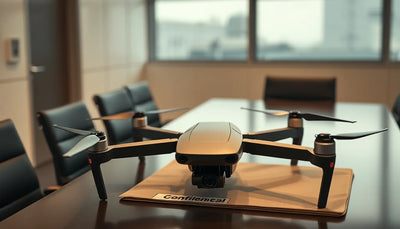
FORT and NVIDIA Blueprint Reshapes Autonomous Drone Safety
FORT Robotics and NVIDIA have introduced an Outside-In Safety blueprint that uses external sensors to protect workers and improve productivity. We break down what it means for your drone operations and pre-owned fleet planning.

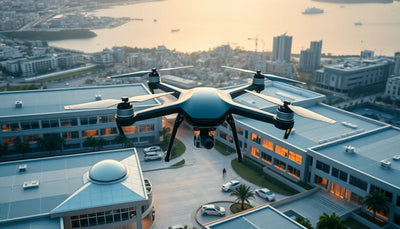
On June 23, 2026, FORT Robotics and NVIDIA announced a new safety architecture called Outside-In Safety, designed to improve how autonomous robots and humans coexist in shared workspaces. The blueprint uses external sensors—mounted on infrastructure rather than on the robot itself—to create safer, more productive zones for industrial automation. For commercial UAV operators, this concept signals a shift in how safety could be priced, designed, and retrofitted into drone fleets, even those powered by pre-owned DJI platforms.
The announcement, reported by The Robot Report, emphasizes that traditional onboard-only safety systems limit robot speed and productivity. By moving some sensing to the environment, autonomous systems can operate closer to humans without stopping for every intrusion. That same logic applies to drones working near people, structures, or other aircraft.
Outside-In Safety: how it works for robots and drones

The FORT-NVIDIA blueprint relies on external camera arrays and processing hardware to define virtual safety zones. When a person or object enters a zone, the system signals the robot to slow or stop—not because the robot saw the threat, but because the environment detected it. This reduces the need for expensive, redundant onboard sensors while maintaining or improving safety ratings.
Market context
Turn market news into a buy, repair, or trade-in decision.
Compare pre-owned availability, resale timing, and repair economics before the market moves again.
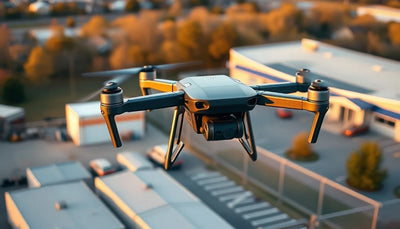
For drones, the implication is direct. Currently, most industrial UAVs rely on onboard collision avoidance—forward sensors, downward lidar, or vision positioning. Those systems work well in open air but struggle in cluttered environments like warehouses, construction sites, or inspection yards. An Outside-In setup could allow a drone to fly faster and closer to obstacles, because the infrastructure—not the drone—is watching for entry into exclusion zones.
FORT Robotics is already known for safety-certified controllers used in mobile robots and heavy machinery. NVIDIA brings the AI processing layer, likely leveraging its Jetson edge platform to fuse multiple external sensor feeds in real time. The blueprint presents a reference architecture that integrators and fleet operators can adopt without designing safety systems from scratch.
Production and worker safety benefits for fleet operators

The primary productivity gain cited in the announcement is the ability to keep robots moving at higher speeds while still qualifying for safety certifications. In drone terms, this means a fleet manager could deploy UAVs in zones where human workers are present—without requiring dedicated safety observers or geofenced perimeters that block all access.
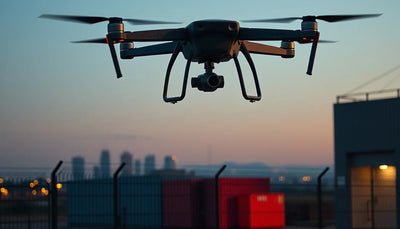
Consider an outdoor logistics hub where drones land among delivery vans and ground crew. With Outside-In sensors mounted on light poles or building corners, the drone can fly its route at full speed. As soon as a worker steps into the landing pad zone, the external sensor array communicates directly with the drone’s flight controller to initiate a hover or landing abort—faster than any pilot reaction.
This reduces downtime and increases throughput. The safety layer becomes a fixed asset rather than a per-robot cost. Over a fleet of ten or twenty drones, that pricing difference matters. Operators buying pre-owned DJI drones for high-volume missions can now consider infrastructure safety investments instead of replacing every aircraft with new, sensor-heavy models.
What this means for drone buyers

For commercial buyers and fleet managers, the FORT-NVIDIA announcement reinforces a strategic choice: invest in safety infrastructure, not just onboard hardware. If you are evaluating a pre-owned DJI Matrice or M300 series drone for a site that requires certified safety performance, the Outside-In approach offers a path to compliance without a full upgrade to the latest onboard obstacle avoidance.
Pre-owned DJI drones remain attractive platforms because of their mature flight controllers and payload flexibility. The Outside-In blueprint does not require a specific robot brand or model; it communicates via standard safety protocols (e.g., CANopen, EtherCAT). Many DJI enterprise controllers already accept external safety inputs through their SDK or auxiliary interfaces. That means a fleet of inspected pre-owned DJI drones could be integrated into an Outside-In zone with proper engineering—without replacing the airframes.
Buyers should also consider the long-term pre-owned market. As more industrial sites adopt infrastructure-based safety, the demand for older drones that can be retrofitted may increase, while drones without external input capability may depreciate faster. If you plan to resell or trade in your fleet, ensure the airframes support external safety commands. The drone trade-in guide at Reboot Hub can help you evaluate whether your current equipment is positioned for that future.
For repair customers, the shift to external sensing could simplify maintenance. Instead of calibrating and replacing onboard sensors after every hard landing, the safety intelligence lives in the infrastructure. Drones themselves become simpler, more robust, and easier to repair with genuine OEM spare parts. If your repair shop is already working with pre-owned DJI drones, this trend makes that service even more accessible. Professional DJI repair services can ensure your airframes are mechanically ready for integration with any safety architecture.
Pre-owned DJI market and repair ecosystem implications
The Outside-In Safety blueprint could shift how the pre-owned DJI market values drones. Currently, the resale value of a used DJI drone is heavily influenced by its onboard sensor condition—broken vision positioning or damaged downward sensors can slash prices. If external safety becomes the norm, the drone’s own sensors become less critical for basic safety compliance. That could stabilize resale values for airframes with minor cosmetic damage or older sensor hardware.
On the repair side, shops that stock genuine OEM spare parts for DJI models will find steady demand for structural and motor repairs, while sensor module replacements may drop. Fleet operators can extend the life of their pre-owned DJI drones by focusing on motor, battery, and frame health rather than sensor upgrades. The ability to buy pre-owned DJI drones that are mechanically sound becomes even more valuable when the safety system is external.
It is important to note that the FORT-NVIDIA announcement is a blueprint, not a commercial product. No release dates, pricing, or drone-specific compatibility claims have been made publicly. Operators should watch for integrators such as FlytBase, AirMap, or regional drone service providers to adopt the architecture. Until then, the prudent move is to prepare your fleet’s mechanical and electrical interfaces for external safety commands.
One concrete action for buyers: if you are purchasing a pre-owned DJI drone today, check whether the auxiliary port and SDK support external I/O. Models like the Matrice 300 RTK and 350 RTK are well-known for this capability. Older drones may lack it. If external safety zones become common at your operational sites, investing a little more upfront in a compatible airframe will pay off.
Will Outside-In Safety apply to small consumer drones?

The announcement focuses on industrial robots and by extension commercial drones. Consumer drones like the DJI Mini or Air series are unlikely to benefit directly, as their flight controller firmware does not typically support external safety overrides. Fleets, however, can deploy consumer-grade drones as secondary units within an Outside-In zone, provided they are tethered by a compatible ground controller.
Does this mean I should stop repairing onboard sensors on pre-owned DJI drones?
No. While external safety may reduce reliance on onboard collision avoidance, many drone missions require onboard sensing for precision landing, terrain following, and obstacle mapping. The Outside-In blueprint supplements, not replaces, onboard safety. Keep following standard repair practices for vision sensors, lidar, and sonar, especially if you operate in mixed environments.
Can I retrofit my existing DJI Matrice with an Outside-In safety receiver?
Possibly, but no retrofit kit or compatibility list has been announced. The blueprint specifies communication protocols common to industrial automation, so integrating with DJI’s SkyPort or OSDK is technically feasible. Professional integrators will need to develop the interface. Professional DJI repair services can advise on hardware modifications once reference designs emerge.